TL;DR I vibe-coded a custom font tool, designed a modular brand kit, and ran live production for a Google UK showcase that scaled to ~730 Googlers and earned a 97% value rating.
Background
In a 7,000+ person office like Google UK, it is easy to stay heads-down inside your own product area. Peers two floors away often ship remarkable work that you never hear about.
Each spring, our volunteer UK Innovation Team runs the UK Innovation Spotlight during Google I/O week. Local teams take the stage for short talks to share their work across the UK site.
I joined the UK Innovation Team in September 2024 and helped run the 2025 Innovation Spotlight. That edition proved how hungry colleagues were to connect across teams. Submissions jumped from 14 to 55, and total reach climbed from ~550 to ~730 engaged Googlers across live and on-demand audiences.
Returning for Year 3 in May 2026, I stepped in alongside my UX Designer day job to push the event experience further. I owned four areas: visual branding, talk curation, live run-of-show, and event photography.
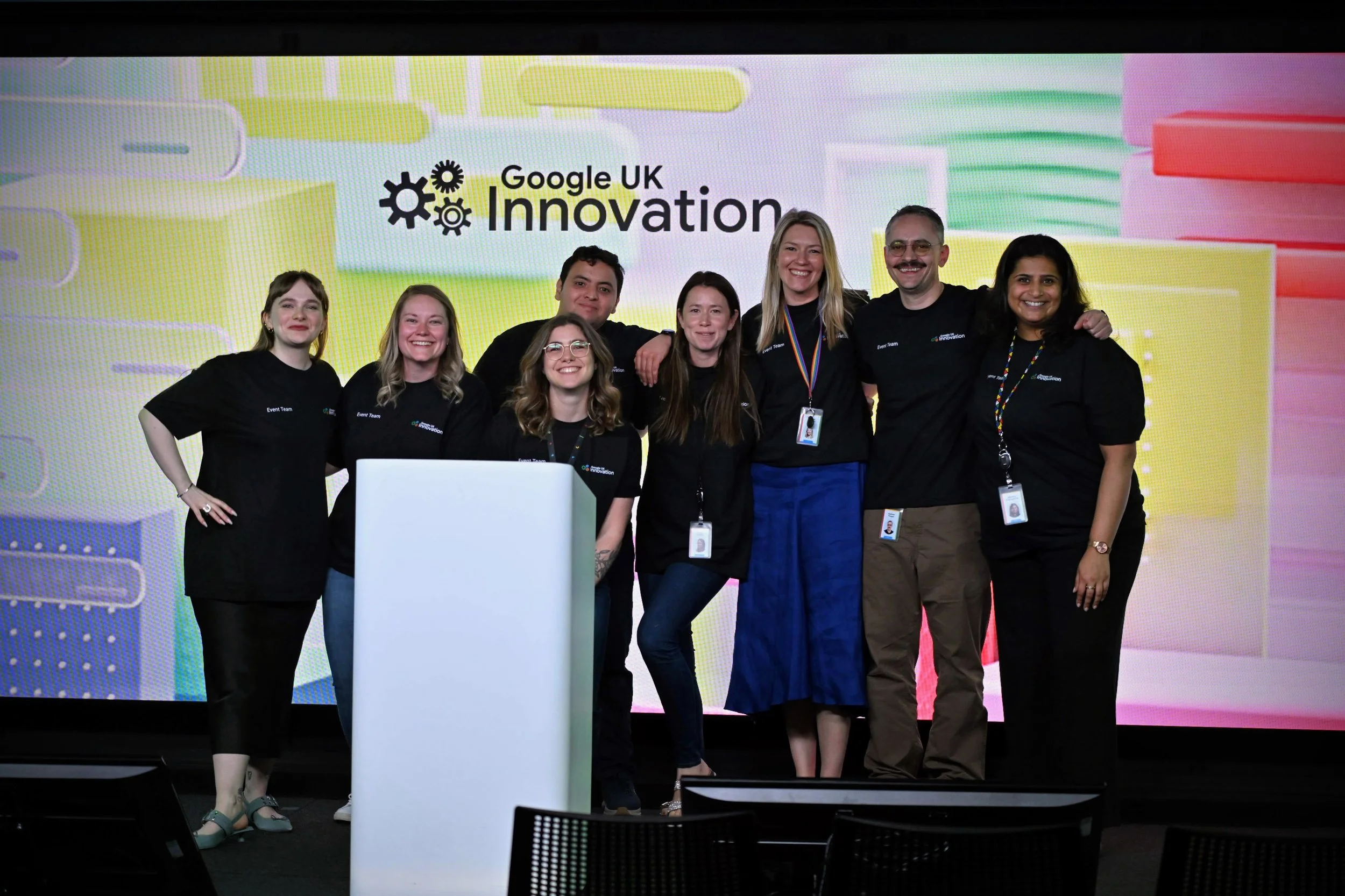
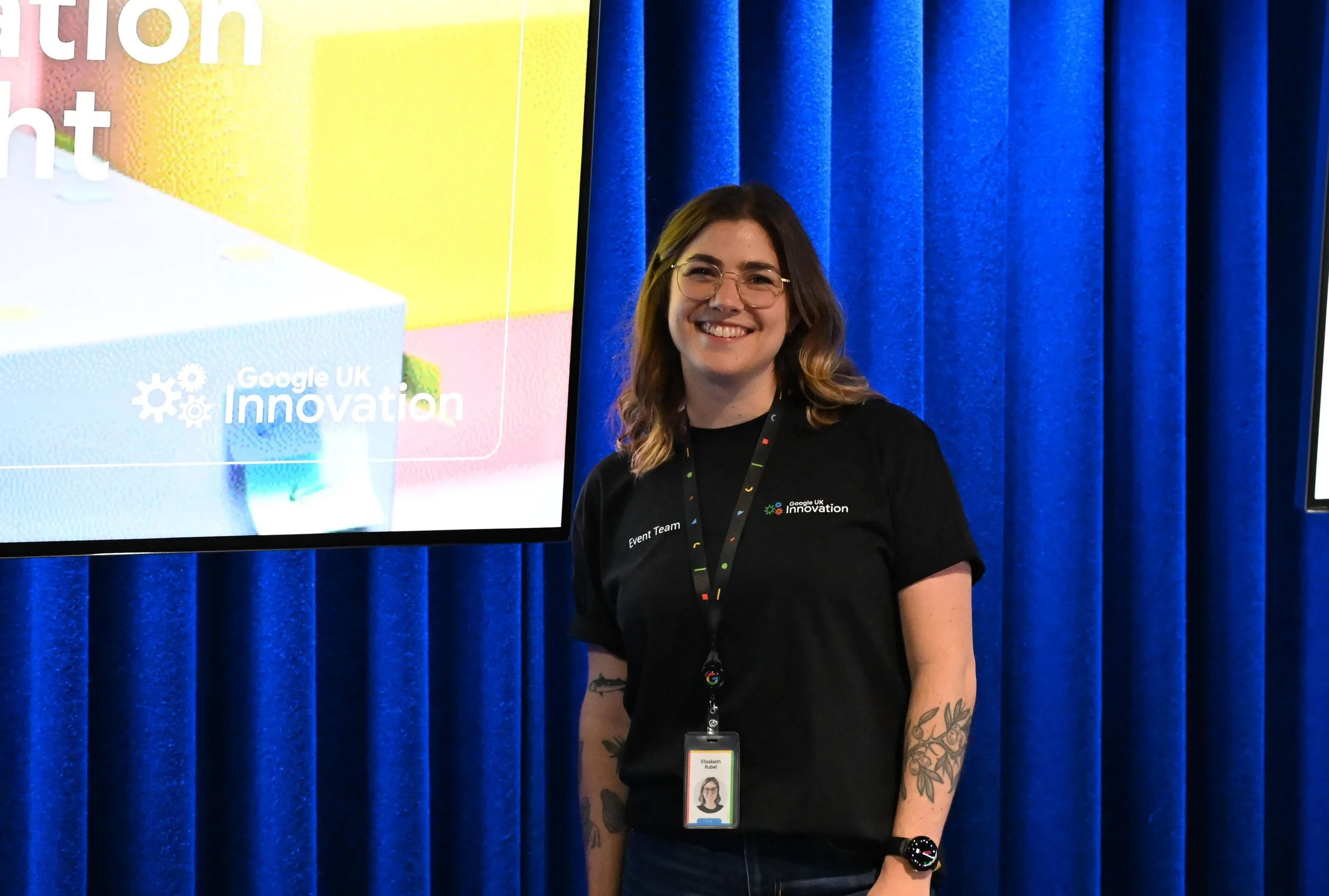
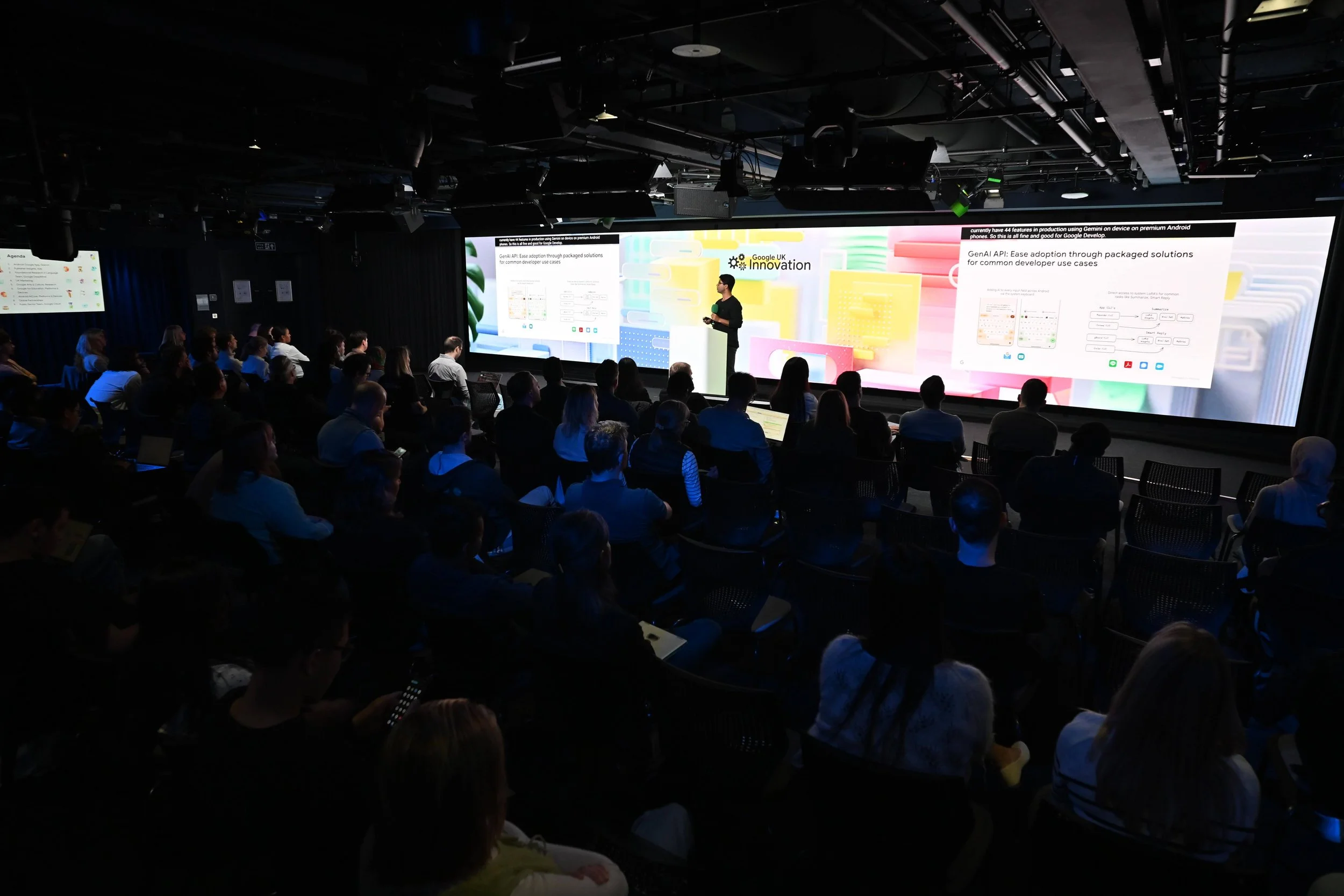
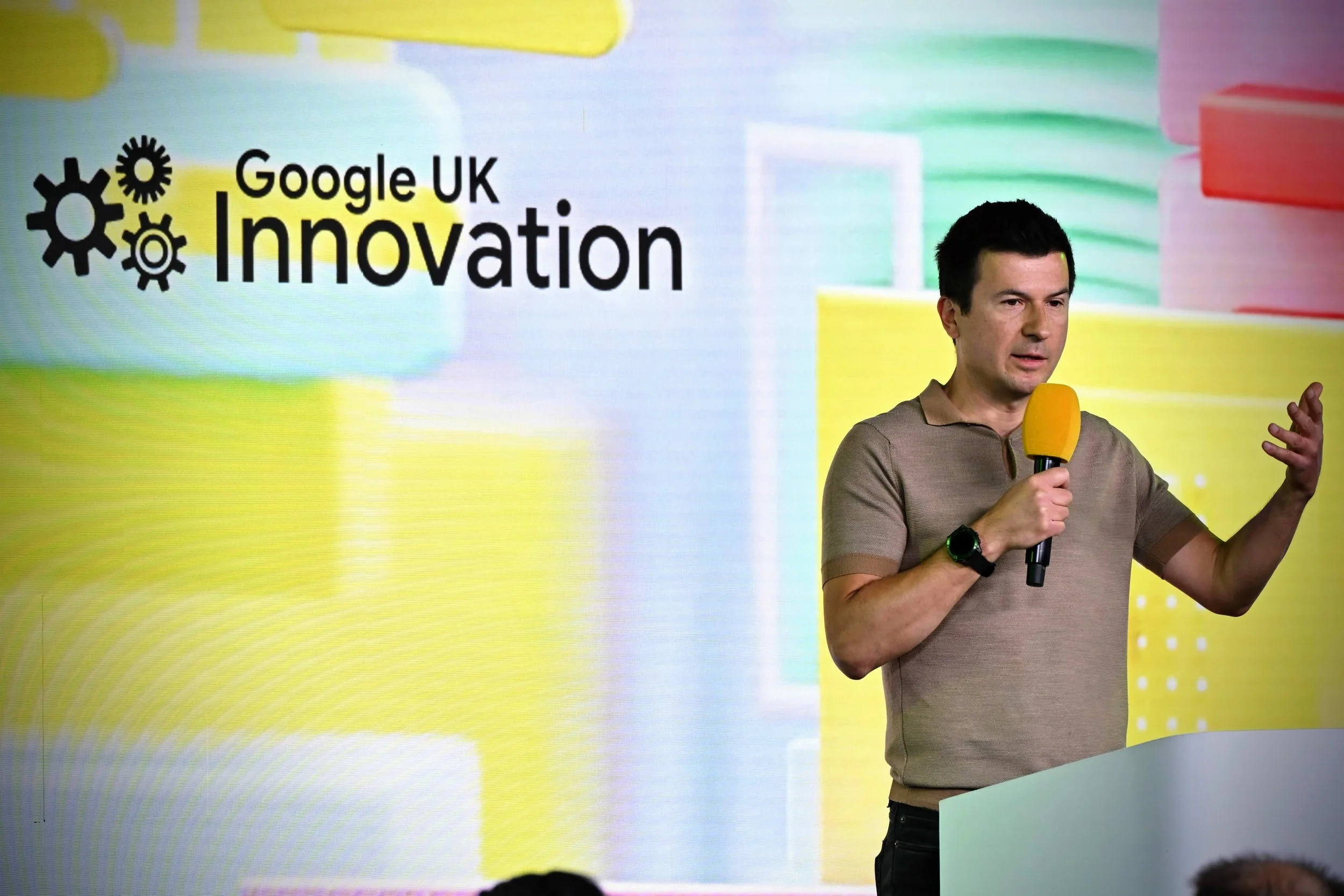
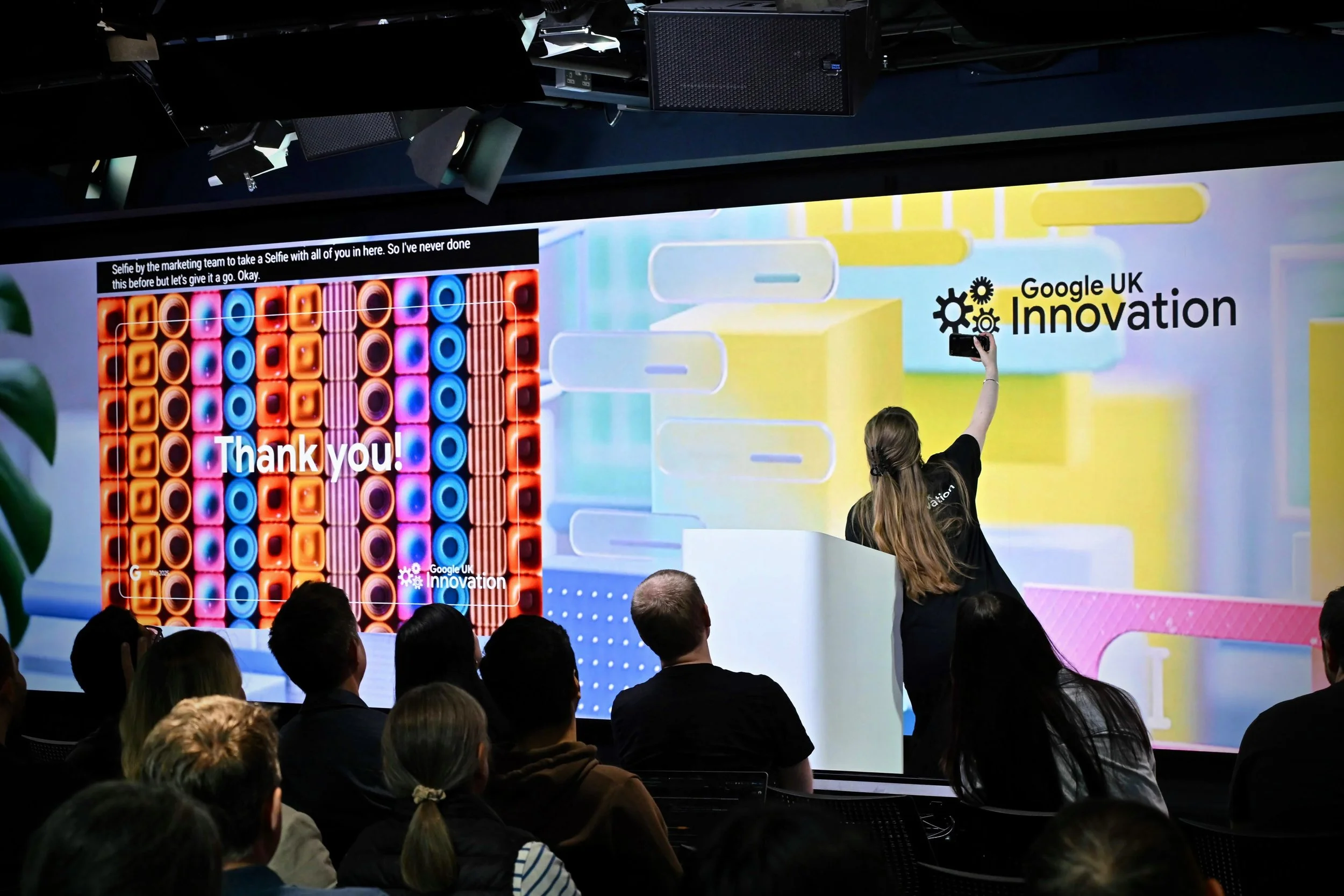
Photos from 2025 UK Innovation Spotlight
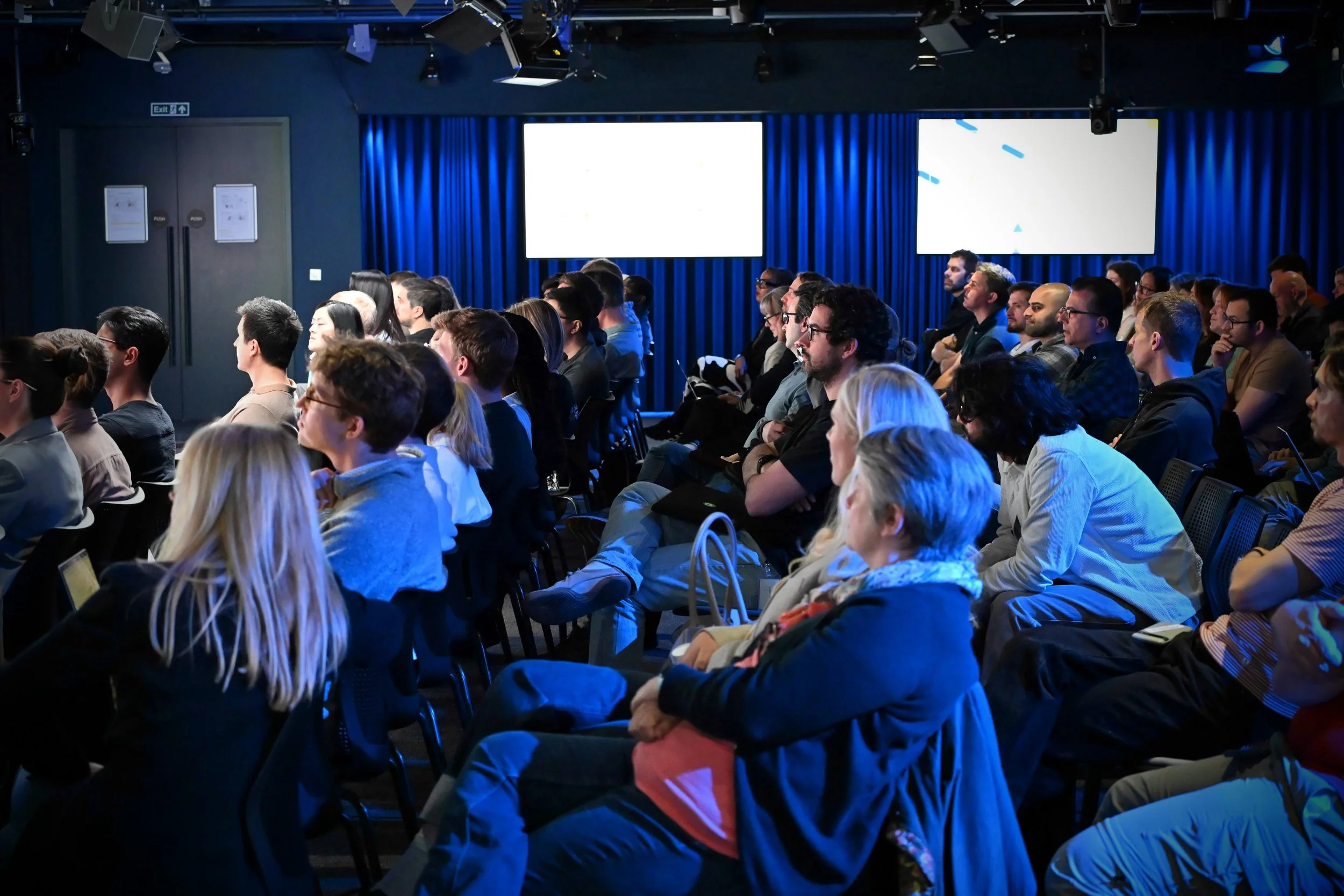
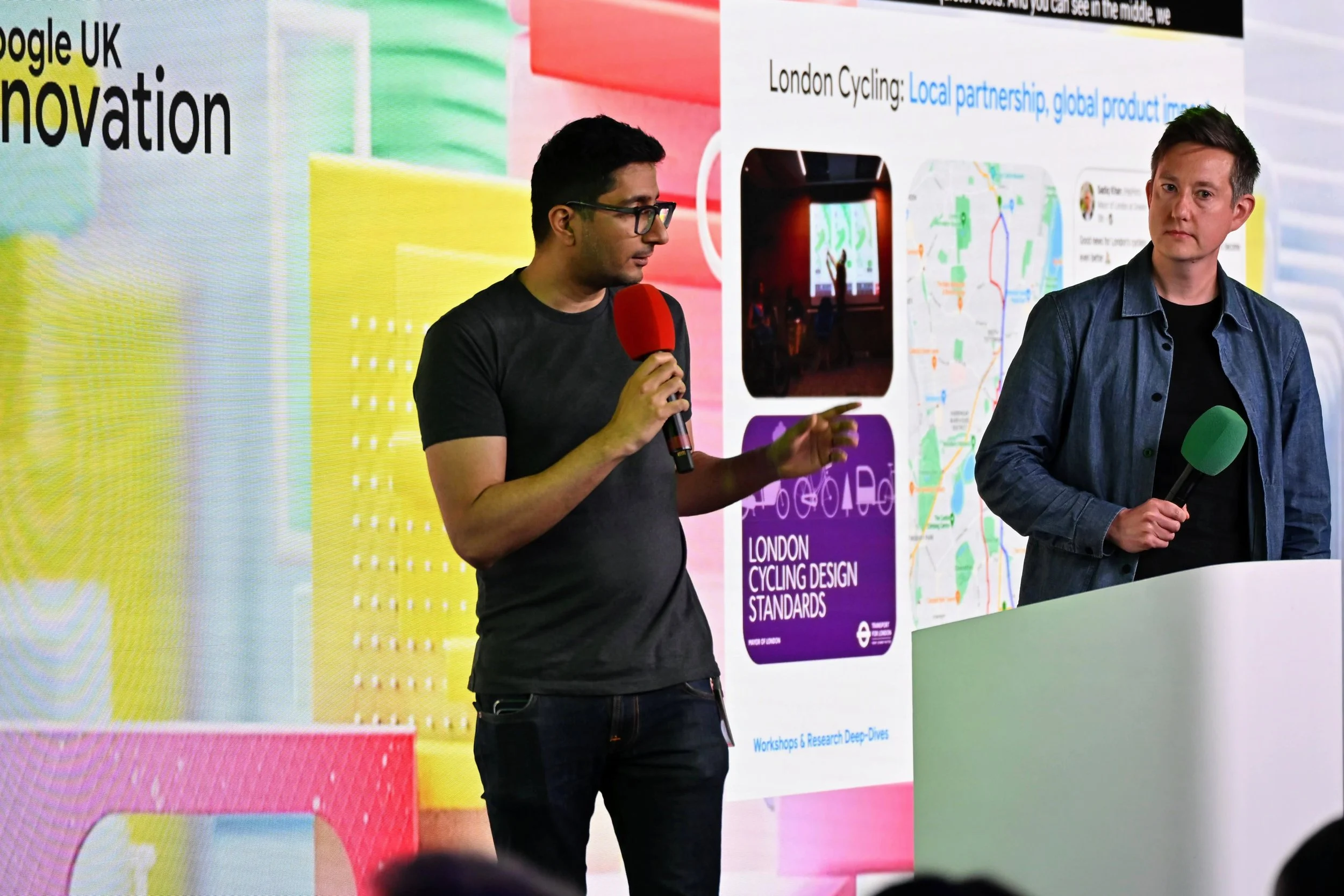
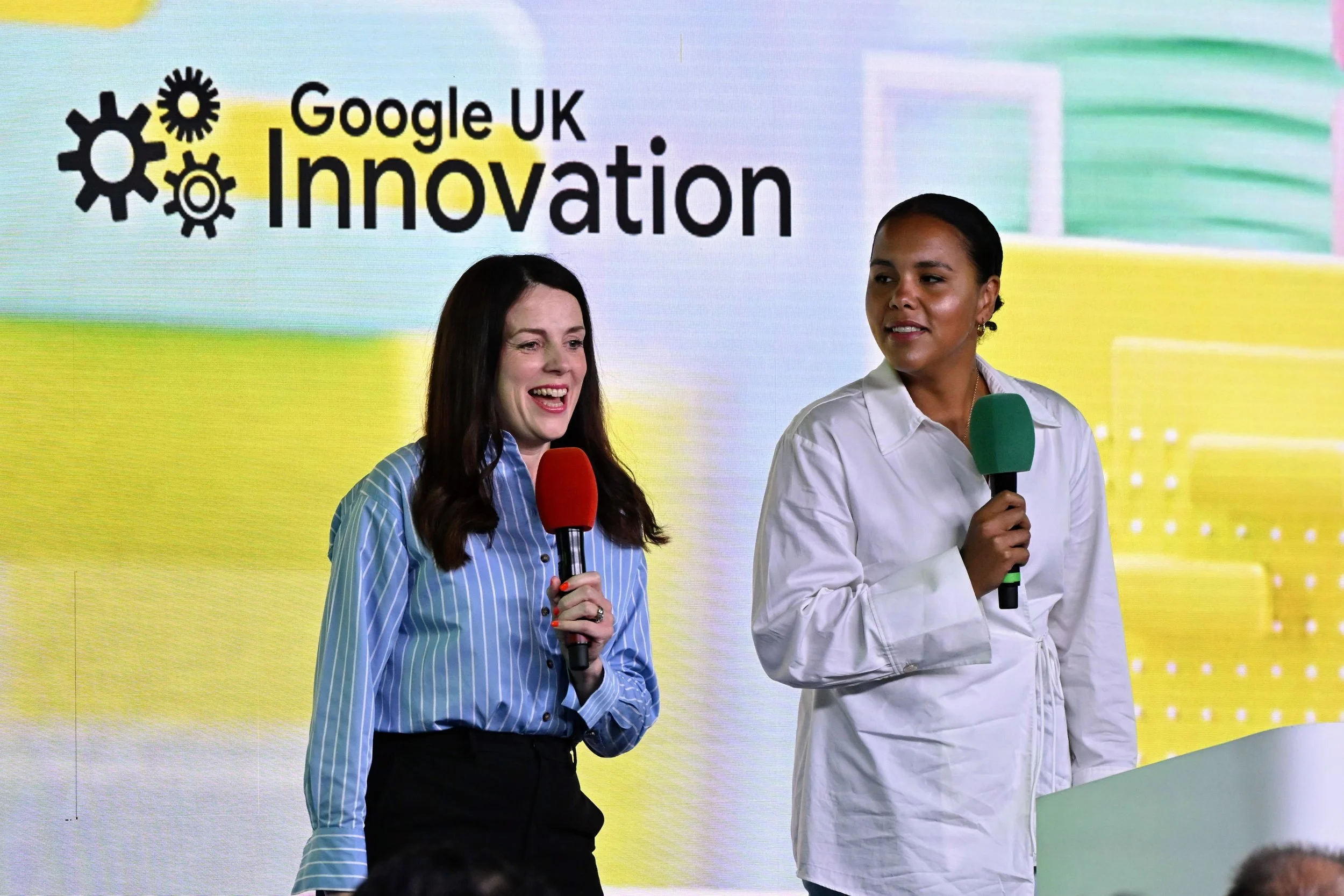
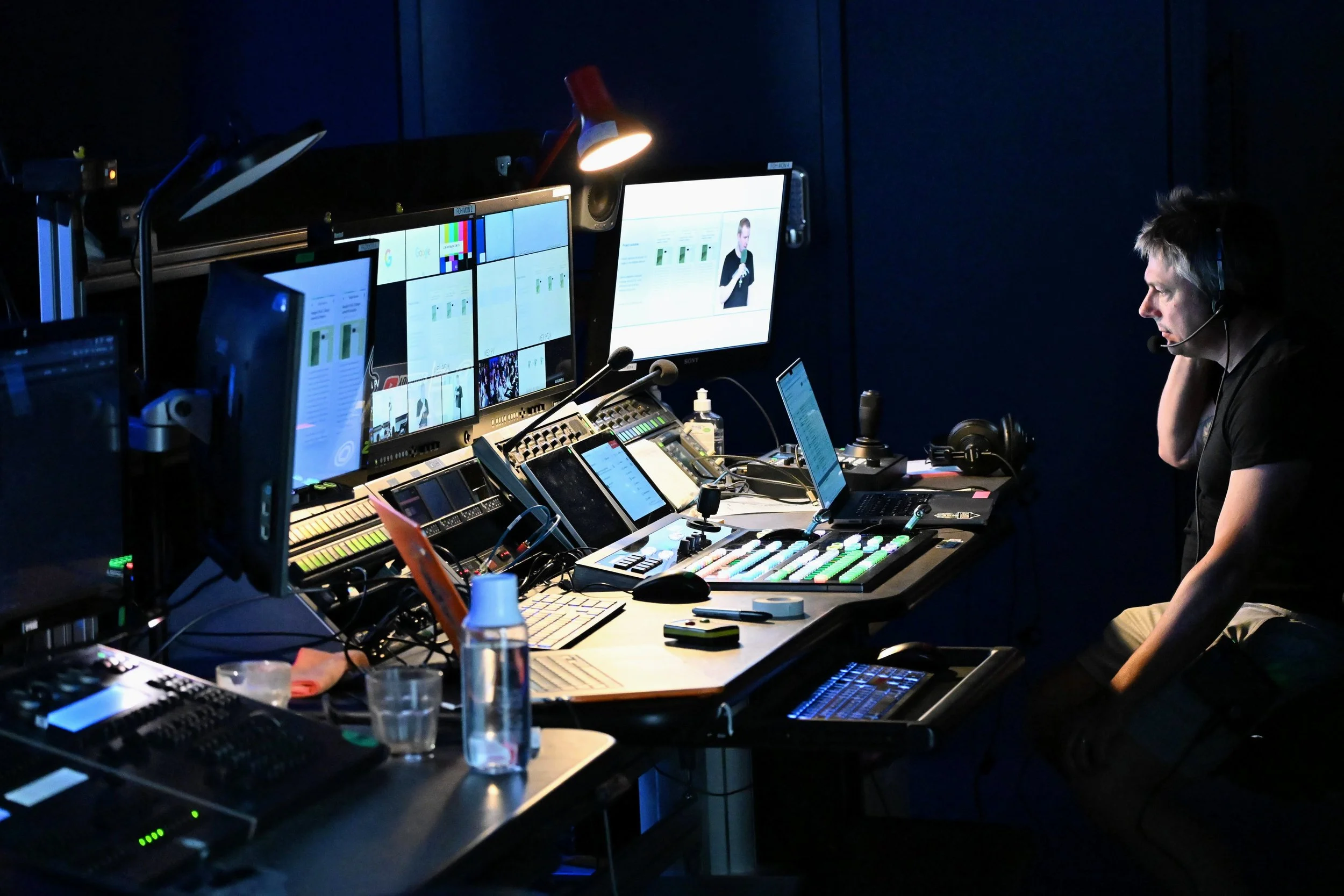
Goals
Our volunteer team shared one modest budget across all of Google I/O week. Building on lessons from 2025, I set four goals for Spring 2026:
Build a cohesive brand on a tight budget: Give an internal showcase agency-level polish across stage screens, stickers, and physical treats.
Echo Google I/O with a UK feel: Pull in Google I/O's expressive typography and luminous gradients while keeping a distinct UK identity.
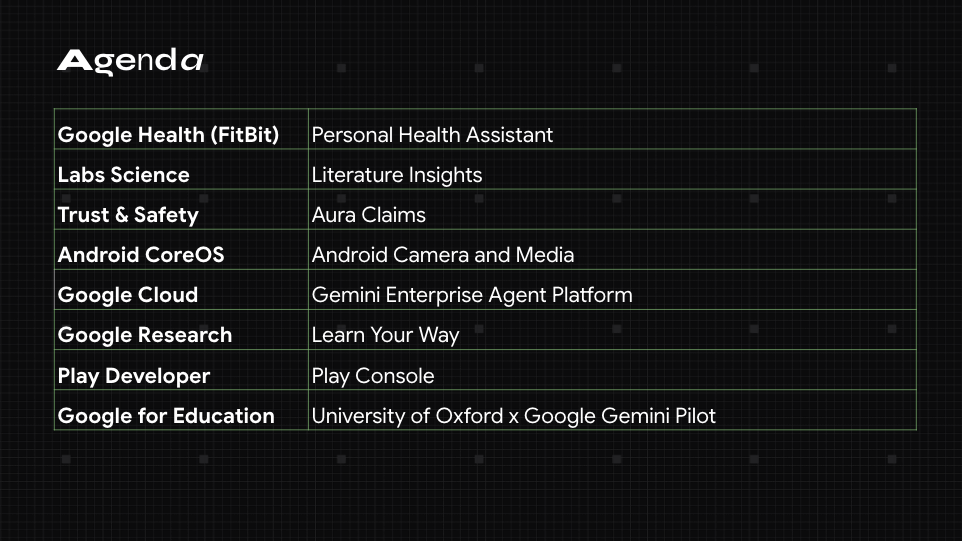
Curate a varied lineup: Feature teams across health, scientific research, mobile, cloud, developer tools, education, and safety.
Run a tight 60-minute show: Guide 8 speakers through five-minute talks without slide glitches or schedule drift.
Process
Vibe-coding a Variable Font Explorer to spark the brand
Most brand projects start in Figma with static font mockups. Because Google I/O leans heavily into expressive variable typography, I wanted the 2026 wordmark to feel alive from the very first sketch.
Before touching vector layout tools, I vibe-coded a lightweight web prototype in Google AI Studio: the Variable Font Explorer. The app sets type on a dark dot-grid canvas and lets me play with variable font axes (weight and width) using per-letter animations and randomization.
Building my own tiny tool solved two problems at once:
Faster typographic exploration: Randomizing individual glyphs exposed playful rhythms of condensed and wide letterforms in minutes. Reaching that same feel by hand in Figma would have taken hours.
Instant motion assets: Recording the live prototype directly gave us the animated title sequence for the auditorium opening and livestream replay.
Once I hit a randomized typographic rhythm that felt unmistakably energetic, I froze that lockup and brought it into Figma and Adobe tools.
Scaling one modular system across extremes
Scale was the hardest design constraint. That single visual identity had to stay crisp across five very different canvases:
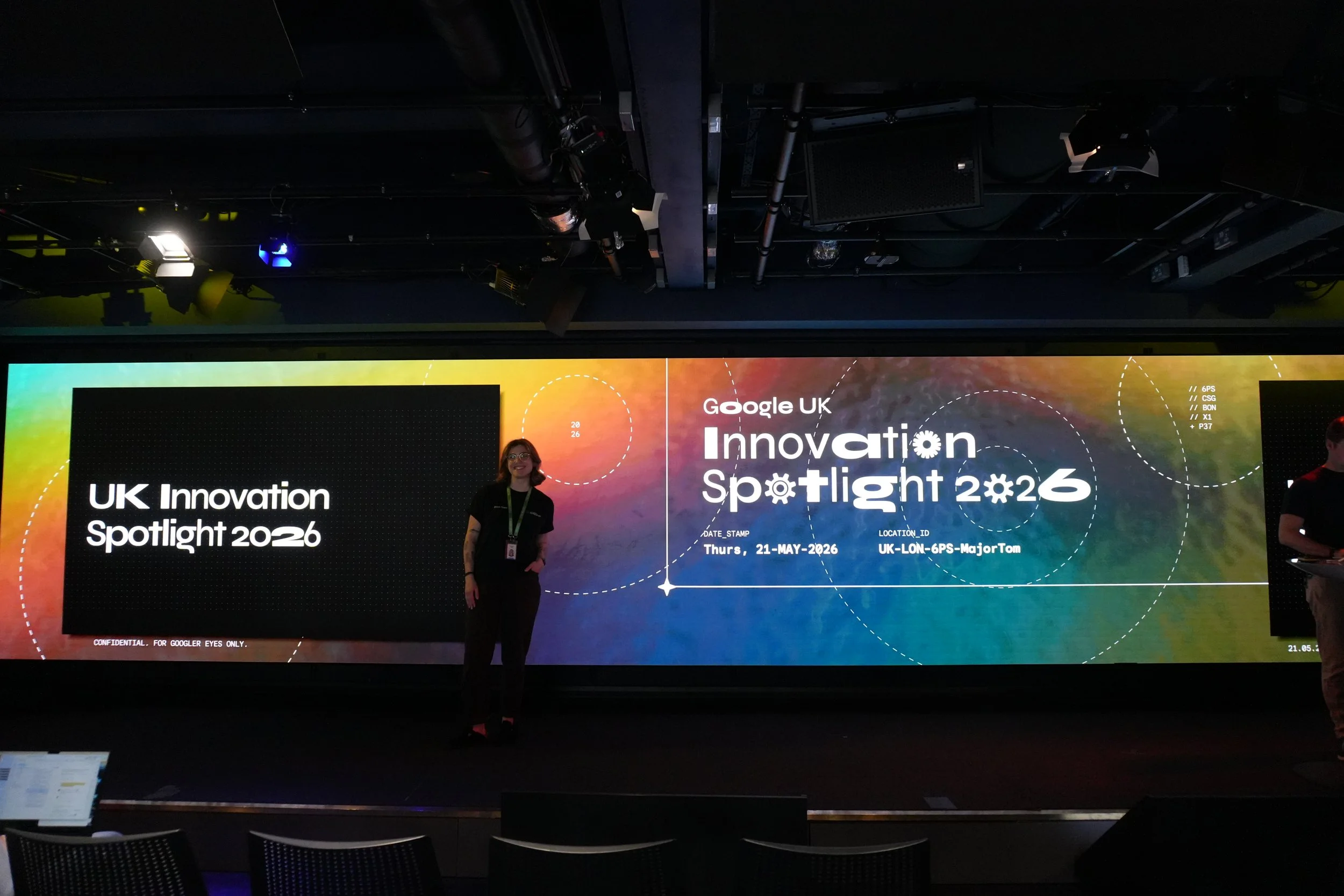
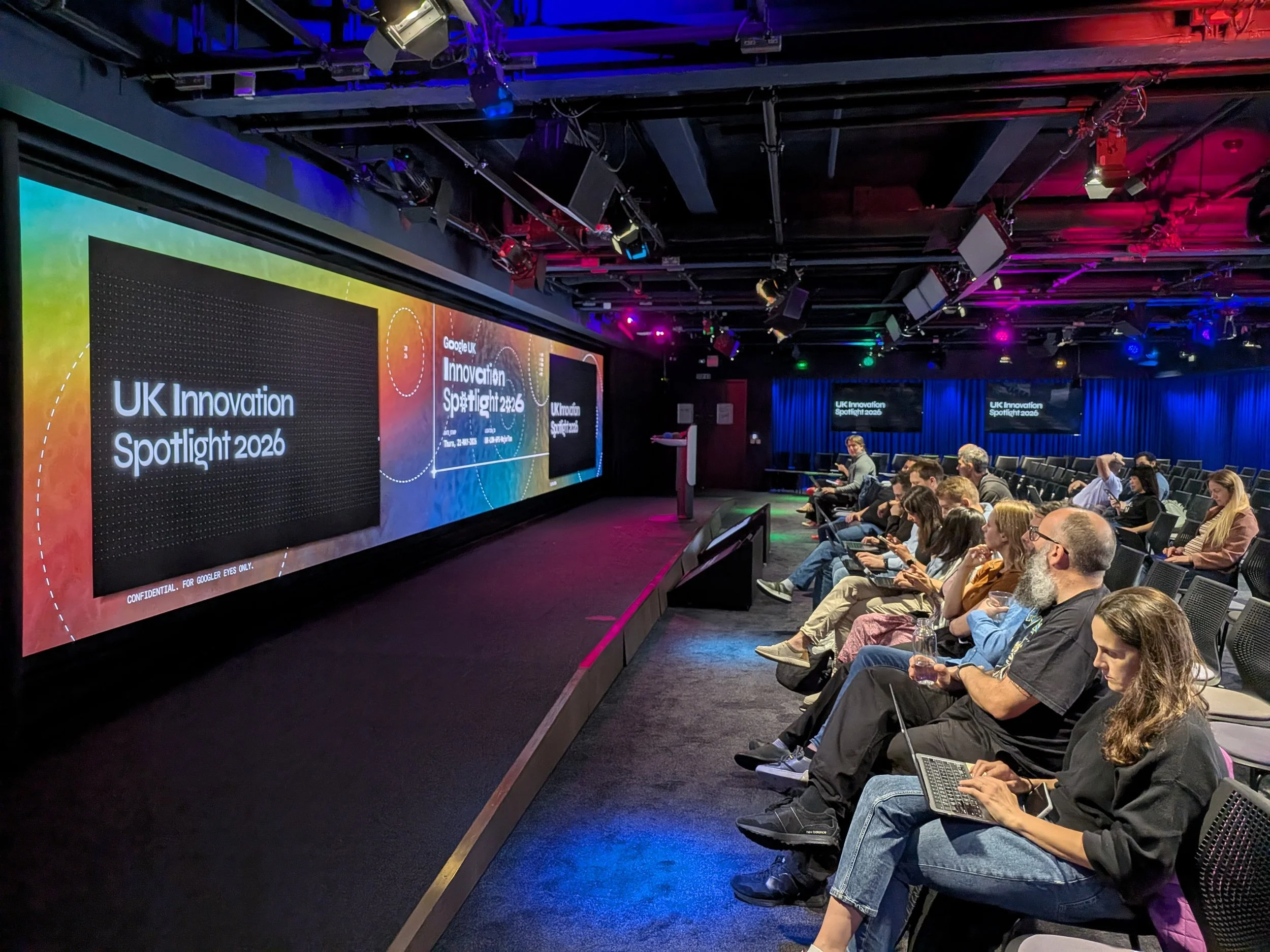
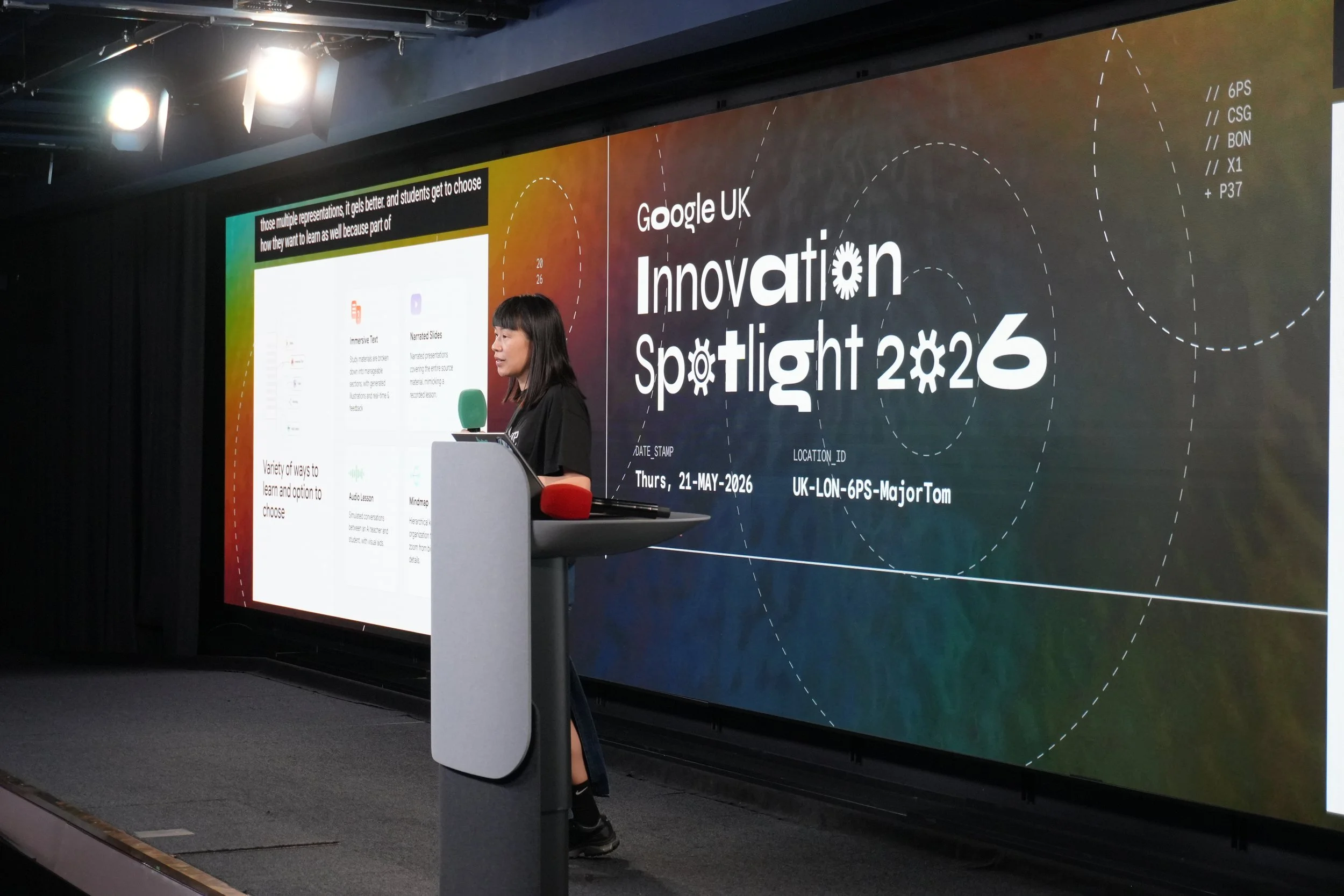
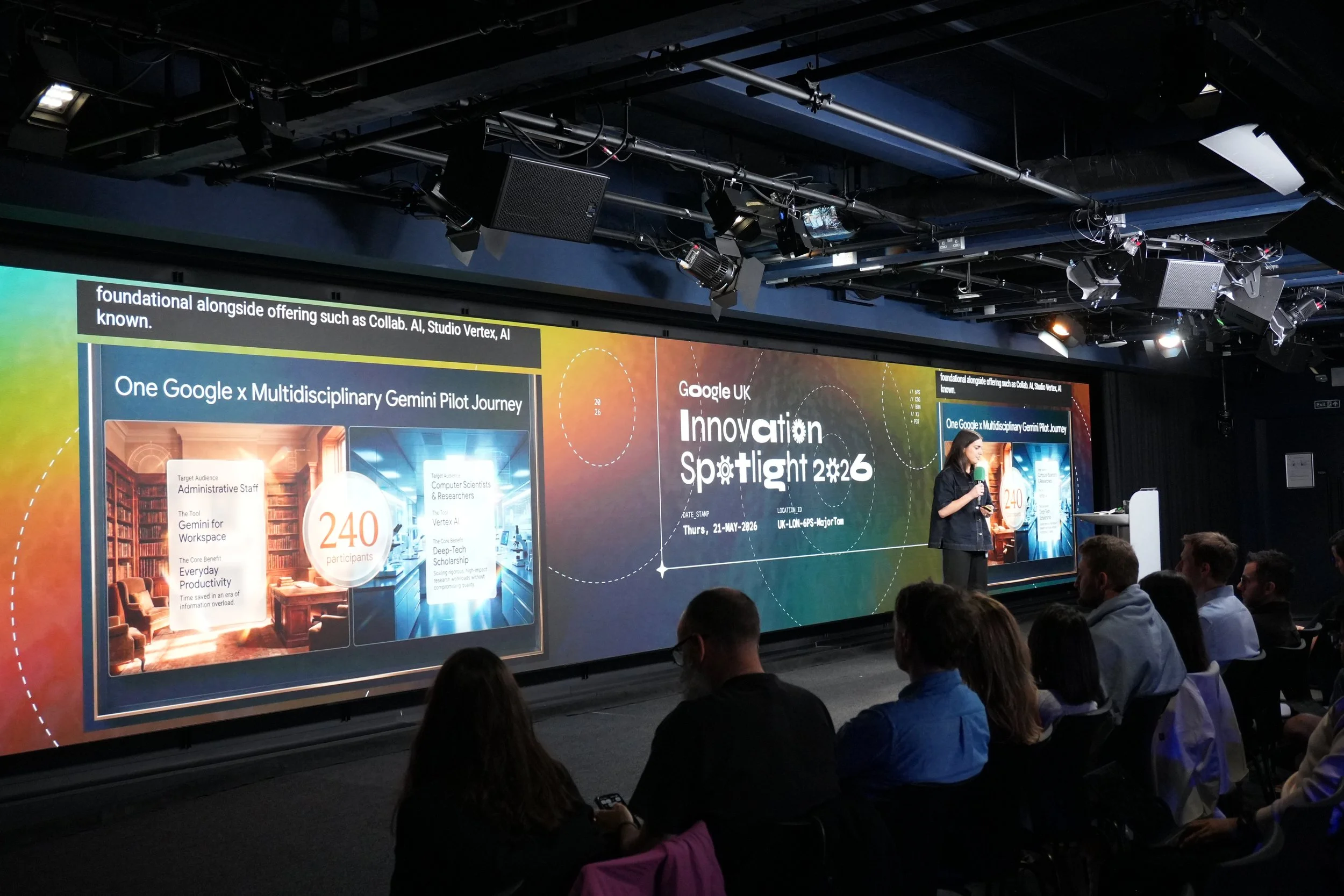
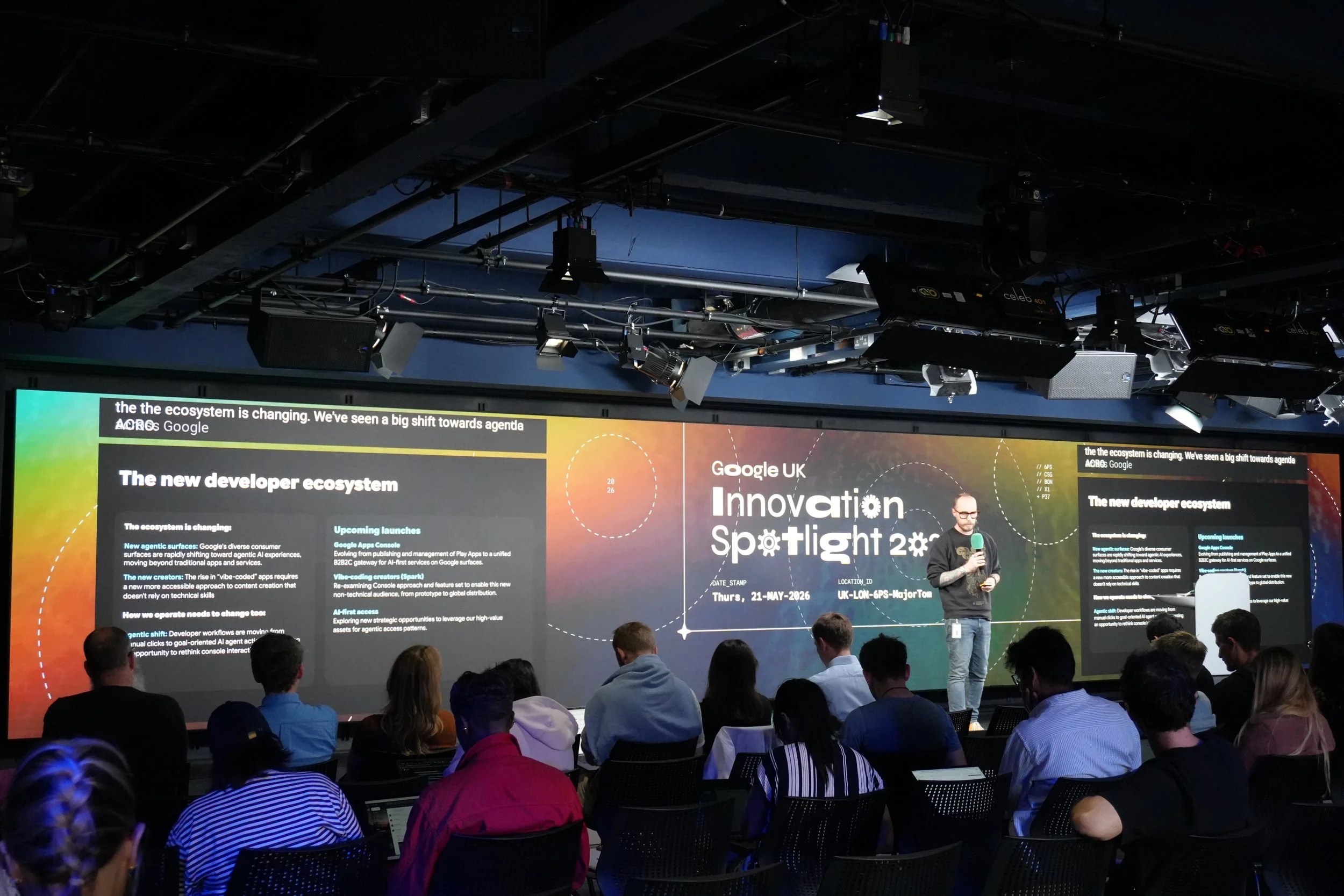
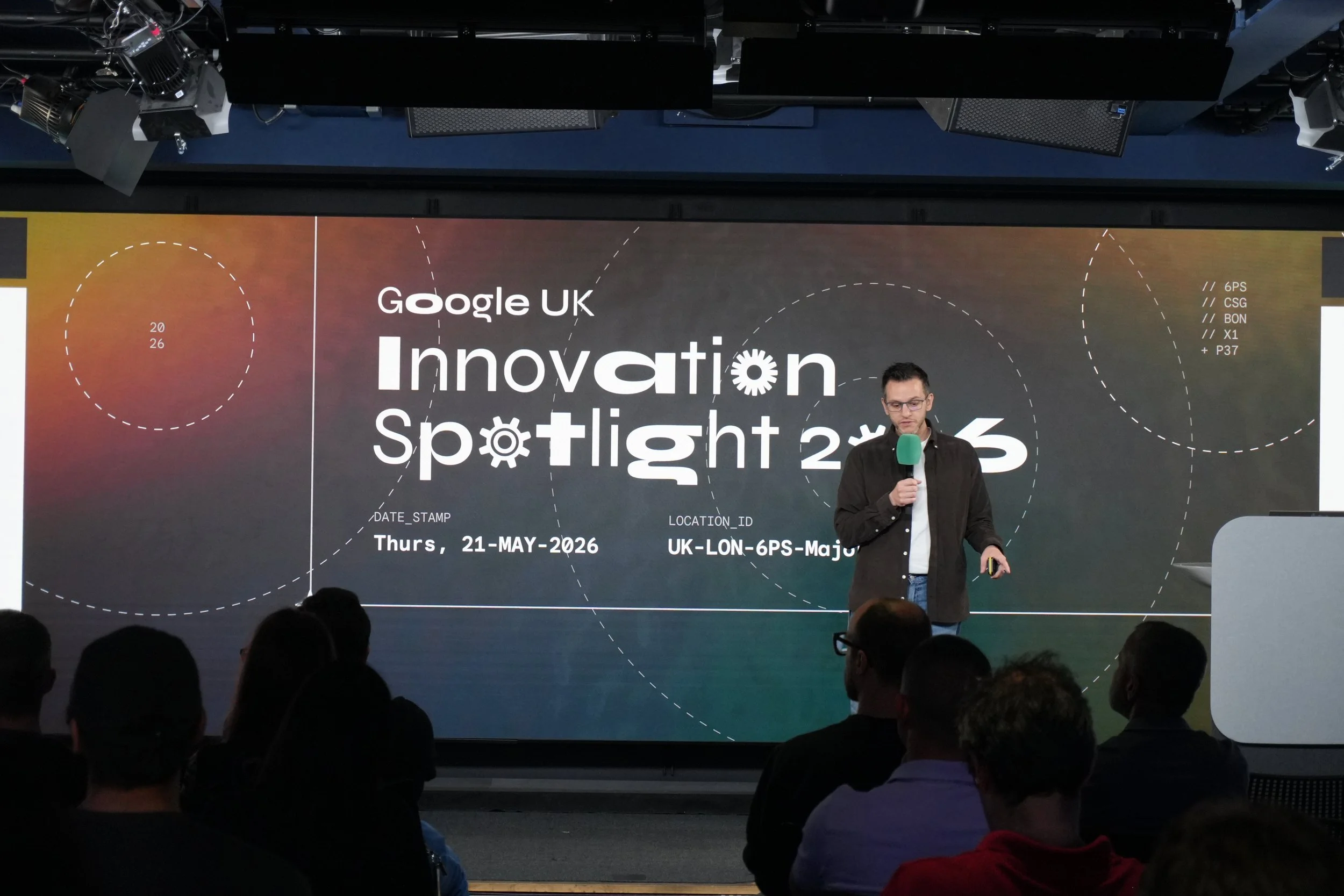
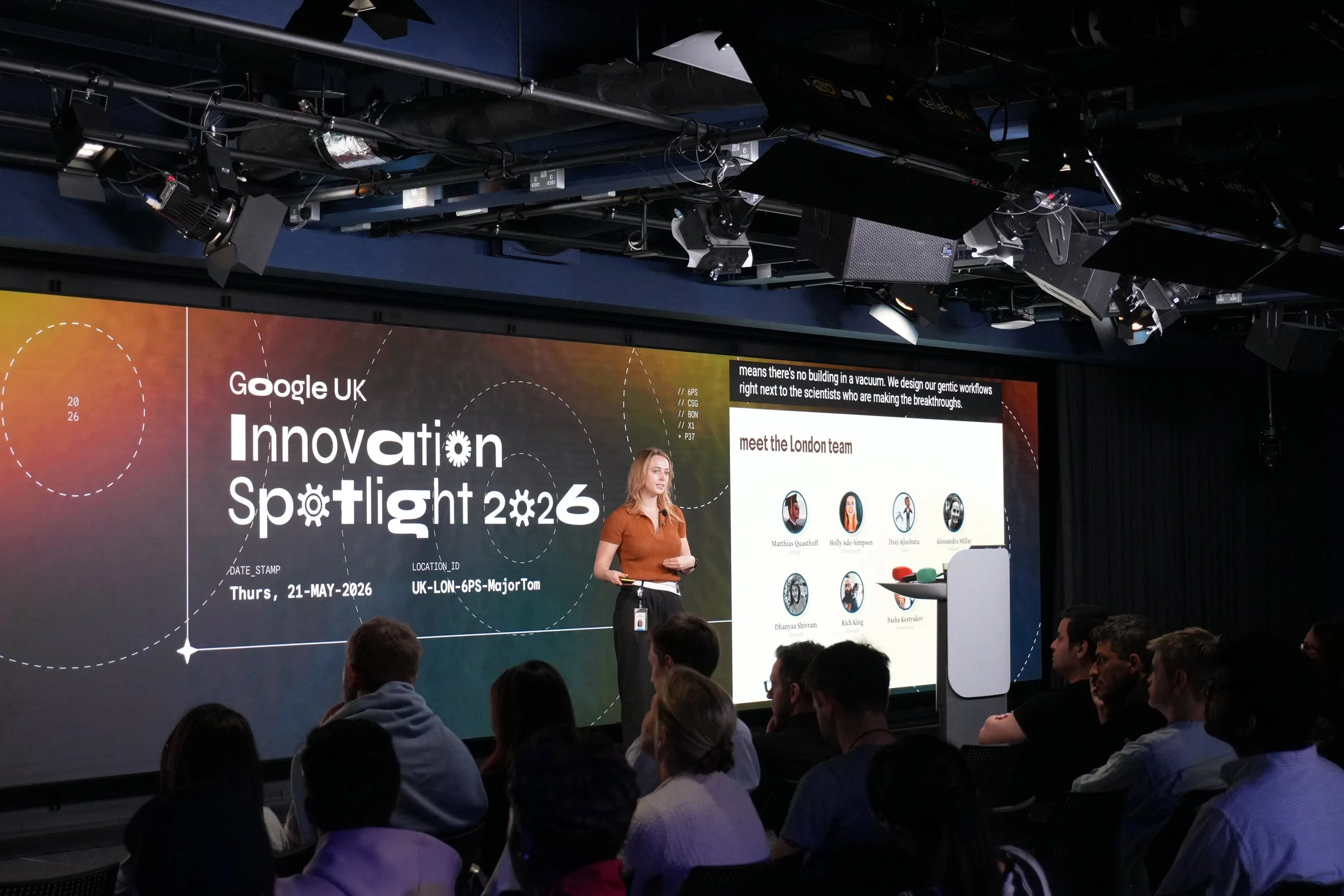
A panoramic screen (3840 × 648 px) wrapping our main London auditorium
The animated title card recorded from the Variable Font Explorer
Die-cut vinyl stickers in dark obsidian and luminous rainbow editions
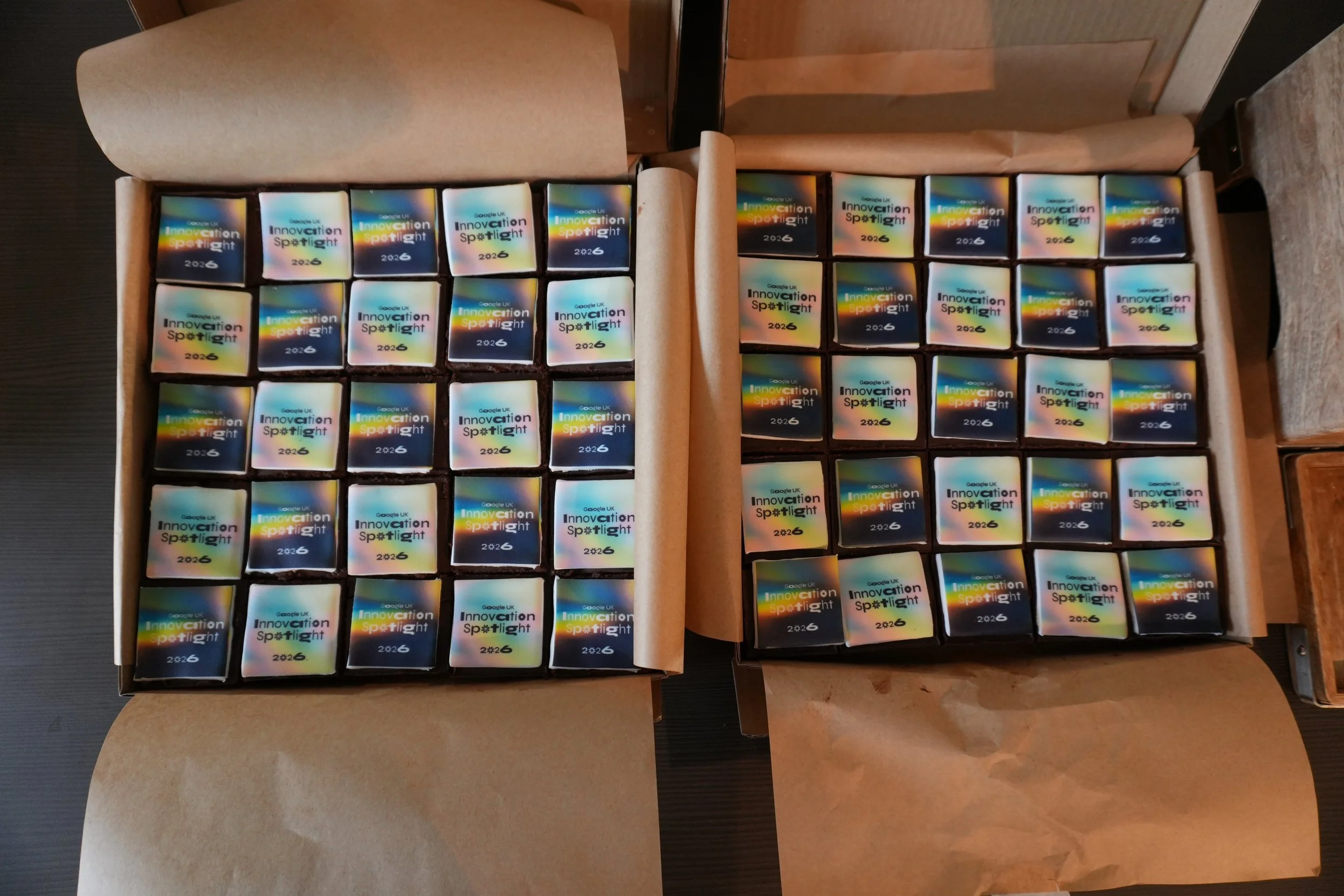
Square edible toppers printed onto brownies for in-person guests
Companion promo graphics for newsletters and our Google I/O Watch Party
Legibility drove two explicit color modes. High-contrast white type on dark textured backgrounds stayed readable in a dim auditorium and on livestream cameras. A soft pastel gradient variant held clean detail when printed onto edible icing toppers.
Working in volunteer pockets between core UX projects meant speed mattered. Pairing AI texture and motion exploration with Figma let me spend my limited hours on final typography, contrast checks, and print prep.
Various sized assets and exploration
Curating for breadth and running live production
With our selection committee, I reviewed nominations from teams across the UK. One early risk was an AI-only agenda that felt repetitive. I pushed to balance topics across product areas, from health and education to developer tooling and trust and safety.
Some strong technical submissions needed deeper room than a five-minute slot allowed. I suggested routing those teams into Google UK's 45-minute Tech Talks series so their stories still reached an audience later in the year.
For the room itself, small tactile details carried real weight on a modest budget. Custom stickers and branded brownies turned a Thursday morning talk into an in-person moment that people looked forward to. Before event day, I merged all 8 talks into one master deck to prevent cable swaps and aspect-ratio glitches. During the live hour, I partnered with our AV crew and kept strict five-minute time from the front row. Because our budget had no room for a hired photographer, I also brought my own camera to shoot candid photos of the room and swag.
Outcome
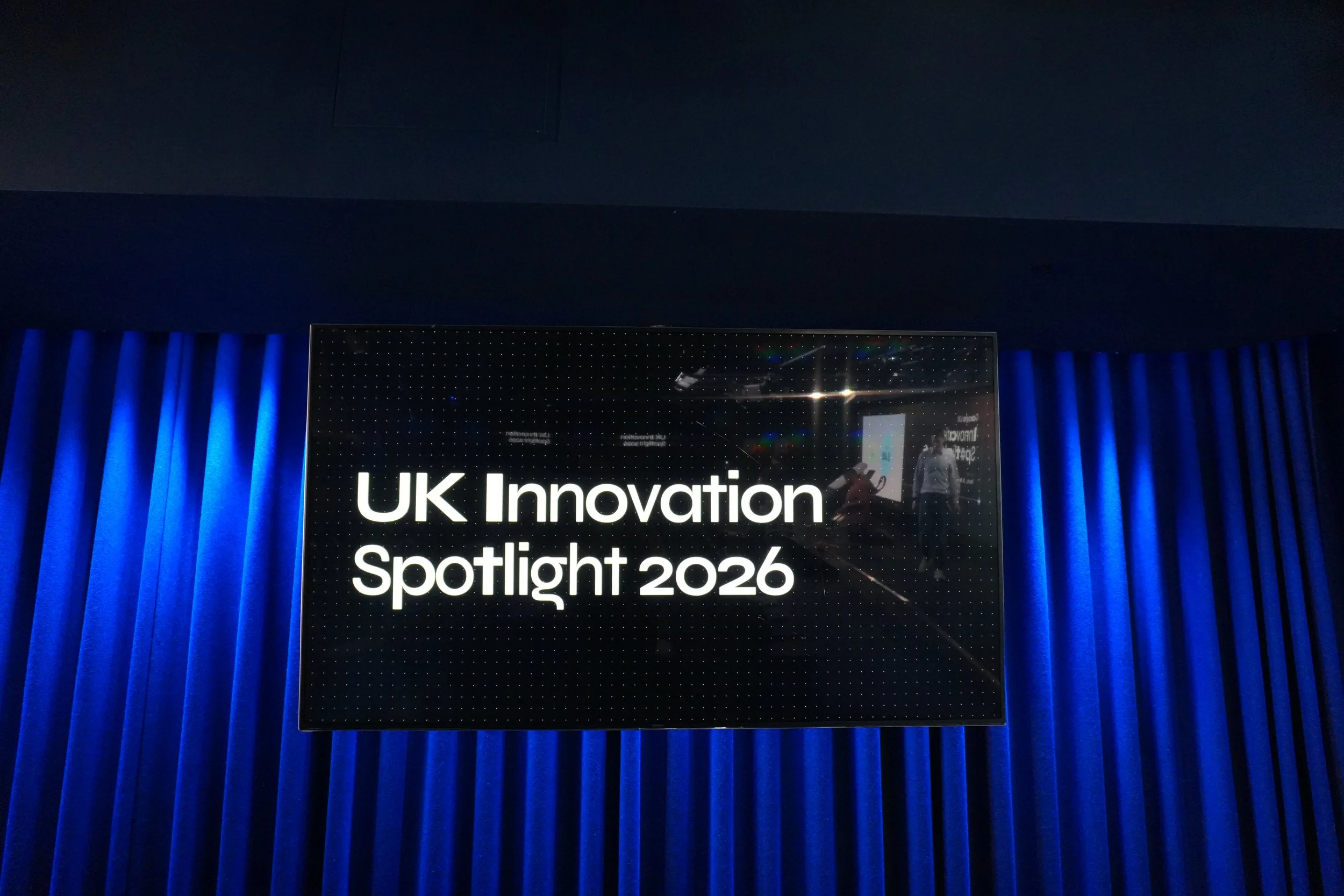
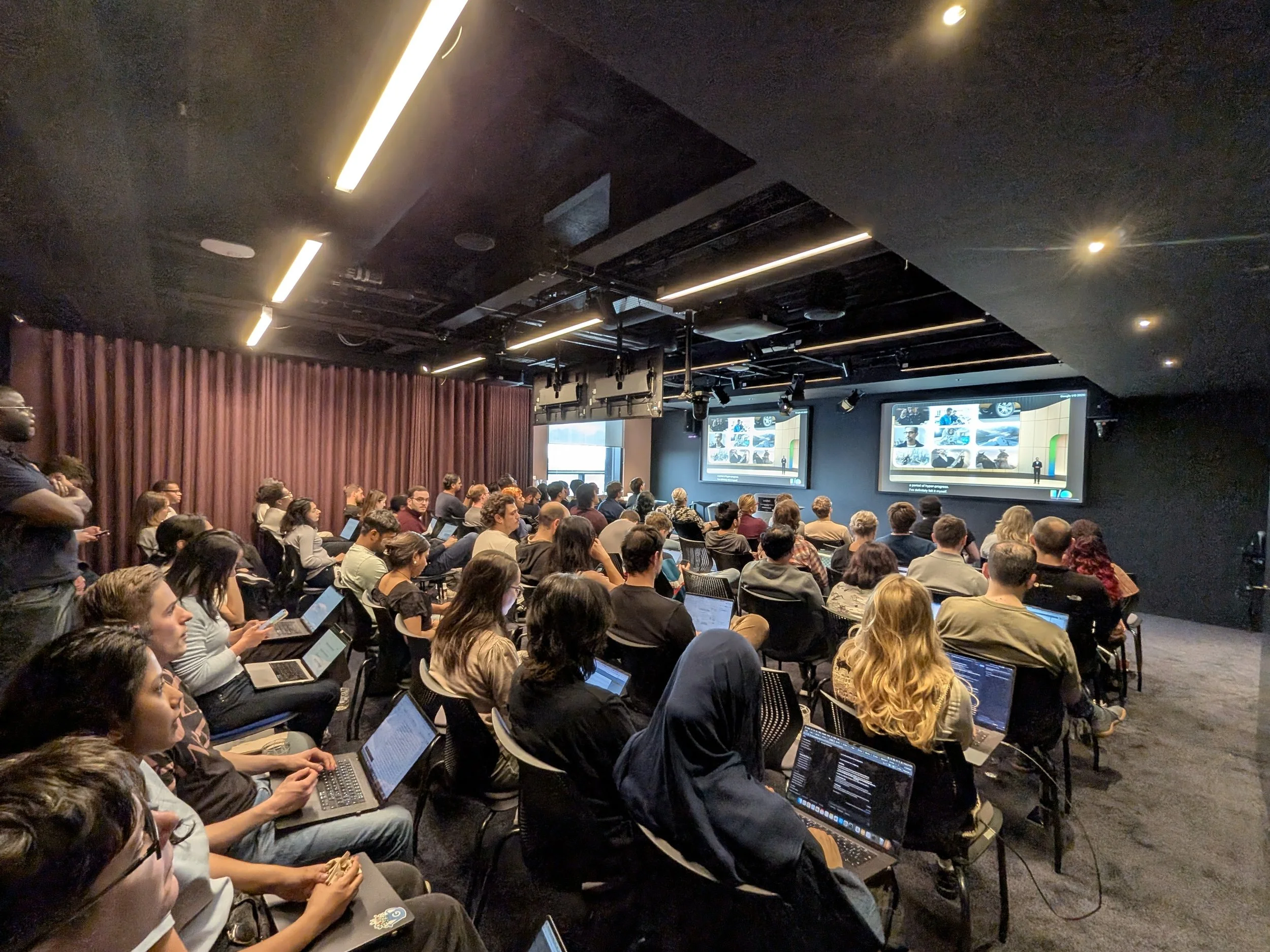
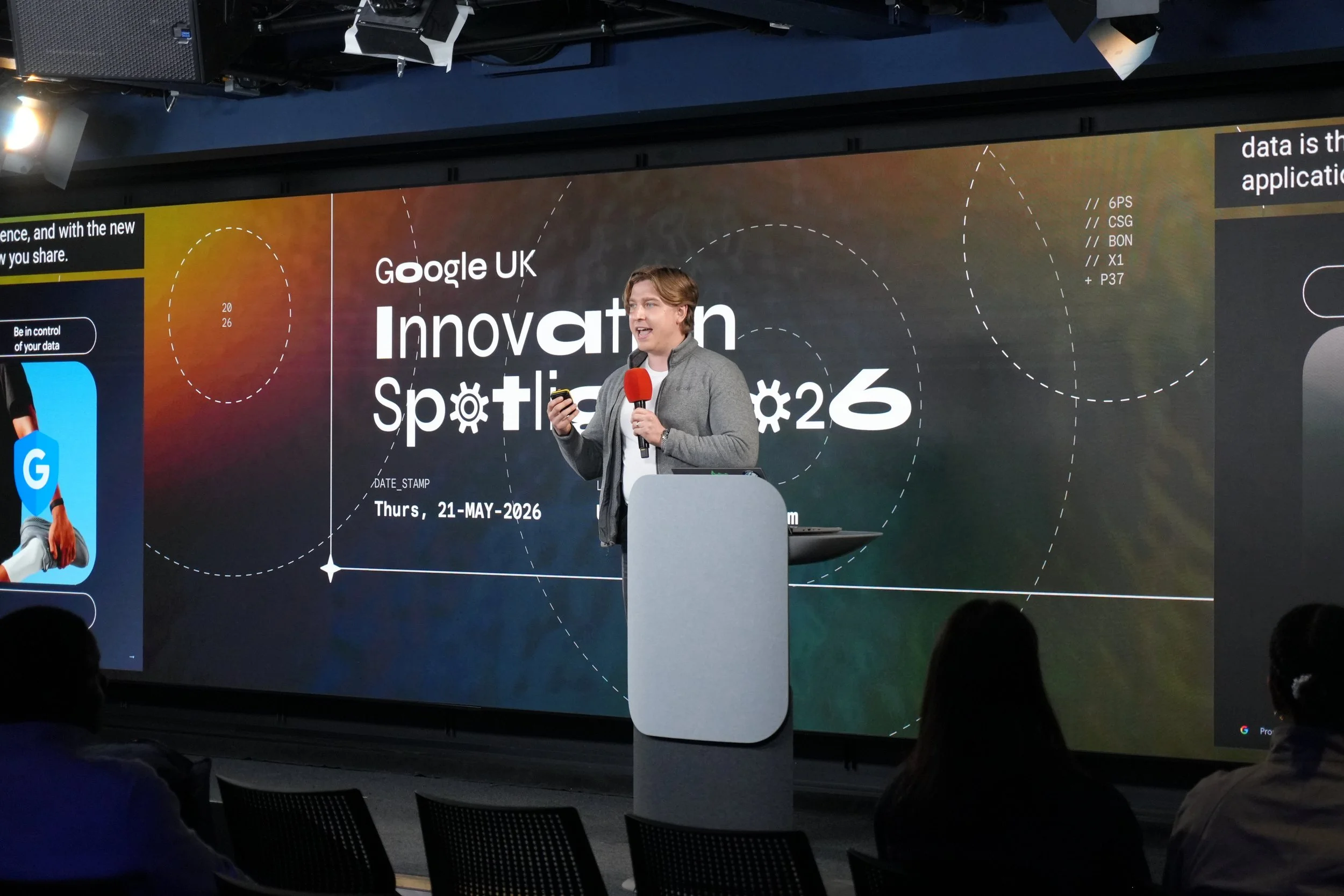
On May 21, 2026, 8 teams from across Google UK delivered rapid five-minute talks inside one energetic hour in London and on livestream. Every touchpoint tied back to the visual language born in my Variable Font Explorer. The same system linked the panoramic stage wall, the motion opener, laptop stickers, and the brownie table.
Impact
Survey responses from the 2026 event (n = 65) and attendance numbers showed that visual craft and tight curation paid off:
Multi-year scale: Across editions since I joined the team in 2024, submissions grew 3.9x (14 to 55) and total reach grew +33% (~550 to ~730 engaged Googlers). In Spring 2026, 250+ colleagues joined live in person and via livestream, with more catching the on-demand replay.
97% rated the 2026 event valuable and worth their time (4.65 / 5 average; 71% gave a top 5/5 score).
97% reported a clearer view of how UK teams contribute to broader company goals (4.71 / 5 average; 77% gave 5/5).
88% learned new insights or unlocked opportunities outside their own team (4.38 / 5 average; 54% gave 5/5).
Feedback from speakers and attendees echoed the exact details that we prioritized:
"Organization was great, things were made clear and easy for us speakers! Fun to see the brownies & swag around the room :)"
"Sometimes I feel quite siloed in my role, this spotlight helped to give some context on what cool things other teams are working on!"
Impact of 2026 UK Innovation Spotlight
Takeaways
If you volunteer to brand or produce a community event on a small budget, four lessons from this spring travel well:
Build a tiny tool to unlock original craft. Vibe-coding the Variable Font Explorer took a fraction of a day, yet it unlocked both our custom typography and our animated show opener.
Test your extremes early. Check your logo at full auditorium width and on two-inch brownie toppers on day one. That check catches legibility bugs before print deadlines arrive.
Invest in small tactile moments. Stickers and custom brownies cost far less than venue decor. Attendees remember them and call them out in survey feedback.
Design for the replay viewer too. Our 2026 survey surfaced one clear upgrade for next year: colleagues watching later want chapter timestamps and short recaps to jump straight to relevant talks.
