TL;DR I designed the brand kit, led speaker coaching, and ran live production for Google UK's annual hackathon across five offices, where 43 finalists pitched 15 demos and 50% of coached teams won.

Background
In a 7,000+ person campus like Google UK, it is easy to stay heads-down inside your own product area. Engineers, designers, product managers, and apprentices often sit two floors apart and rarely build something together from scratch.
Each autumn, our volunteer UK Innovation Team runs Google UK Hack Week. Every November, colleagues across the UK form cross-functional teams to build working prototypes. At the end of the week, finalists pitch those ideas live to senior UK leaders.
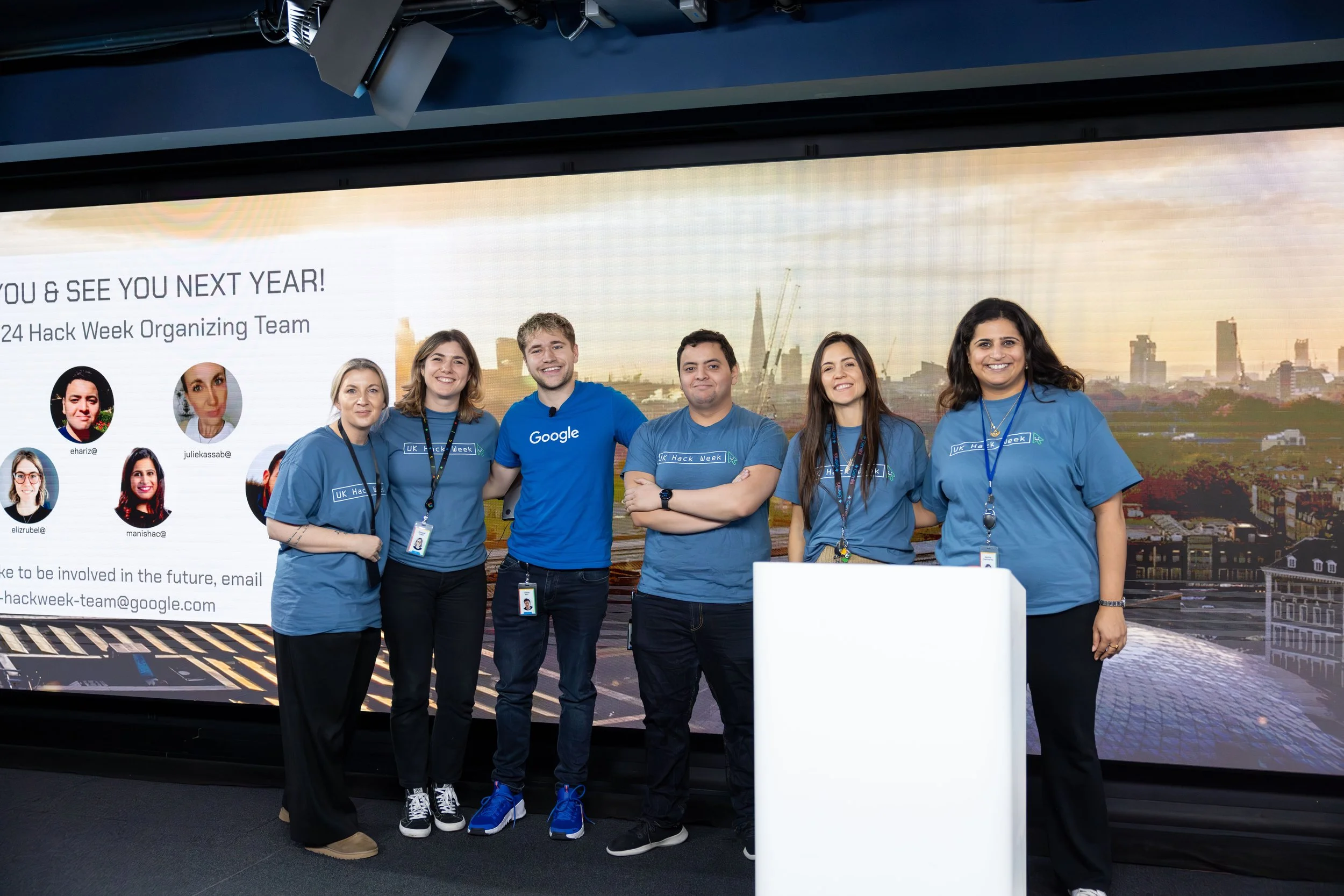
I joined the UK Innovation Team in September 2024 and helped brand and run the 2024 hackathon. That edition proved how much pitch prep mattered. Five of the six winning teams attended a Pitch Clinic before stepping onstage, and 100% of surveyed attendees said that they would recommend the sessions.
Returning in November 2025 for our 9th annual Hack Week, I stepped in alongside my UX Designer day job to push both the craft and the live show further. I owned three areas: our 2025 visual identity and swag system, Pitch Clinics for speakers, and live production for the finale.
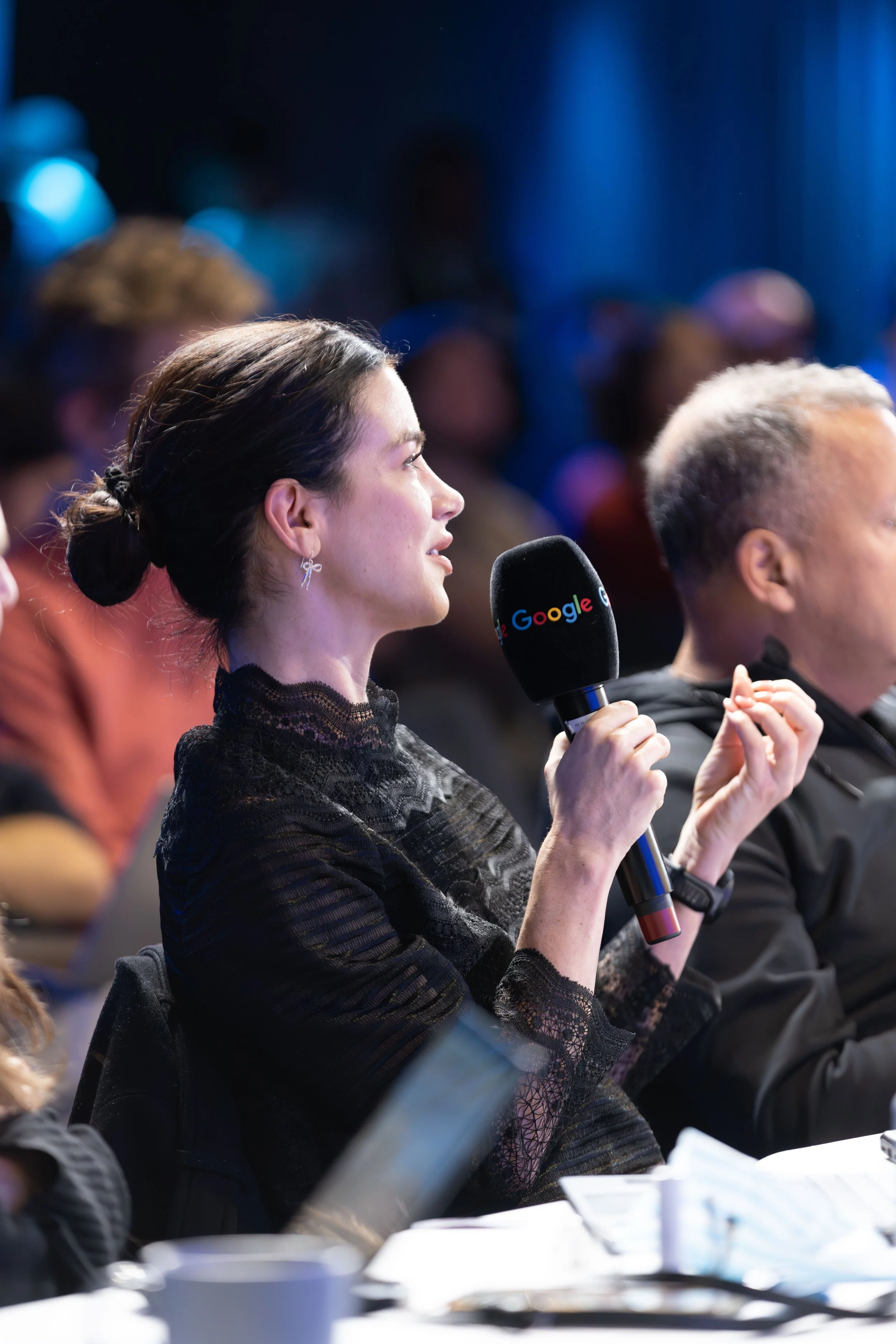
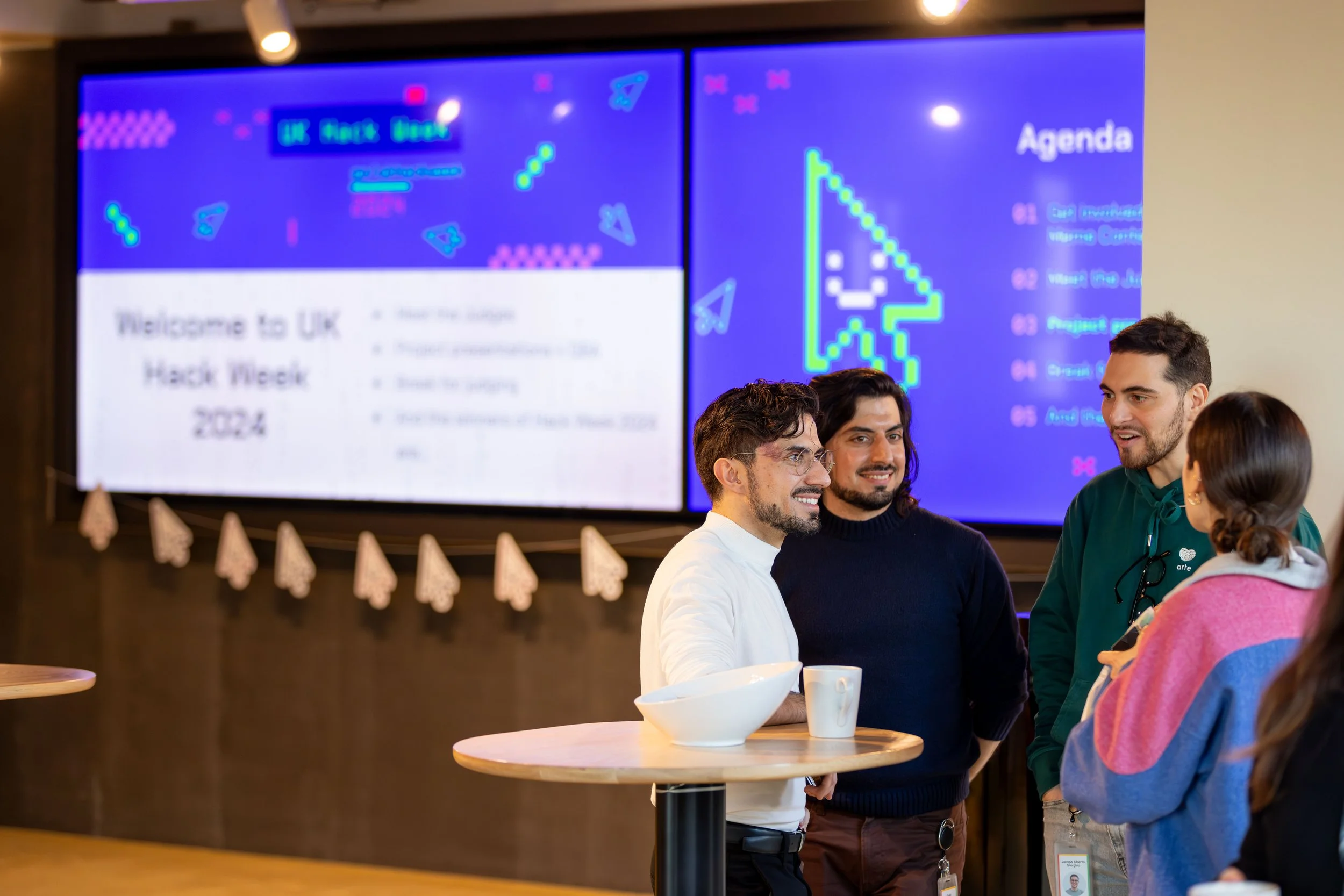
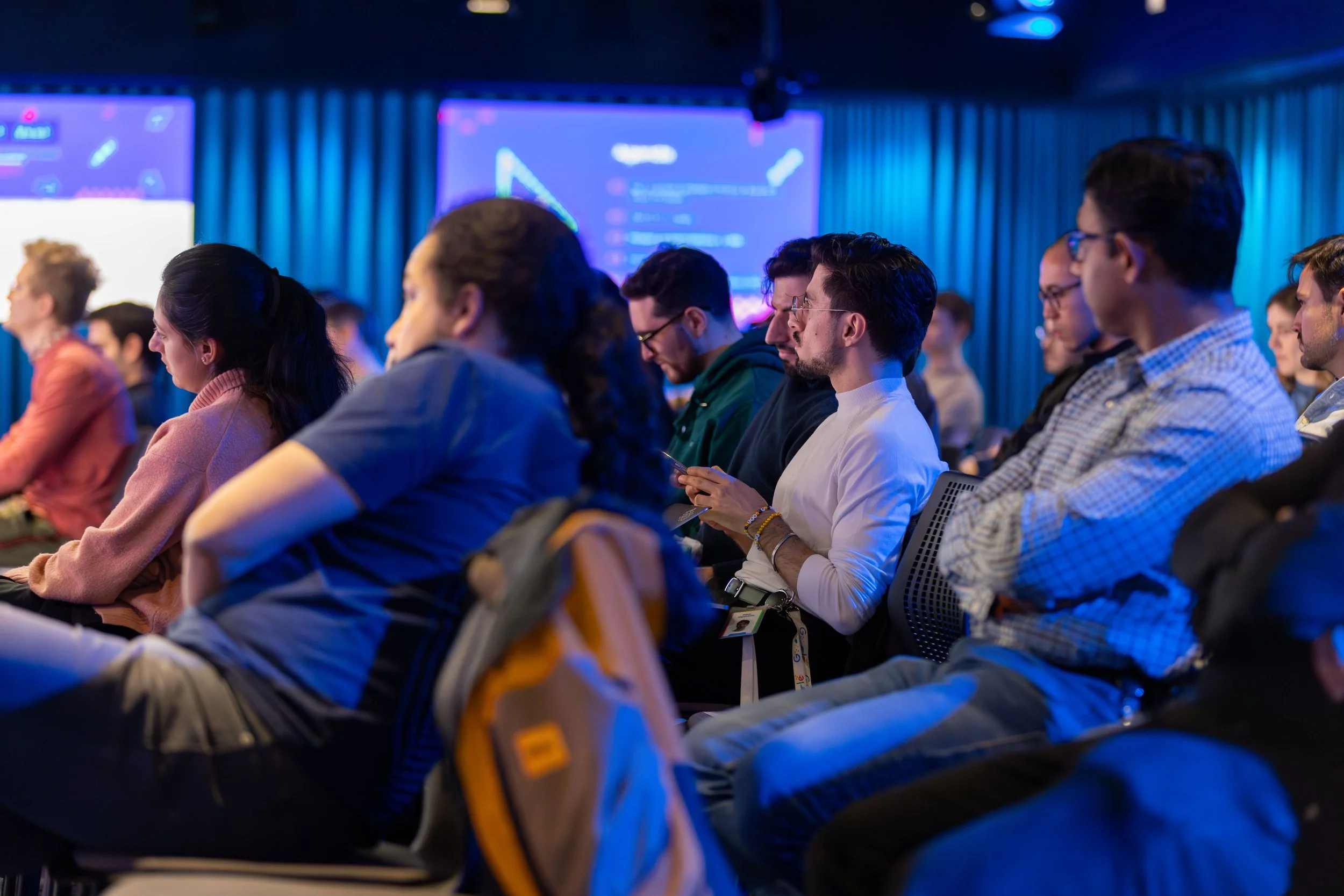
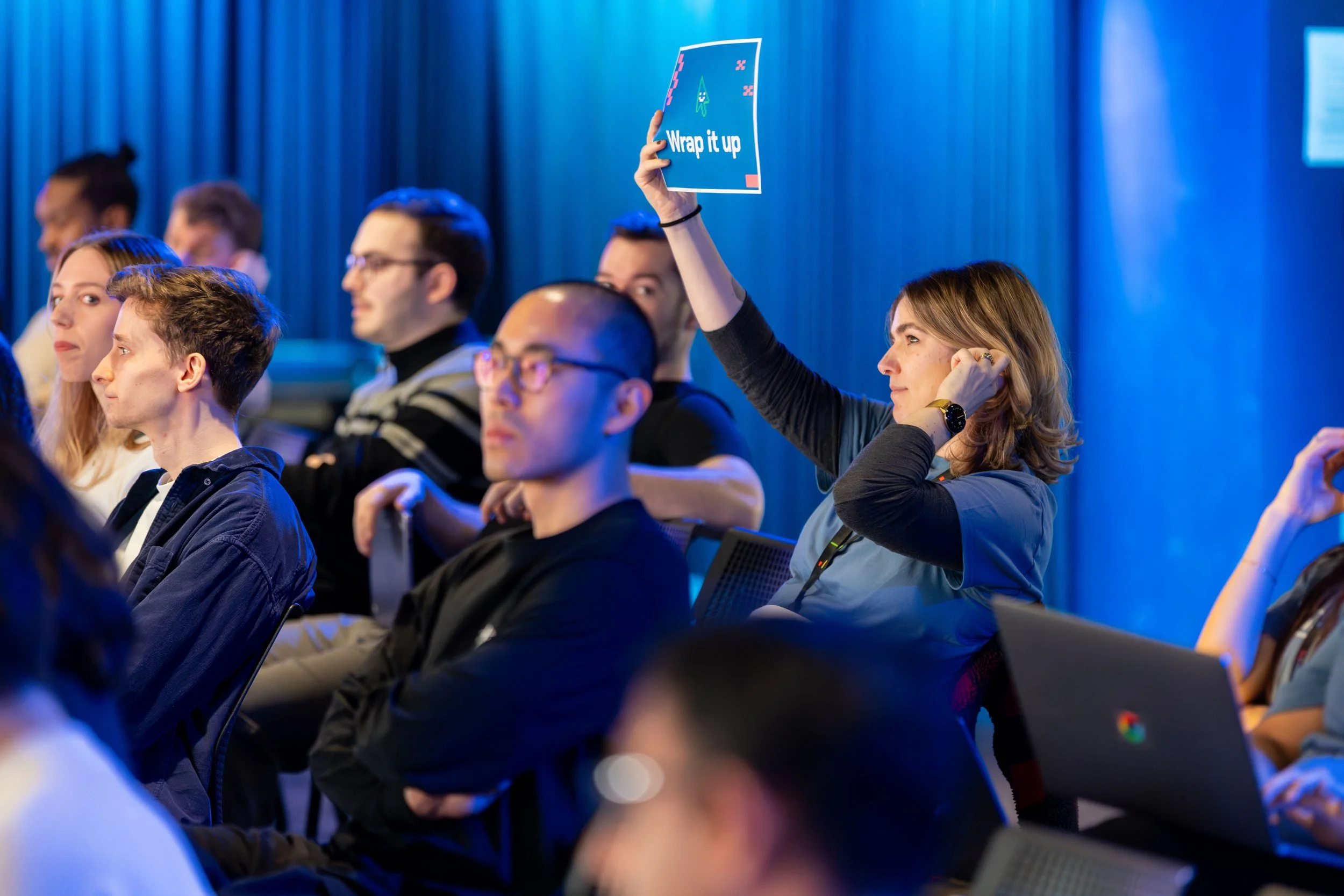
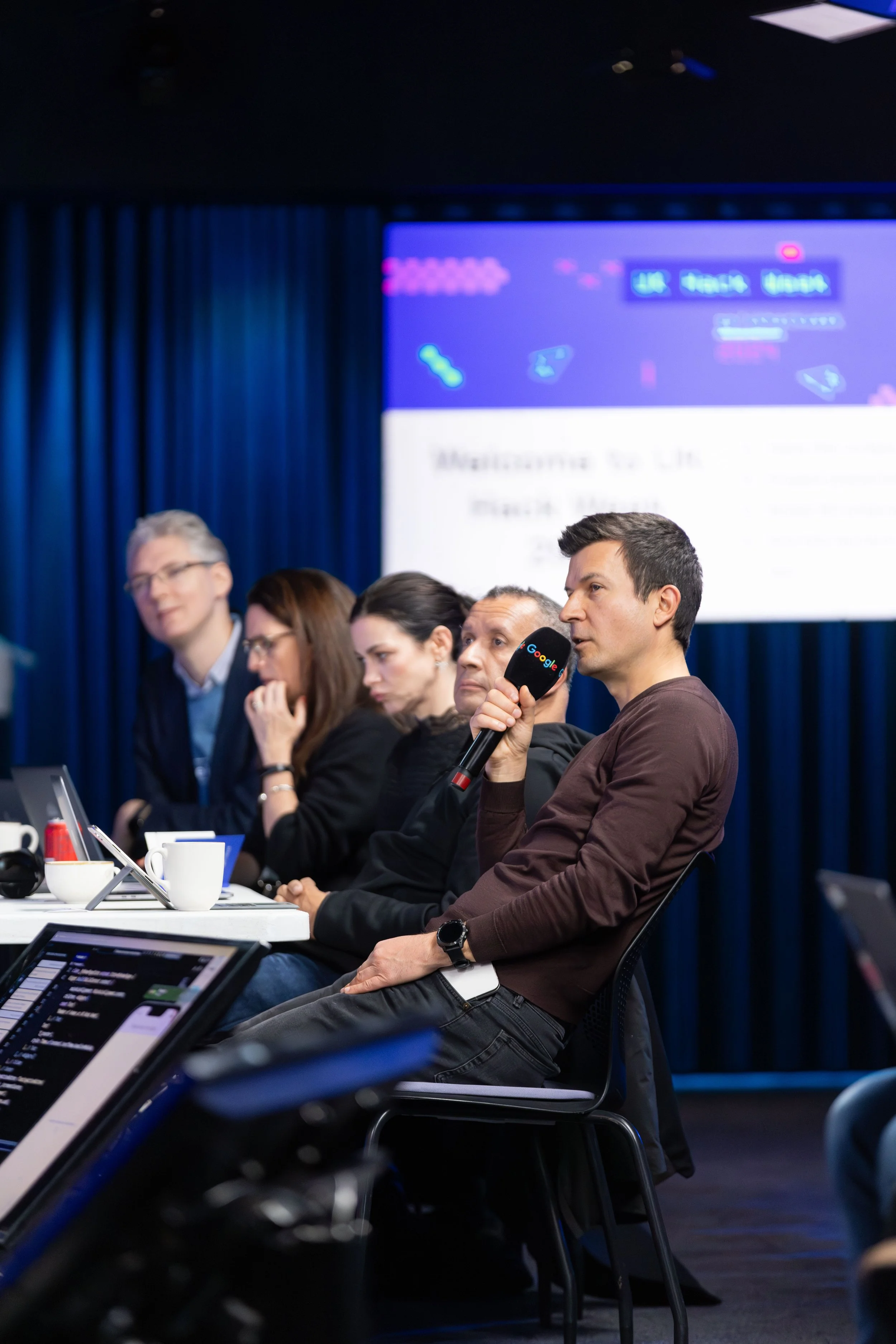
Photos from the 2024 Hack Week
Goals
Our 10-person volunteer team shared one modest budget while balancing full-time product roles. Building on lessons from 2024, I set four goals for November 2025:
Build a reusable modular brand kit: Evolve our smiling pixel cursor mascot, Pixie, into a flexible logo system that stays sharp on tiny badges and a panoramic stage wall.
Unify every digital and physical touchpoint: Carry one energetic visual language across web banners, slide decks, lanyards, stickers, cookies, cue cards, and digital profile badges.
Sharpen pitches before finale day: Recruit volunteer presentation coaches and shorten the team slide template so speakers could tell a clear story inside five minutes.
Run a smooth three-hour live finale: Merge all 15 team decks into one master file, keep strict time from the front row, and update winner slides live backstage.
Process
Evolving Pixie into a modular retro-pixel brand kit
Hack Week already had a playful soul in Pixie, our smiling 8-bit pixel cursor mascot. For 2025, I wanted that mascot to behave like a real design system that any volunteer or print vendor could drop into a layout without guesswork.
I built a 16-variant logo matrix paired with a visual reference sheet. Every lockup shipped in both SVG and PNG across four formats and four color modes:
Four responsive lockups: The standalone Pixie mascot, a compact square mark (HW UK25), a stacked mark (UK Hack / Week 2025), and a wide single-line lockup.
Four high-contrast palettes: Neon green and white on dark charcoal, white on dark charcoal, electric pink and cobalt blue on light backgrounds, and cobalt blue on light backgrounds.
Around those lockups, I built out an electric cobalt-blue retro-tech world. Layered window frames, pink and coral pixel bursts, neon green step blocks, and smiling pixel stars tied the whole campaign together. Strict dark and light variants let teammates grab the exact file that they needed for slides, newsletters, or print vendors in seconds.
Pixie Mascot lockups
Scaling one identity from 3D-printed badges to a 3840 x 648 px stage wall
Physical and digital extremes were the hardest design constraint. One pixel-art identity had to hold crisp detail across ten very different canvases:
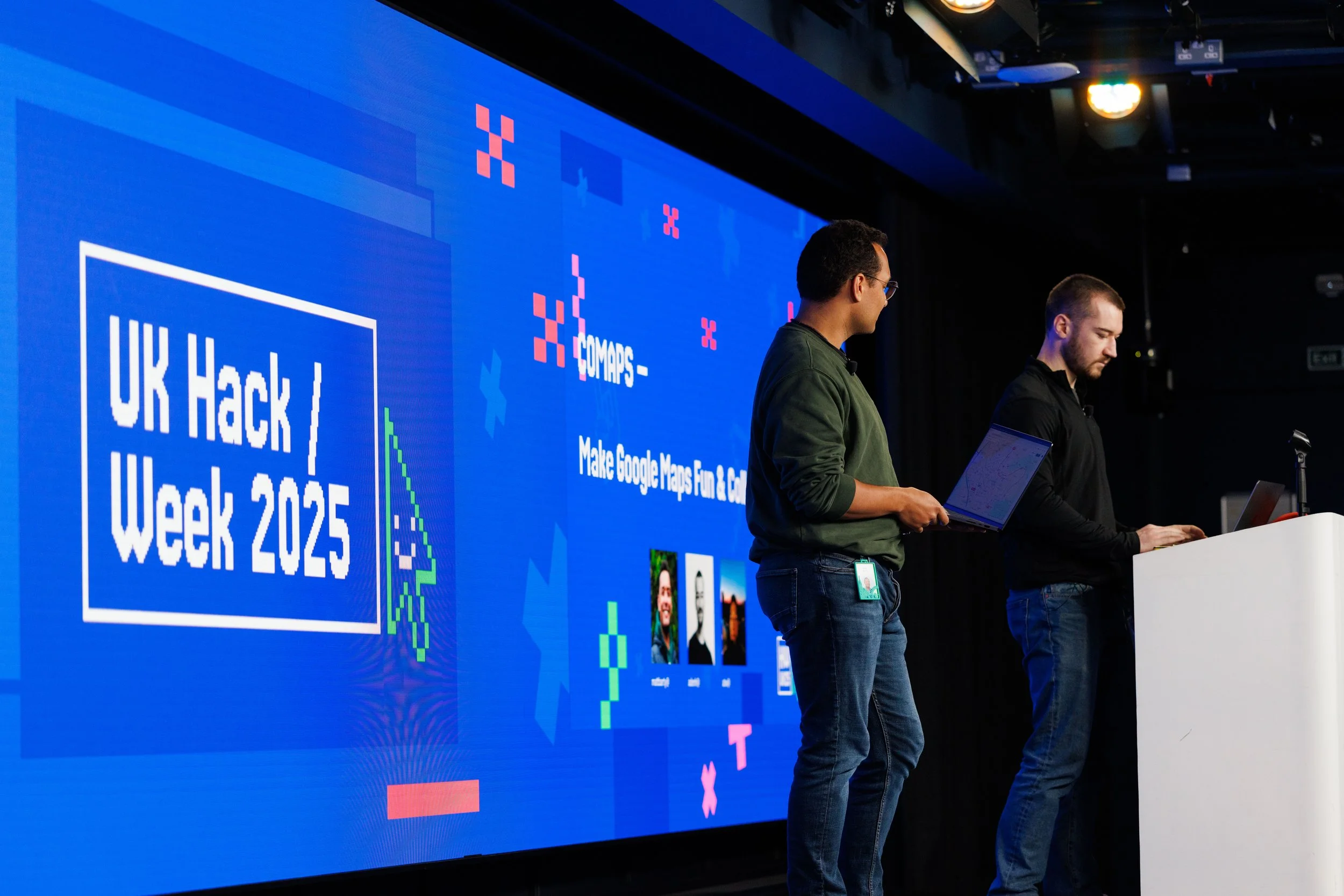
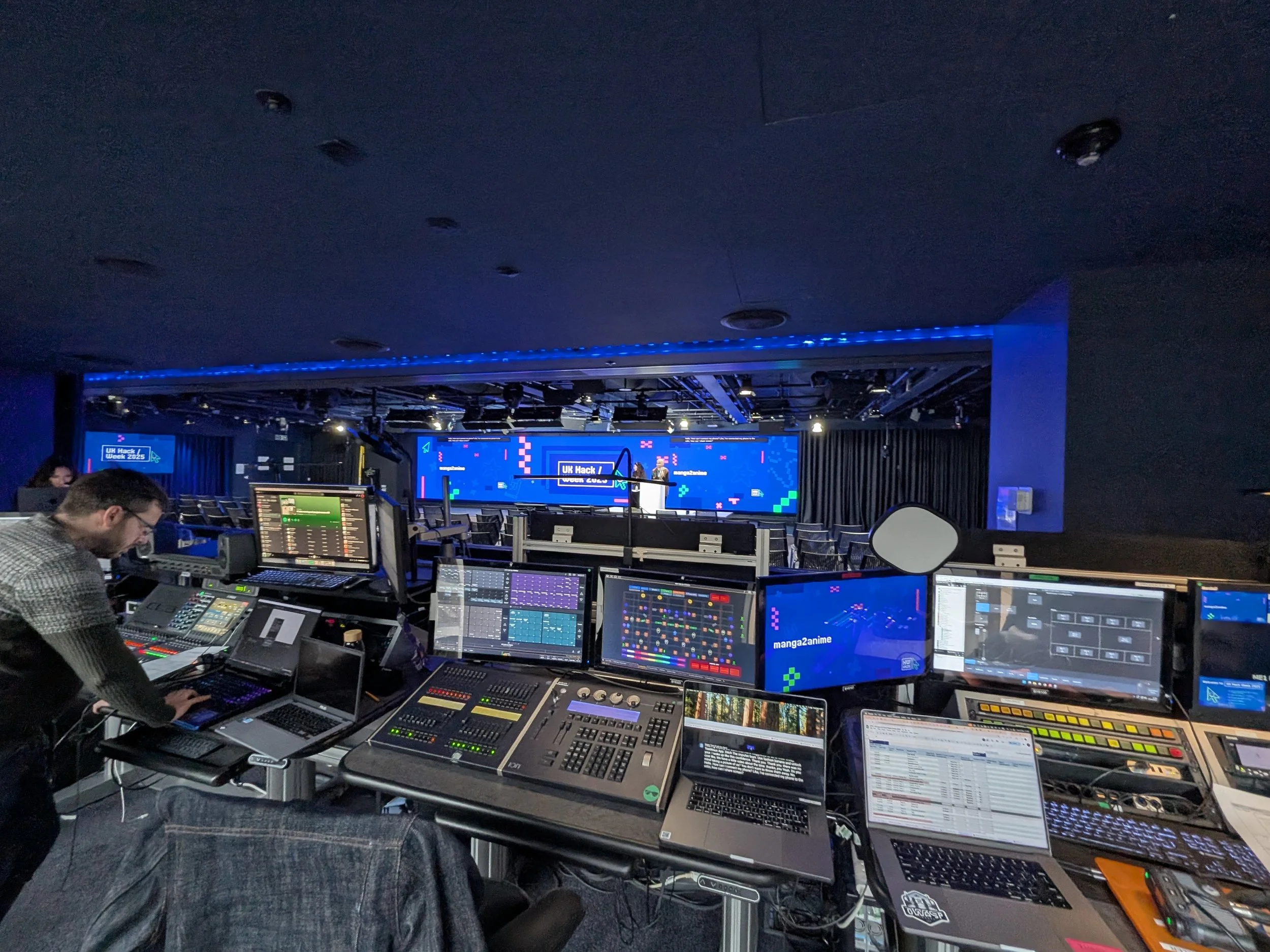
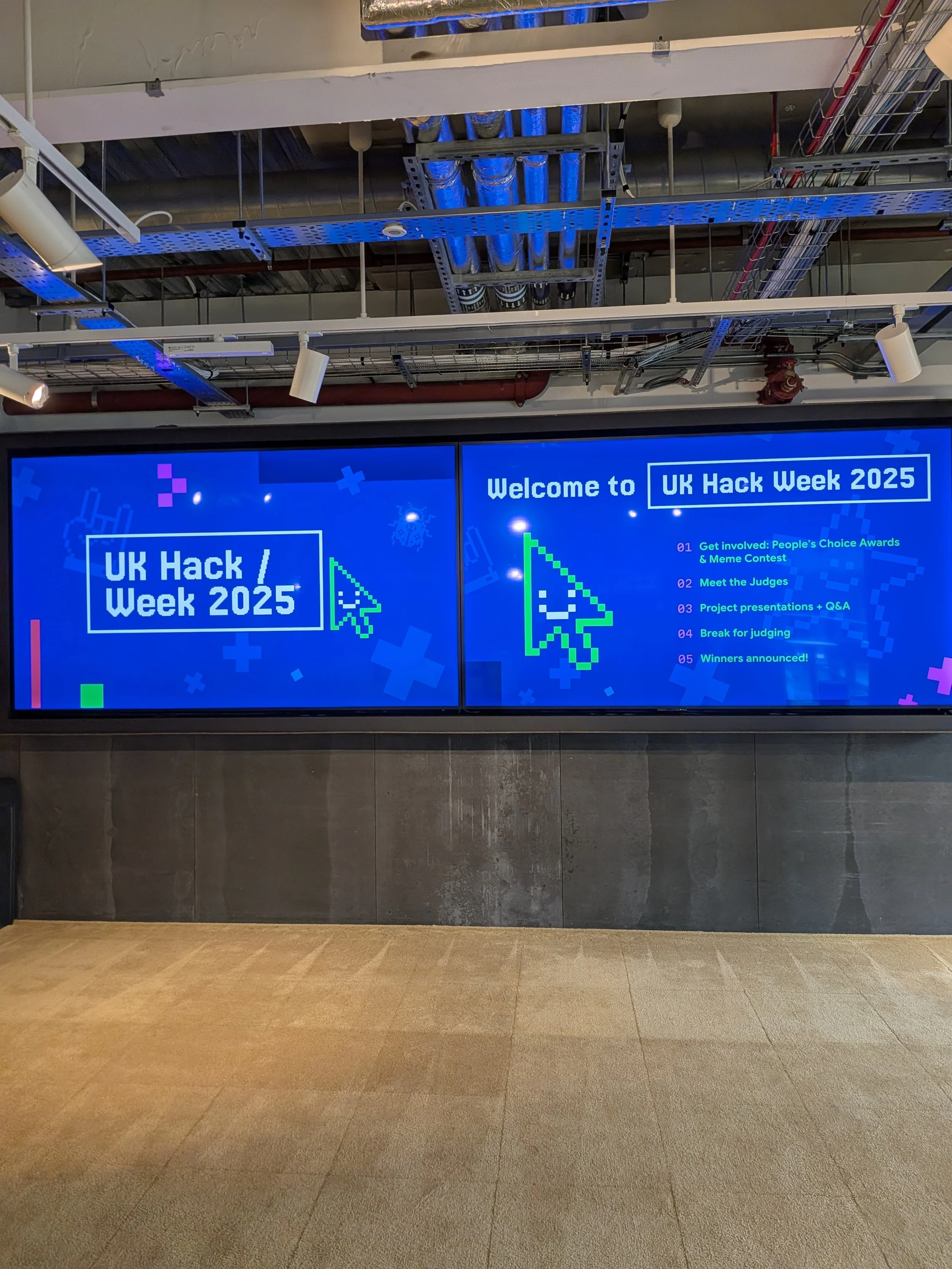
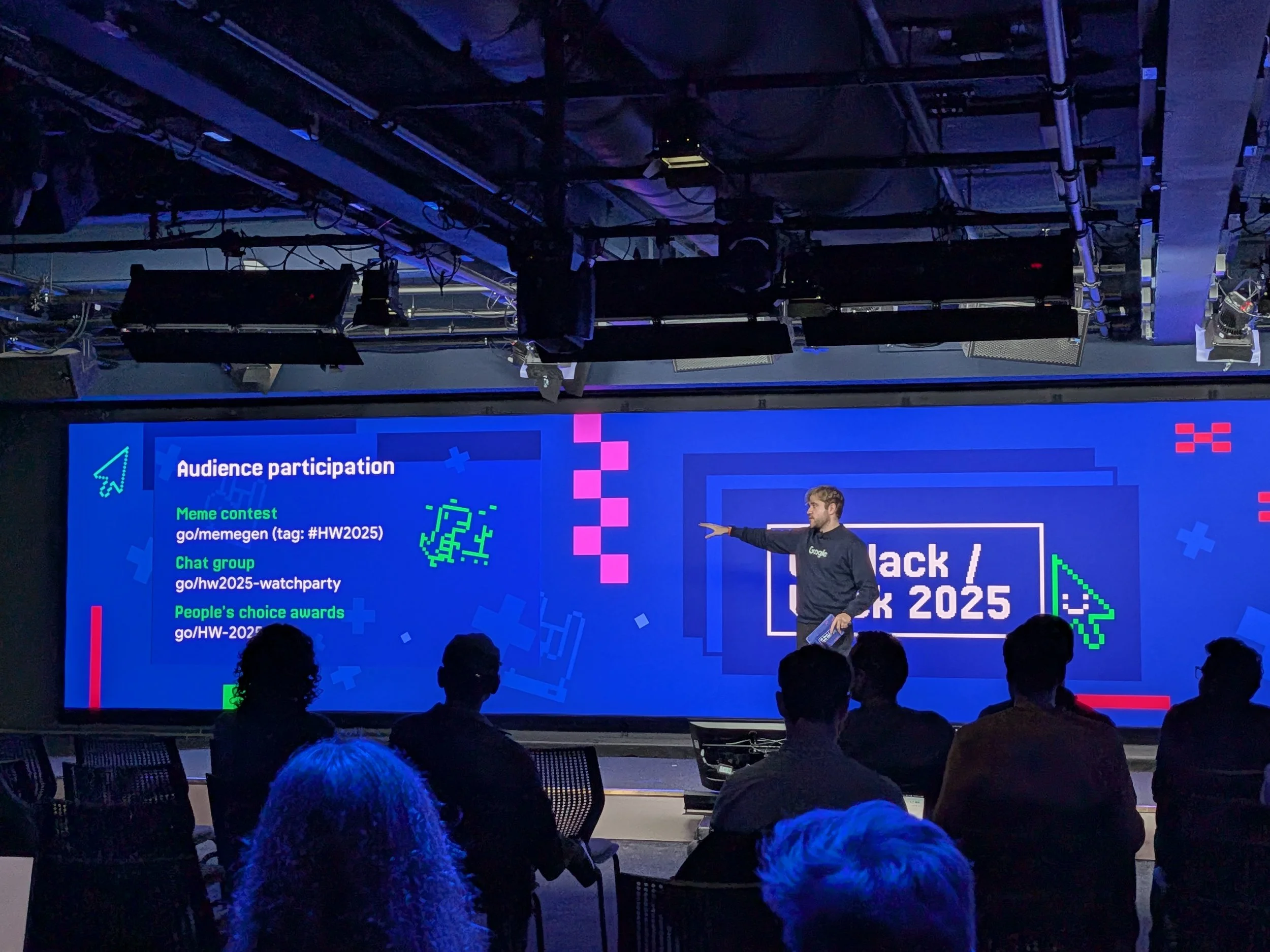
A panoramic LED wall (3840 x 648 px): I built static and looping animated backgrounds for our main London auditorium. Placing our boxed UK Hack / Week 2025 mark and Pixie on the left wing let every team's 16:9 slide deck sit naturally inside the same electric-blue backdrop.
3D-printed badges and Pixie lanyards: I partnered with a colleague to turn 2D Pixie and our compact mark into custom 3D-printed badges for participants. We paired those badges with 90 emerald-green lanyards patterned with Pixie.
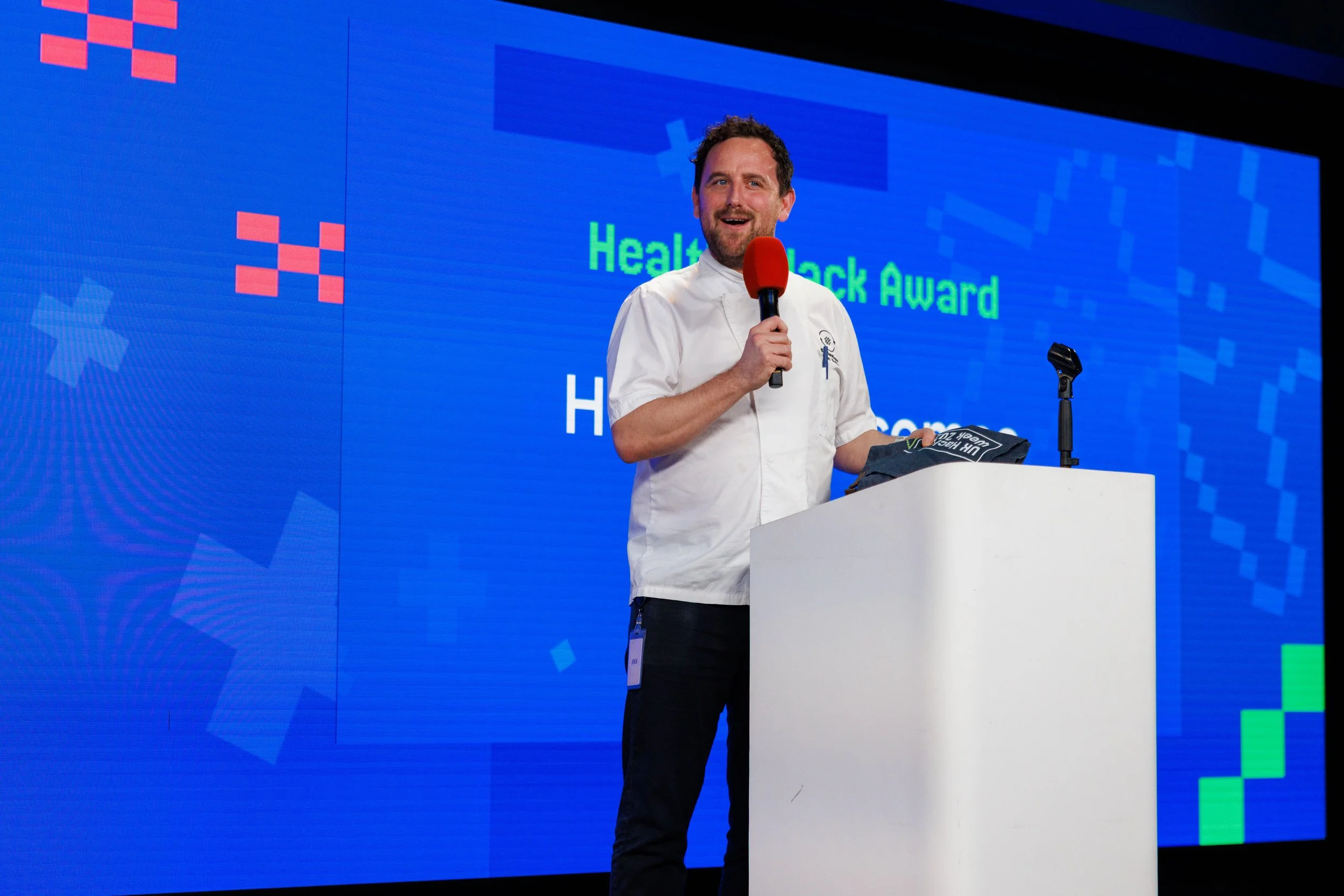
Everyday swag and edible treats: Our team printed the same identity onto 200 die-cut stickers, 200 logo cookies, 75 toiletry bags, and 100 microfiber cloths. We also produced team T-shirts, branded cue cards for our host, and custom aprons for a new health-focused hack prize.
Digital keepsakes: Every participant, judge, and organizer received a custom internal profile badge after the finale.
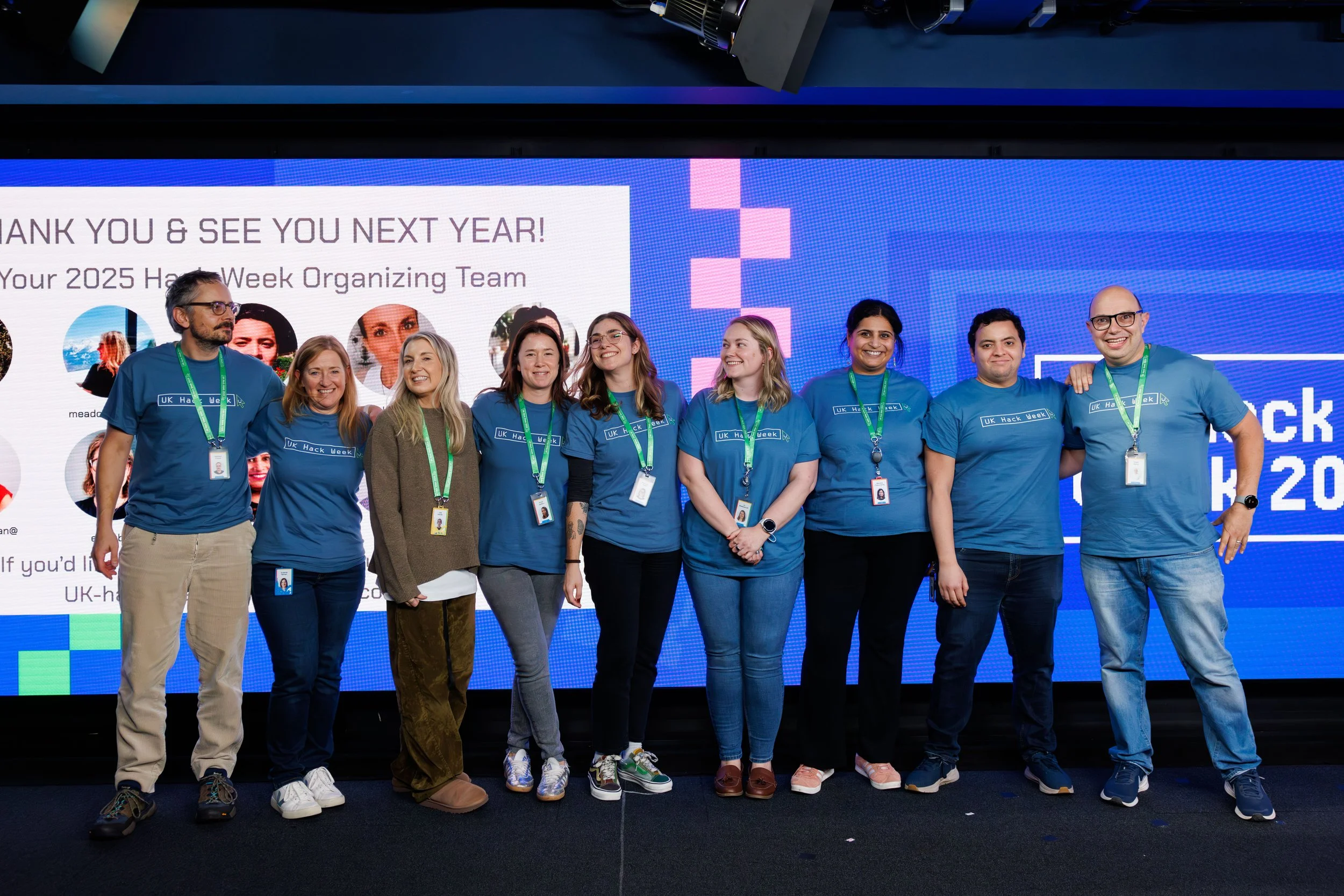
Small tactile details carried real weight on a modest budget. Watching our host hold branded cue cards onstage while the organizing team wore matching Pixie lanyards and T-shirts turned a volunteer event into a proper showcase. Pixie even crossed over into custom team chat emoji during our live watch party.
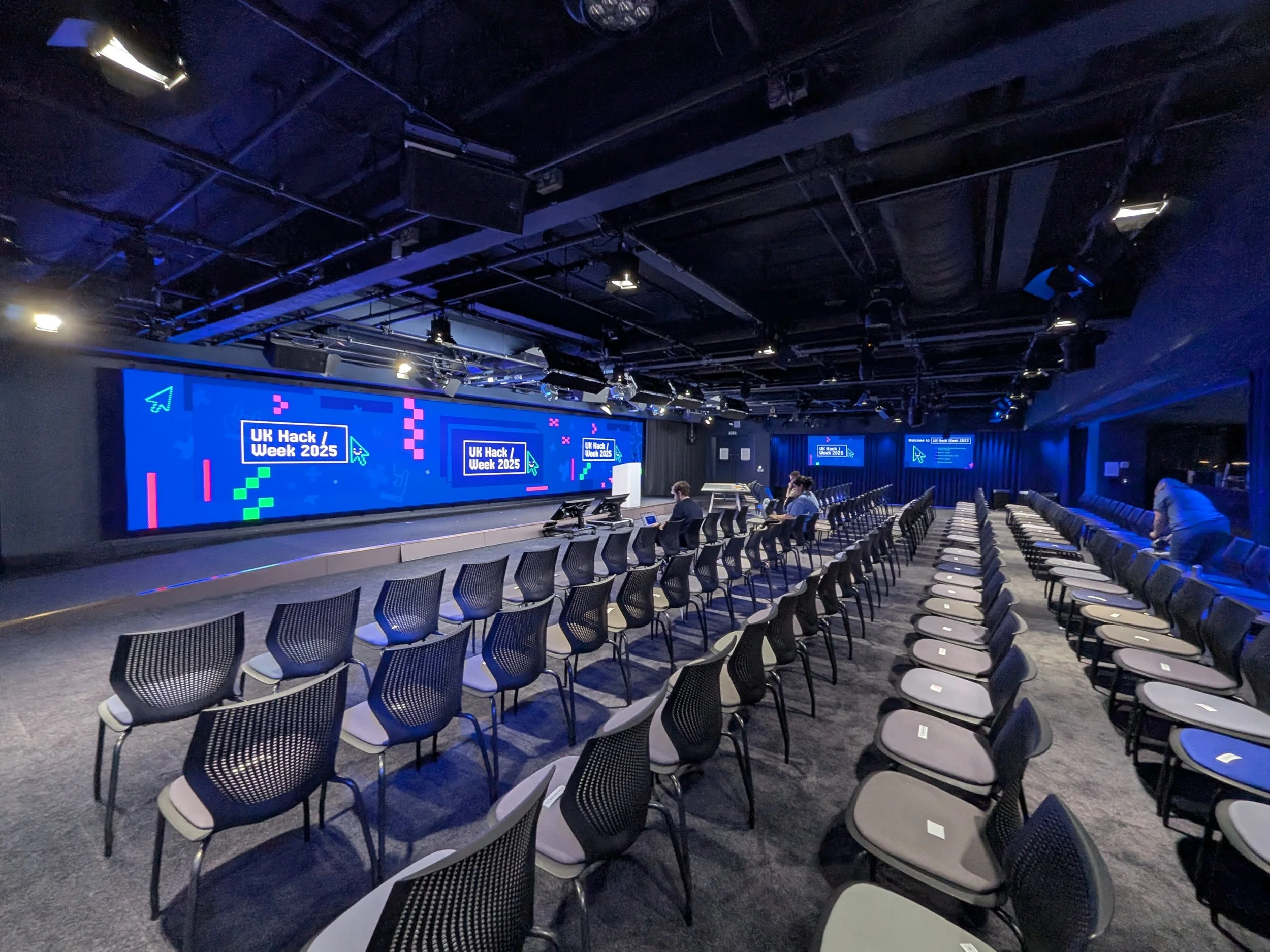
Event space
Coaching speakers and running a three-hour live finale
Great prototypes still lose the room if a team runs out of time on slide two. In 2024, participants told us that three-minute pitches felt too short. They also noted that our older slide template had so many slides that teams mistook it for a ten-minute deck.
For 2025, I fixed that friction in two ways:
A shorter, story-first slide template: I trimmed the optional template down to core narrative beats: team, problem statement, three big ideas, a user quote, and demo. Those beats lined up cleanly with our upgraded five-minute pitch and 90-second Q&A format.
Focused 30-minute Pitch Clinics: I recruited and coordinated four volunteer coaches across engineering leadership, developer relations, cloud architecture, and Google UK's internal public-speaking club. Over two days right before the finale, those coaches ran six 30-minute working sessions for 20 participants across six finalist teams.
Demand also exceeded our live stage capacity, so our committee introduced a two-step sign-up and project submission window. Before event day, I merged all 15 finalist decks into one 188-slide master presentation. That single deck prevented cable swaps, laptop handoffs, and broken aspect ratios.
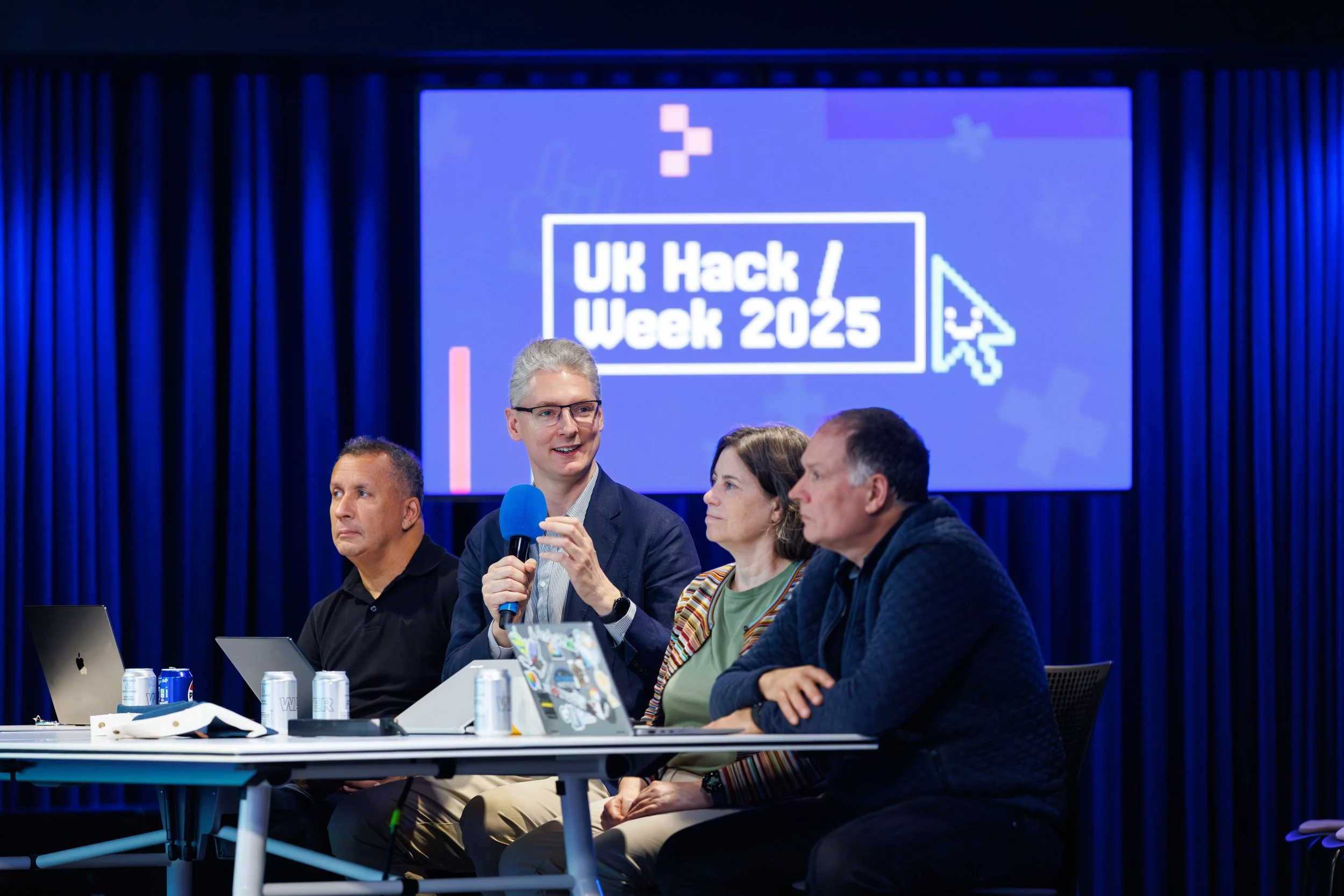
During the live three-hour show, I kept strict five-minute time from the front row across three 35-minute blocks of five teams. While our four judges deliberated during the final 20-minute break, I updated the live master deck backstage in real time. Each winner slide went straight onto the auditorium wall for eight award reveals: 1st, 2nd, and 3rd place, People's Choice, our new health-focused prize, three special mentions, and the audience meme contest.
Team Slides Template
Outcome
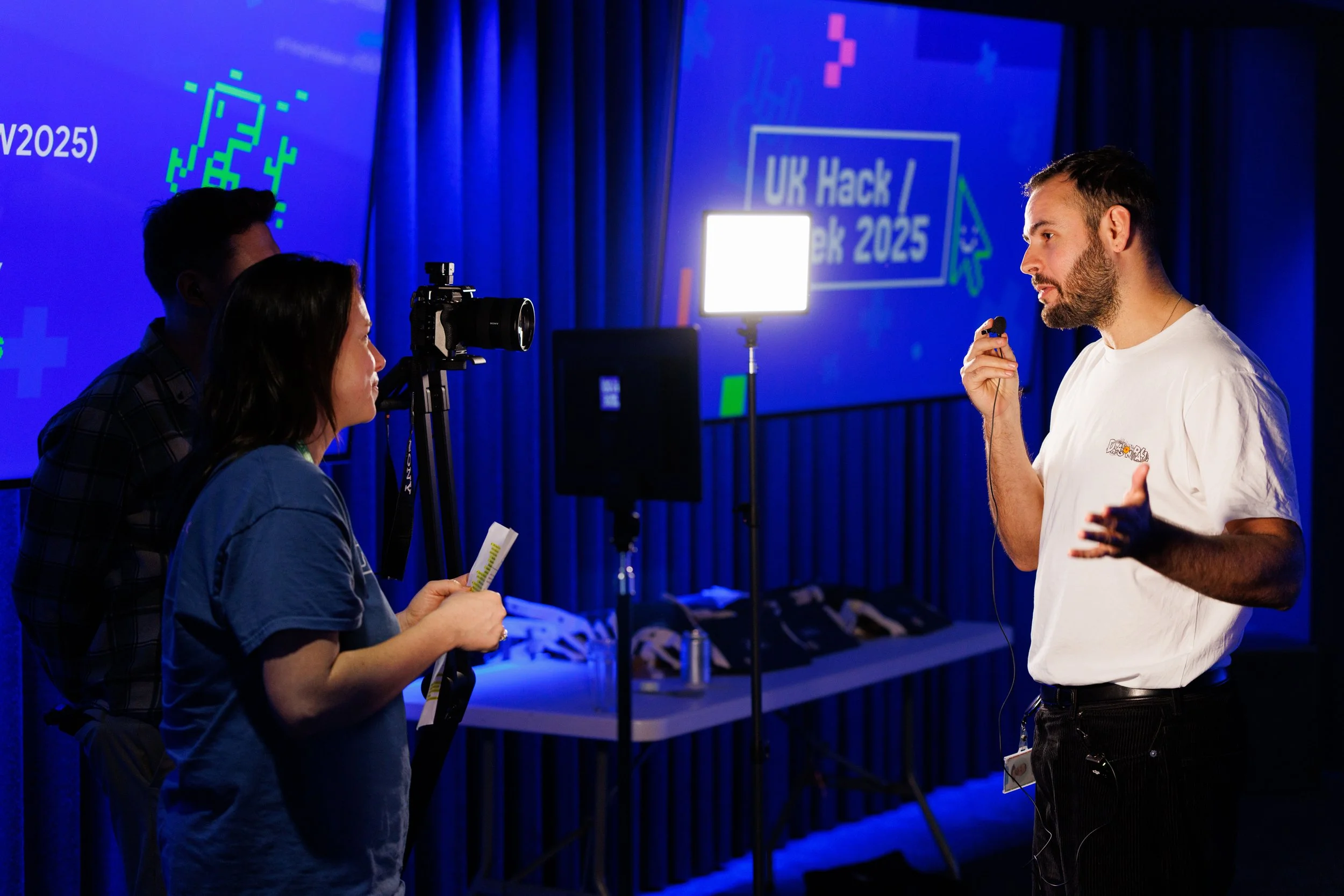
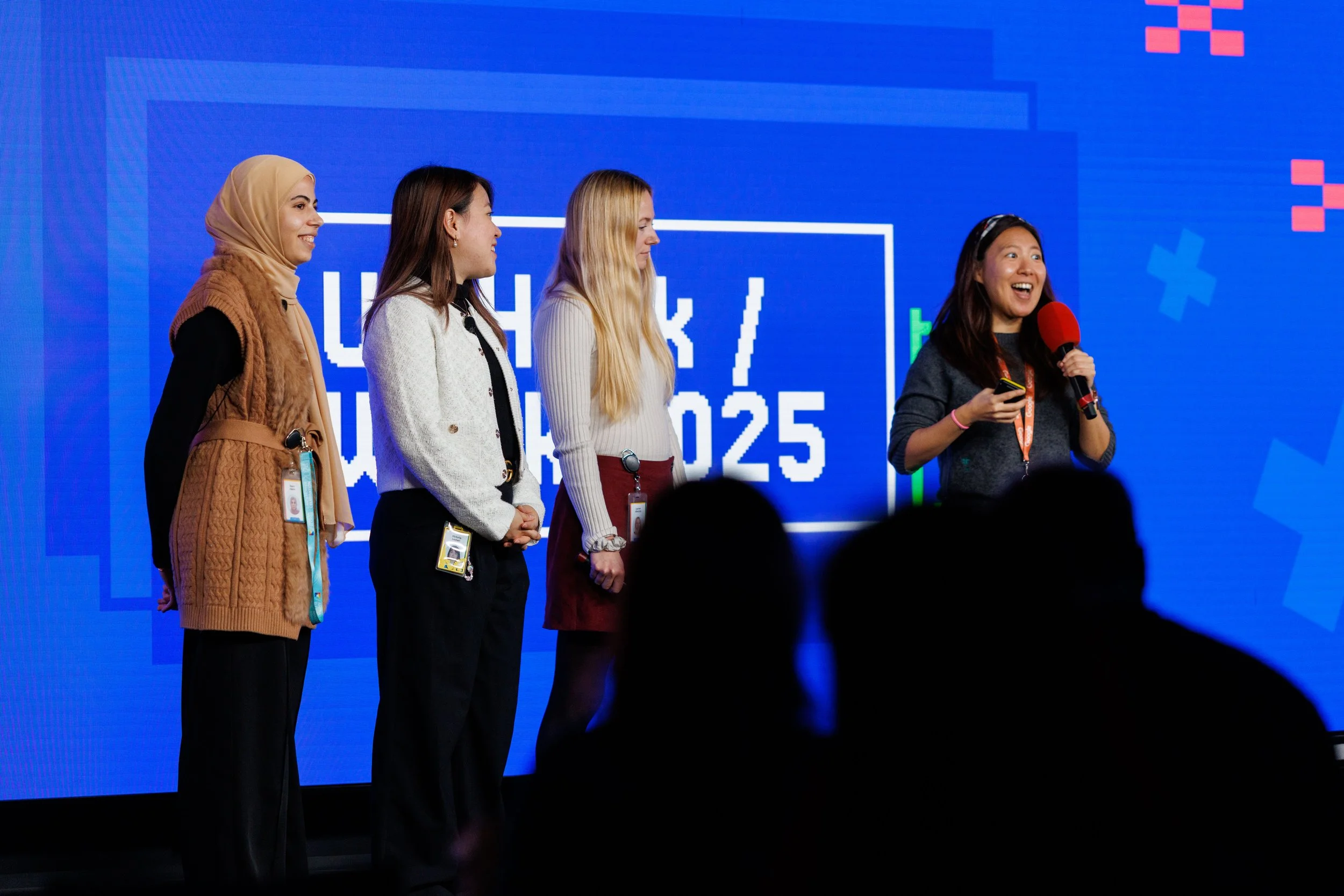
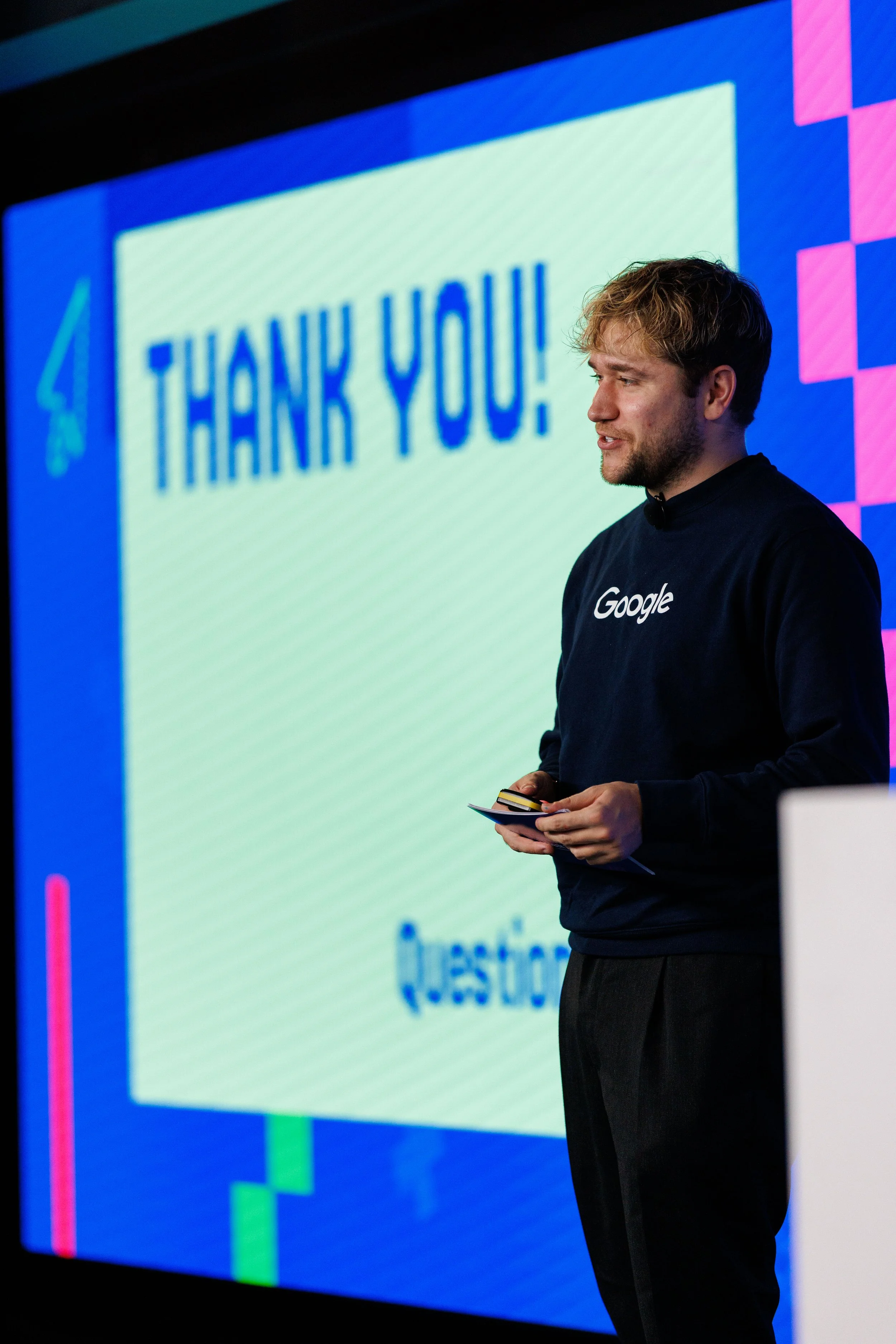
On November 27, 2025, 15 cross-functional teams pitched brand-new prototypes live in London and on livestream. Projects spanned collaborative travel planning, personal finance automation, health and nutrition, creative media, accessibility, and internal productivity tools. One consistent pixel identity connected the panoramic stage wall, the 188-slide master deck, the host's cue cards, the 3D-printed badges, the lanyards, and the cookie table. Winning teams went on to share their hacks at Google UK's December all-hands town hall.
Impact
Participation counts, coaching outcomes, and UK-wide recognition showed that modular design craft and pitch coaching paid off:
Strong cross-office participation: 64 colleagues registered interest, and nearly half joined solo to match with new teammates. 17 teams submitted brand-new proposals, and 43 finalists across five UK offices and remote teams presented live onstage.
50% win rate among 2025 coached teams: Four volunteer coaches supported 20 participants across six finalist teams in 2025. Three of those six teams won awards, including the People's Choice Award and two Special Mentions. Across 2024 and 2025 combined, our Pitch Clinics ran 19 sessions for 46 participants and coached 8 award-winning teams.
Tactile brand reach across the room: Our 16-variant kit powered 200 stickers, 200 logo cookies, 90 Pixie lanyards, 100 microfiber cloths, 75 bags, custom 3D-printed badges, a 47-member watch-party chat, and digital profile badges after the event.
Site-wide recognition: UK leadership recognized my UK Innovation Team work with a Spot Bonus for "elevating the look and feel of our events to make them both fun and professional." At our December End-of-Year Town Hall, I also received the 2025 Google UK Gemies Award for "Build helpful things."
Feedback from participants and Pitch Clinic attendees echoed why coaching and community space mattered:
"Thank you to the UK Hack Week team for encouraging me to tap into my innovative side! I have long been enthusiastic about the newest features in tech, so it was truly a dream come true to participate in this hackathon, both at the start and end of my apprenticeship, with such a dedicated team."
"[Our coach] was very oriented to giving us suggestions on how to improve our presentation in a way that matched what judges typically look at. Becoming aware of it made us improve our presentation greatly."
2025 UK Hack Week Impact
Takeaways
If you volunteer to brand, coach, or produce a community hackathon on a small budget, four lessons from 2025 travel well:
Build a logo matrix once to save hours later: Exporting four lockup ratios across dark and light modes upfront stopped last-minute file requests from vendors, web owners, and speakers.
Short templates teach better than long instructions: Trimming our optional team deck aligned speakers to the five-minute limit faster than reminder emails ever did.
Thirty minutes of coaching unlocks hidden craft: Many hackathon builders ship impressive prototypes but get little stage practice. One focused working session turns a dense walkthrough into a clear story.
Meet busy builders in chat: Our 2025 debrief surfaced two upgrades that we carried straight into 2026. We moved participant updates into live chat spaces where builders actually look, and we combined sign-ups into one unified step instead of two separate forms.
