Takeaways from SXSW London 2025
TL;DR I went to SXSW London, attended some great talks and want to share my thoughts.
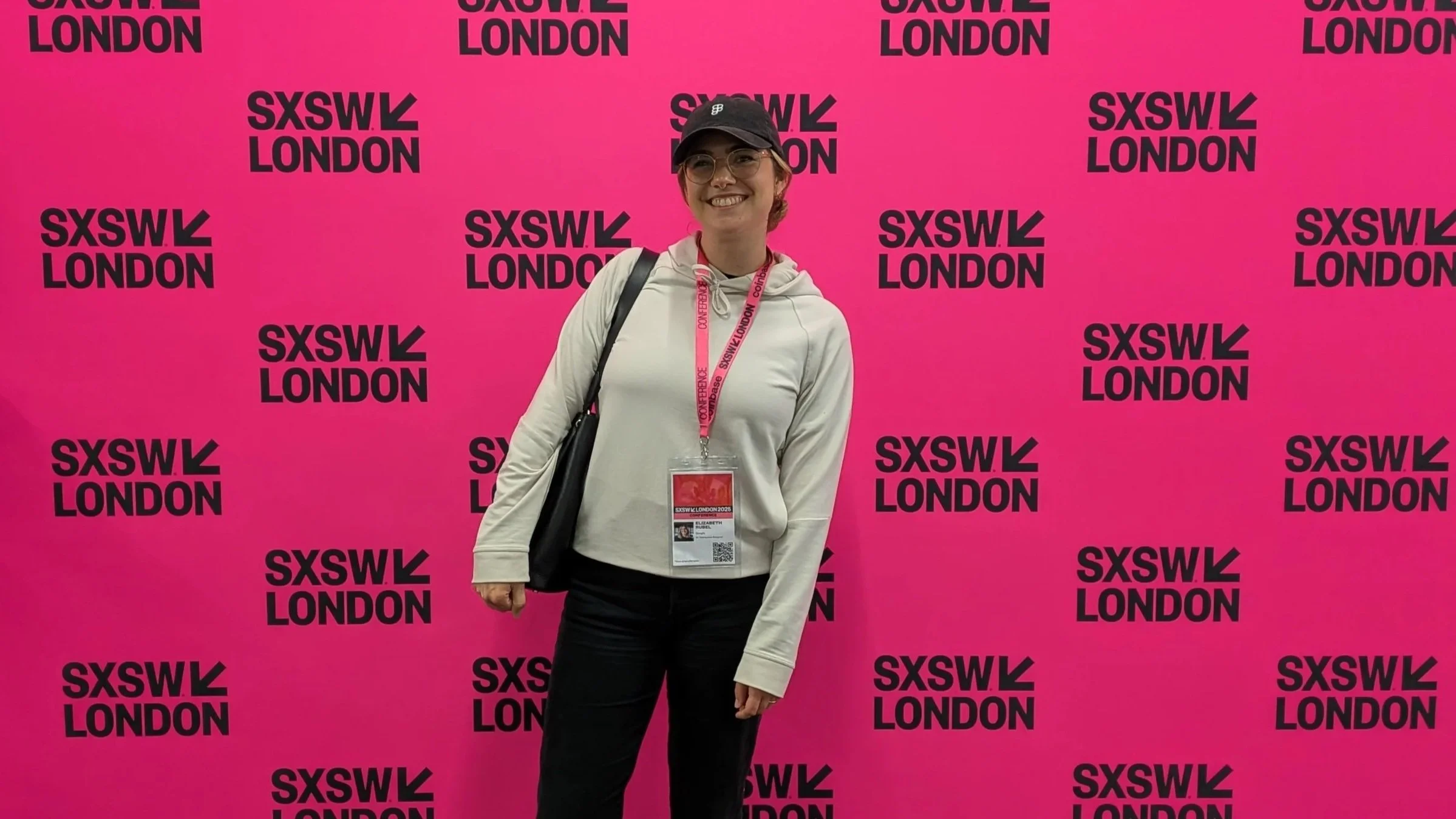

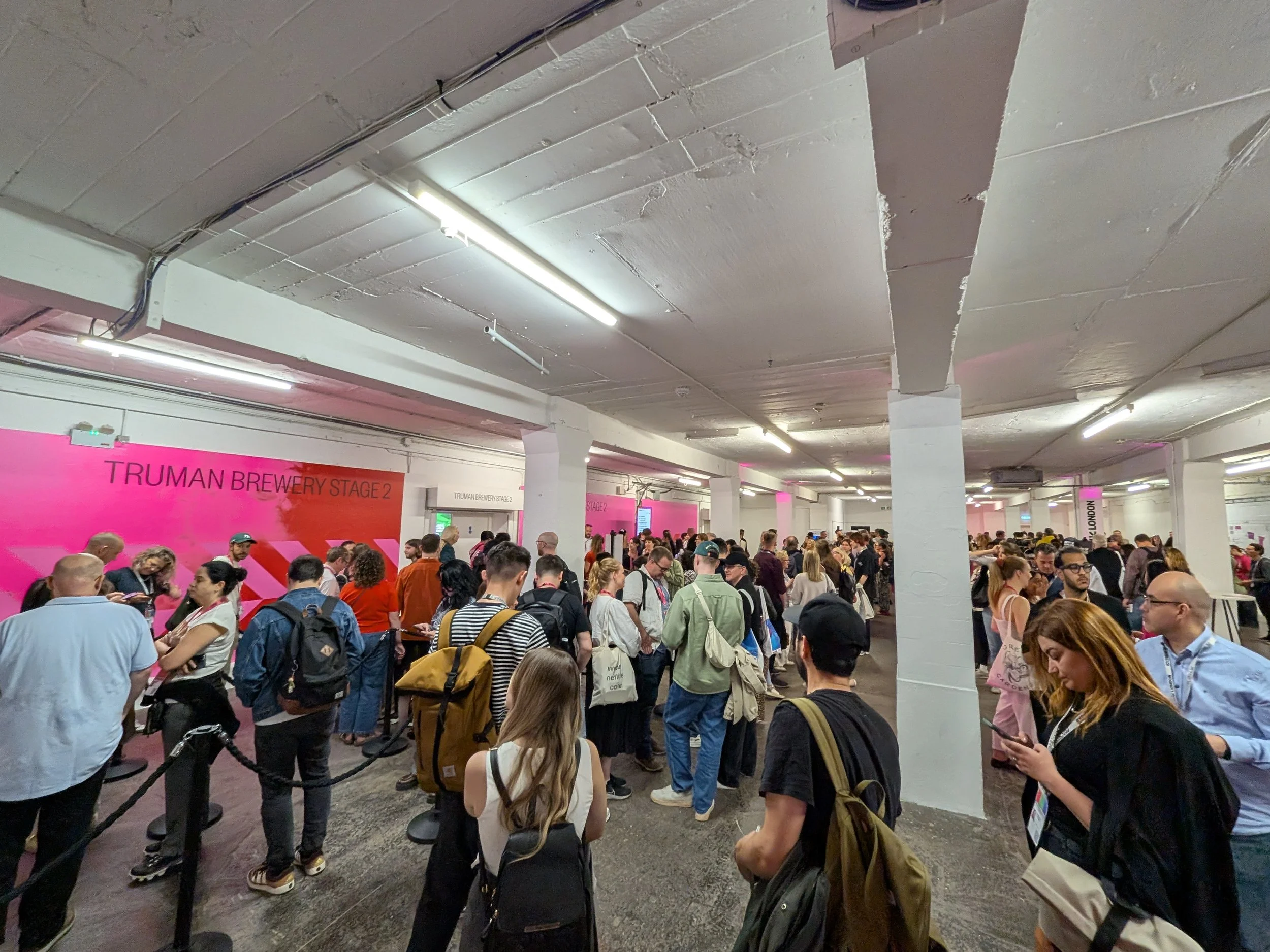
Event overview
The Good
Lots of exciting talks covering topics like the future of society, the role of technology, the importance of human connection, wellbeing and inclusivity
A variety of talks across different industries (tech, healthcare, advertising, government, racecars)
All star speakers like Demis Hassabis, Deepak Chopra, Tony Blair & Jimmy Wales (founder of Wikipedia)
Discussions highlighted challenges and opportunities in a rapidly changing world
The Bad
The event was spread out across Shoreditch, making it difficult to get between talks
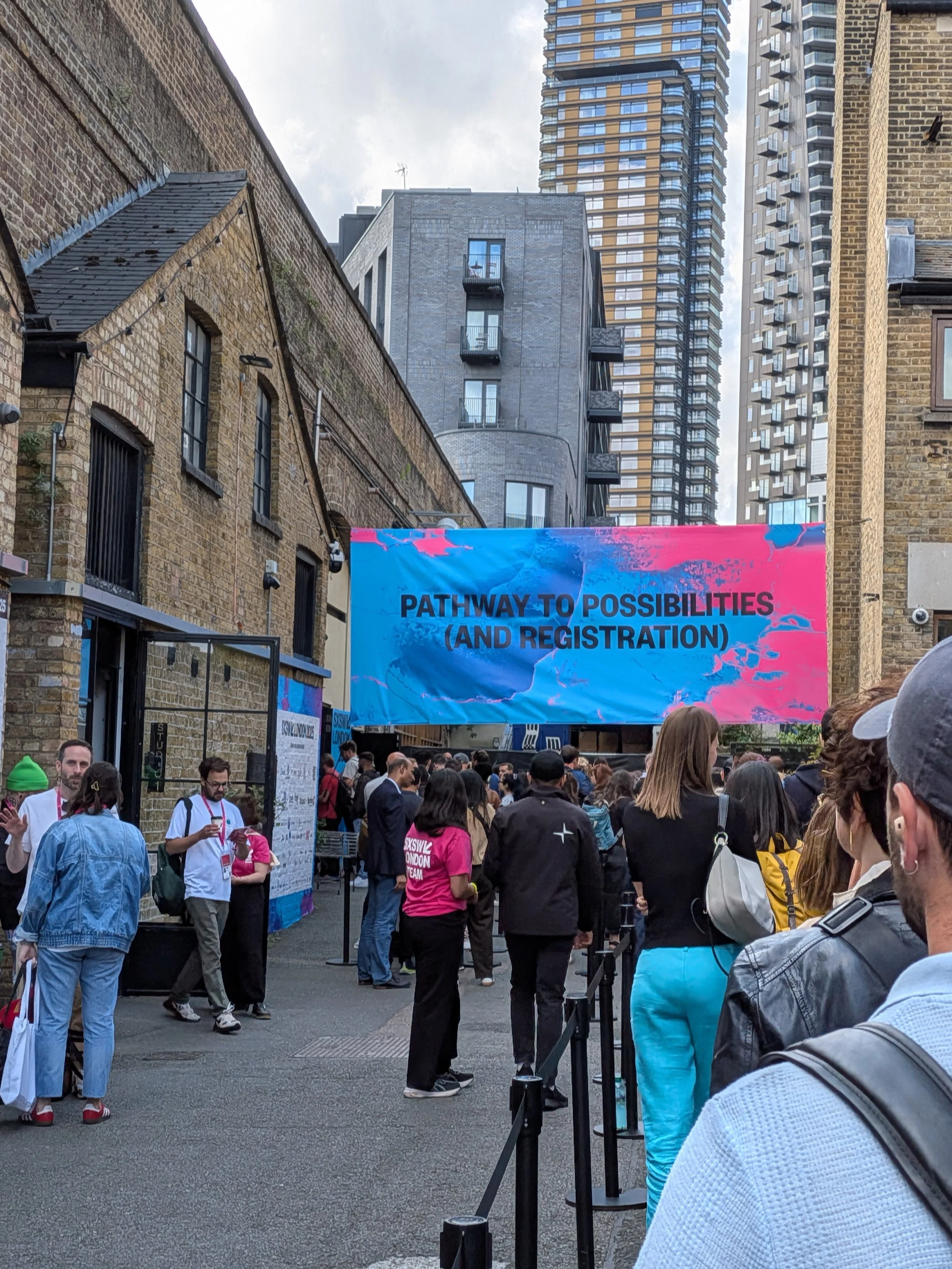
Queues were often 45+ mins long, meaning you had to skip current talks to attend future ones
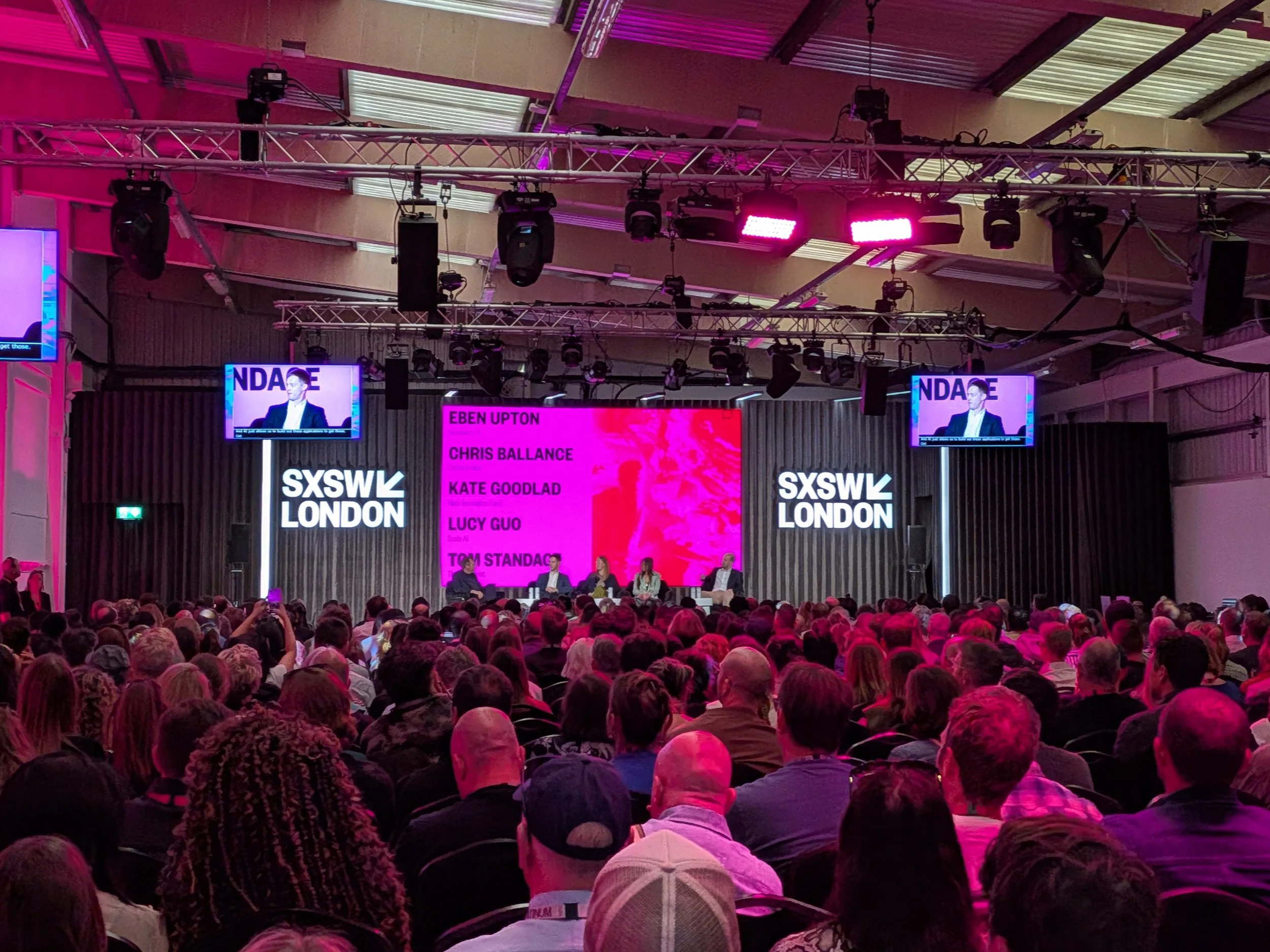
Each room was overly packed, leading to standing room only or at the worst times, not being admitted
The Ugly
The SXSW app was poorly made and difficult to use (i.e. can’t copy and paste any of the text on the app, no ability to export event schedule to calendar)
Waiting in the London rain in 45 min queues
Themes
-
The dominant narrative has shifted from "what is this technology?" to "how does this integrate into reality?"
From Chat to Action: The "AI hype" has settled into practical application. We are moving from generative chatbots to Agentic AI—systems that execute tasks and reduce toil (SaaS AI, Government efficiency).
Invisible Tech: Whether it's the LA Clippers' stadium or "smart" clothing, the consensus is that technology should be invisible. If it doesn't seamlessly enhance the human experience, it is just "expensive noise."
The Physical-Digital Blur: Virtual production in Hollywood and the "metaverse" in cinema are dissolving the lines between physical sets and digital assets, allowing for "creative computing" that reshapes how we build and tell stories.
-
The conversation around health has moved from treating illness to optimizing life.
Healthspan > Lifespan: A major focus was placed on Biohacking and Microbiomes. The goal is no longer just living longer, but keeping the "biological age" young. Panels predicted that checking microbiome data will soon be as common as checking the weather.
Architecture as Medicine: The concept of "Socially Useful Architecture" emerged strongly. From Maggie Centers to the NHS, the built environment is now seen as a critical tool for mental health, designed specifically to reduce cortisol and foster healing.
-
In an increasingly digital world, the value of physical, shared connection is skyrocketing.
The "Third Space": Rapha’s cycling club and the "meanwhile spaces" in city planning highlight a desperate need for physical community spaces to counter digital isolation.
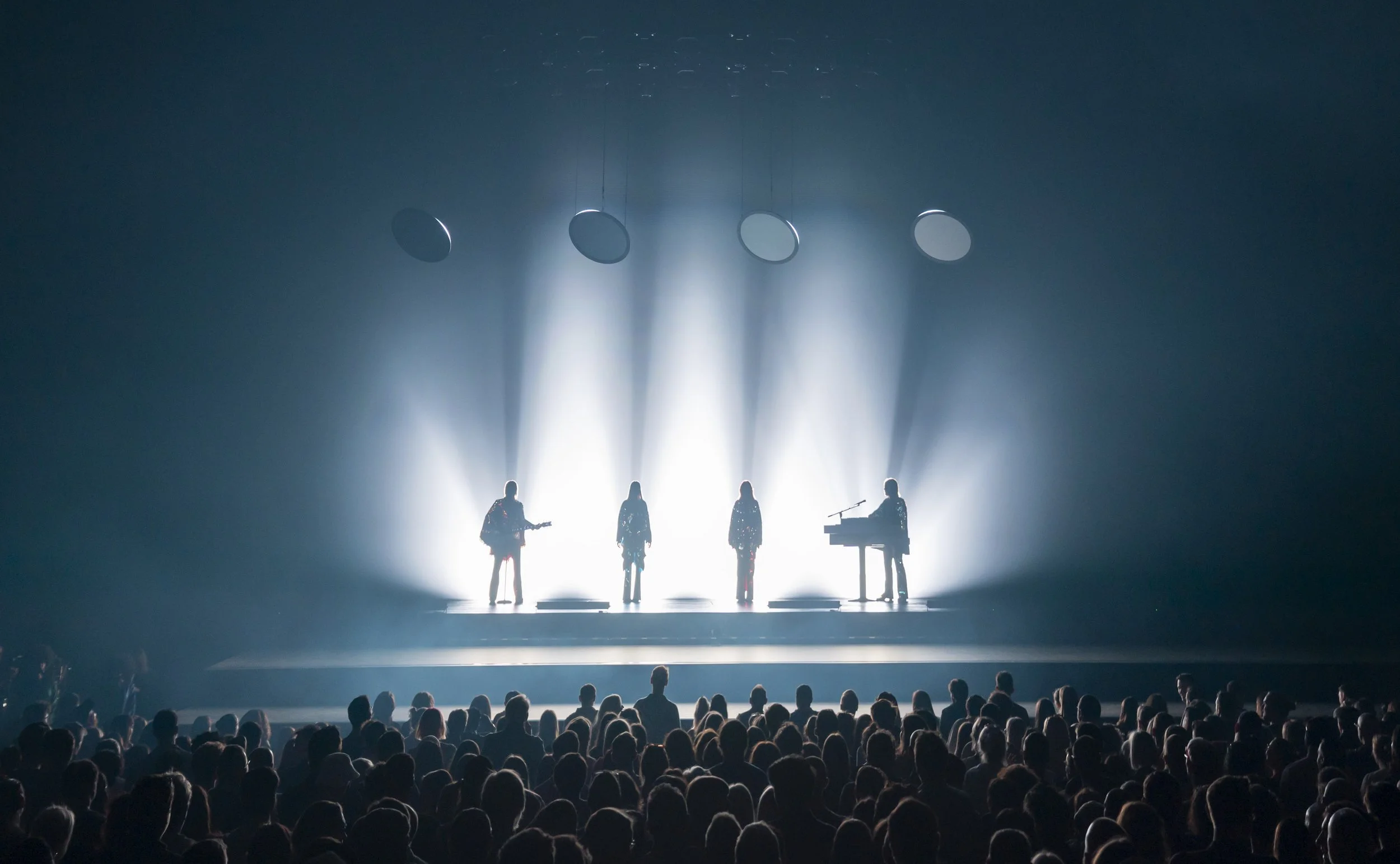
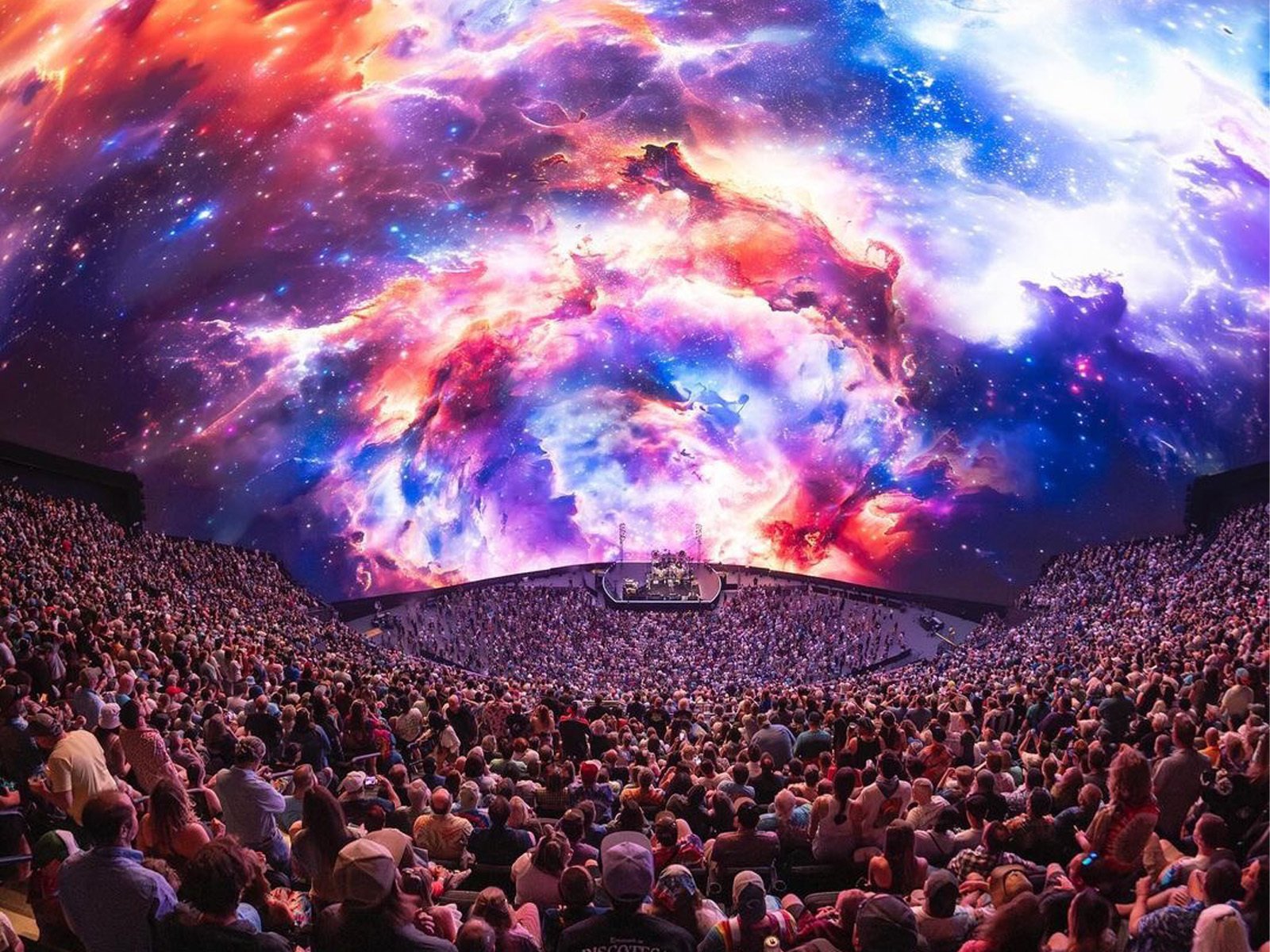
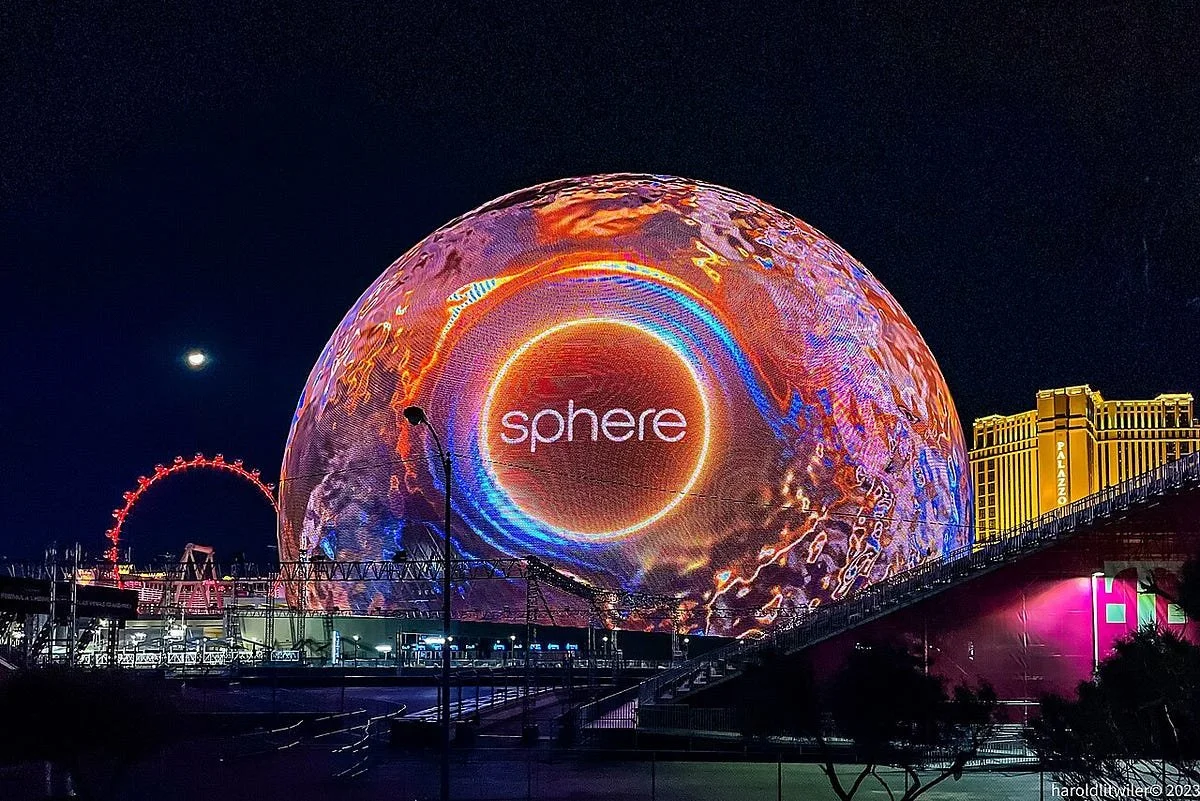
Shared Immersion: The "Experience Economy" is booming. Audiences are flocking to communal, large-scale experiences (The Sphere, Outernet, ABBA Voyage) because they offer a shared sense of awe that home viewing cannot replicate.
Trust in the Crowd: In an era of polarization, platforms like Wikipedia were highlighted as beacons of "neutrality," proving that human-led, community-verified truth is resilient against disinformation.
-
Inclusion is moving from a "initiative" to a structural imperative.
Visibility Matters: Leaders from F1 and RIXO emphasized that "you can't be what you can't see." True inclusion requires structural support (e.g., childcare policies) rather than just lip service.
Redefining Leadership: The concept of Reverse Mentoring—where juniors mentor seniors—was presented as a vital tool for leadership to understand the modern workforce and bridge the generational trust gap.
Ethics & Equity: From the "Love the Earth" indigenous storytelling project to debates on "designer genetics," there was a strong ethical undercurrent asking: Who gets access to these advancements?
-
Innovation is being driven by "dual-use" thinking and extreme risk-taking.
Risk as a Strategy: Vollebak’s "clothing made of copper" and the "dual-use" technology in the space sector (serving both military and commercial needs) show that the biggest breakthroughs come from ignoring traditional market signals.
Open Source & Collaboration: The "SaaS AI Moment" and Government panels both pointed to open-source tools and cross-sector collaboration (public/private partnerships) as the only way to keep up with the speed of technological change.
Talks that stood out
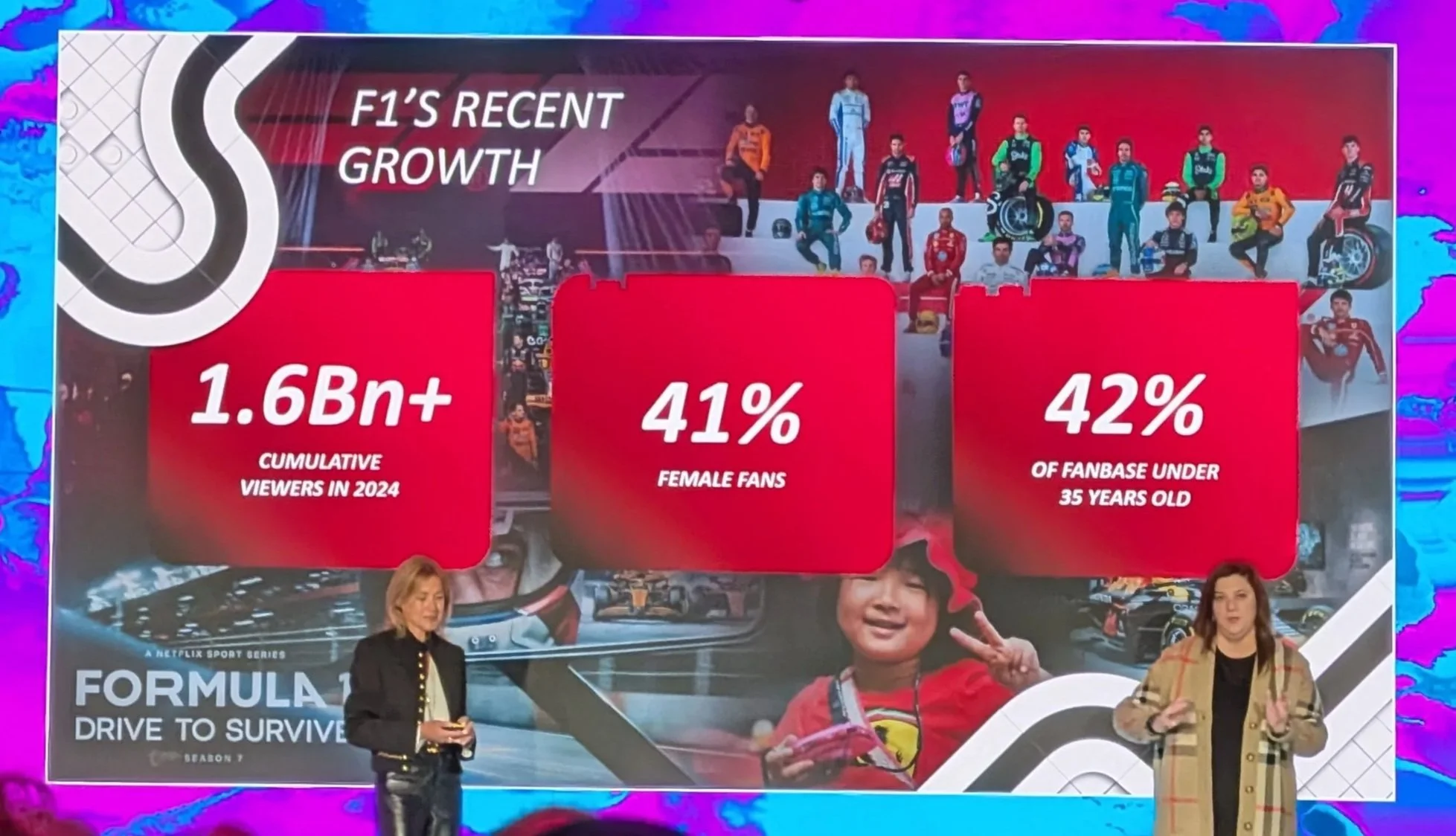
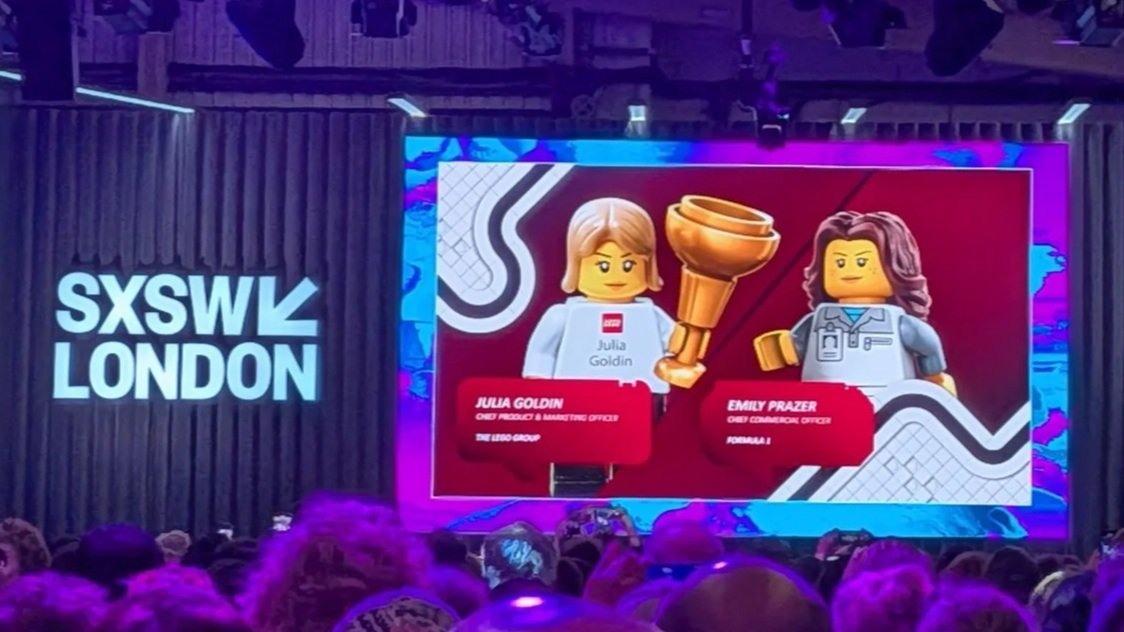
Lights Out with F1 and the Lego Group: How to Build Immersive and Relevant Experiences for Your Audience
Julia Goldin, Emily Prazer
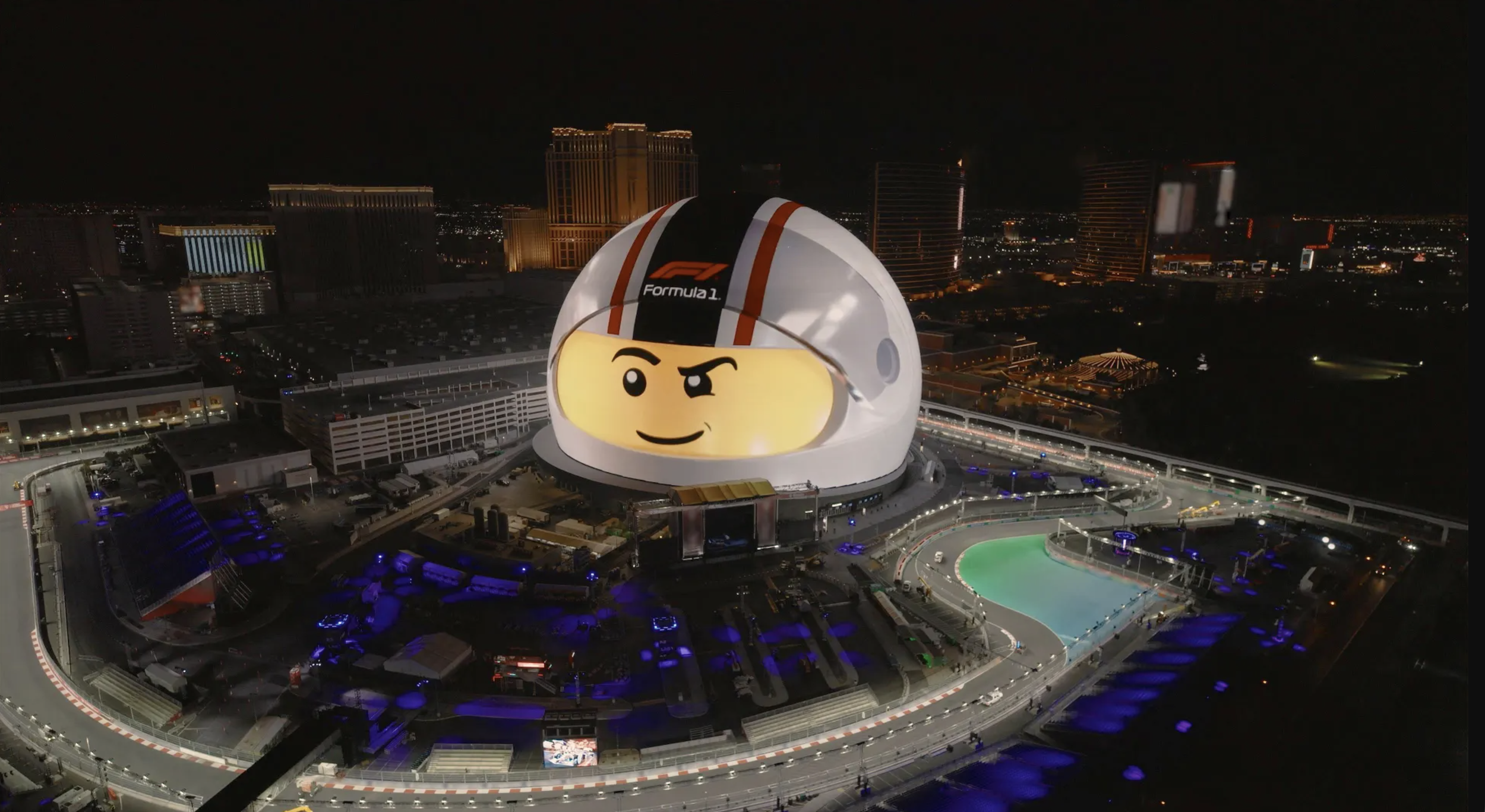
F1 and Lego proved that the best collaborations are about way more than just slapping logos on a product. Recognizing that their audiences are getting younger and more diverse, they ditched the standard playbook for something wild: a massive takeover of the Las Vegas Sphere and building life-sized, drivable Lego cars for the Miami Grand Prix. It was a huge creative risk, but it paid off instantly—products sold out in 24 hours and the content went viral. The big takeaway? If you want to grab attention in a crowded world, stop playing it safe and build the kind of epic, physical experiences that people actually want to be a part of.
Building Trust in the Age of Information Overload
Jimmy Wales, James Armitage
In an era characterized by polarization and deepfakes, Wikipedia is doubling down on human verification as the antidote to misinformation. While AI offers potential for spotting bias, it remains a liability for factual accuracy—exemplified by contributors catching ChatGPT inventing plausible-looking but non-existent sources (like fake book ISBNs). Wikipedia is enforcing stricter sourcing standards, proving that in a landscape where low-quality information is increasingly persuasive, we cannot blindly trust what we read; we must rely on rigorous, human-led debate to grapple with the truth.
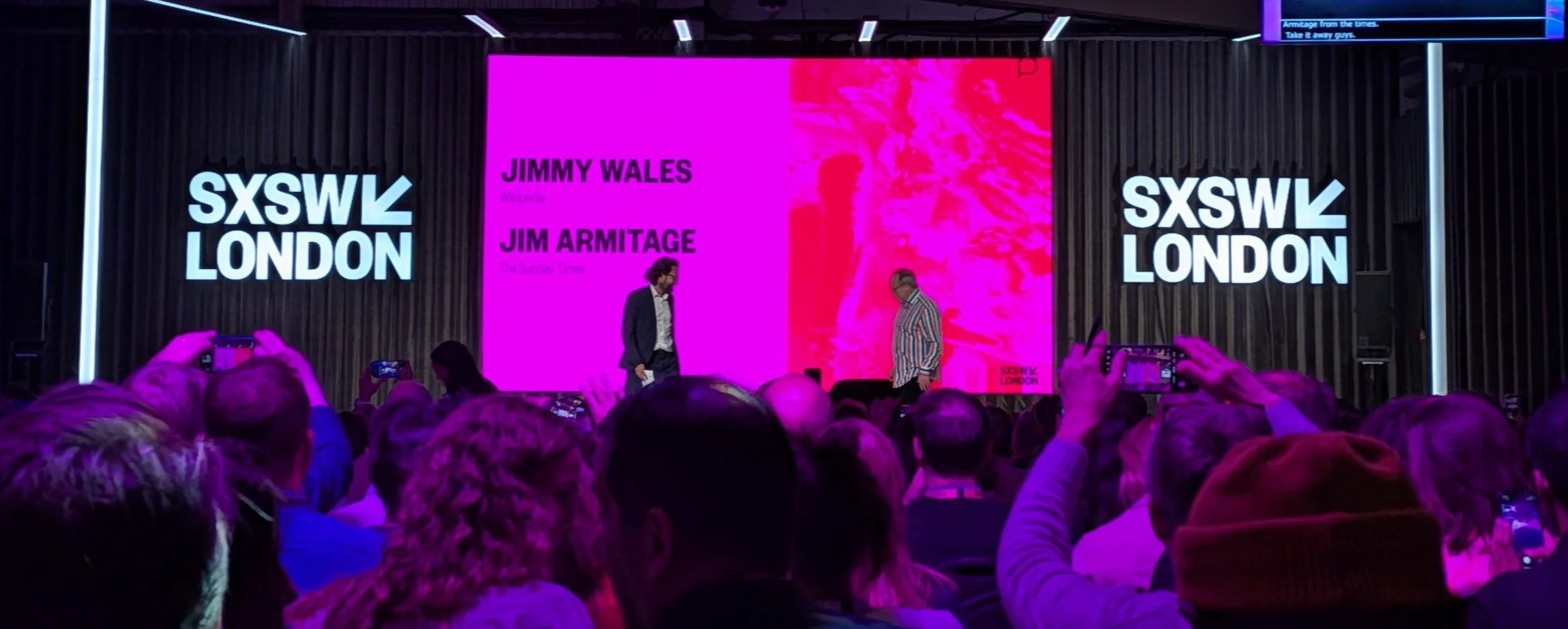
Jimmy Wales (founder of Wikipedia) in discussion with Jim Armitage
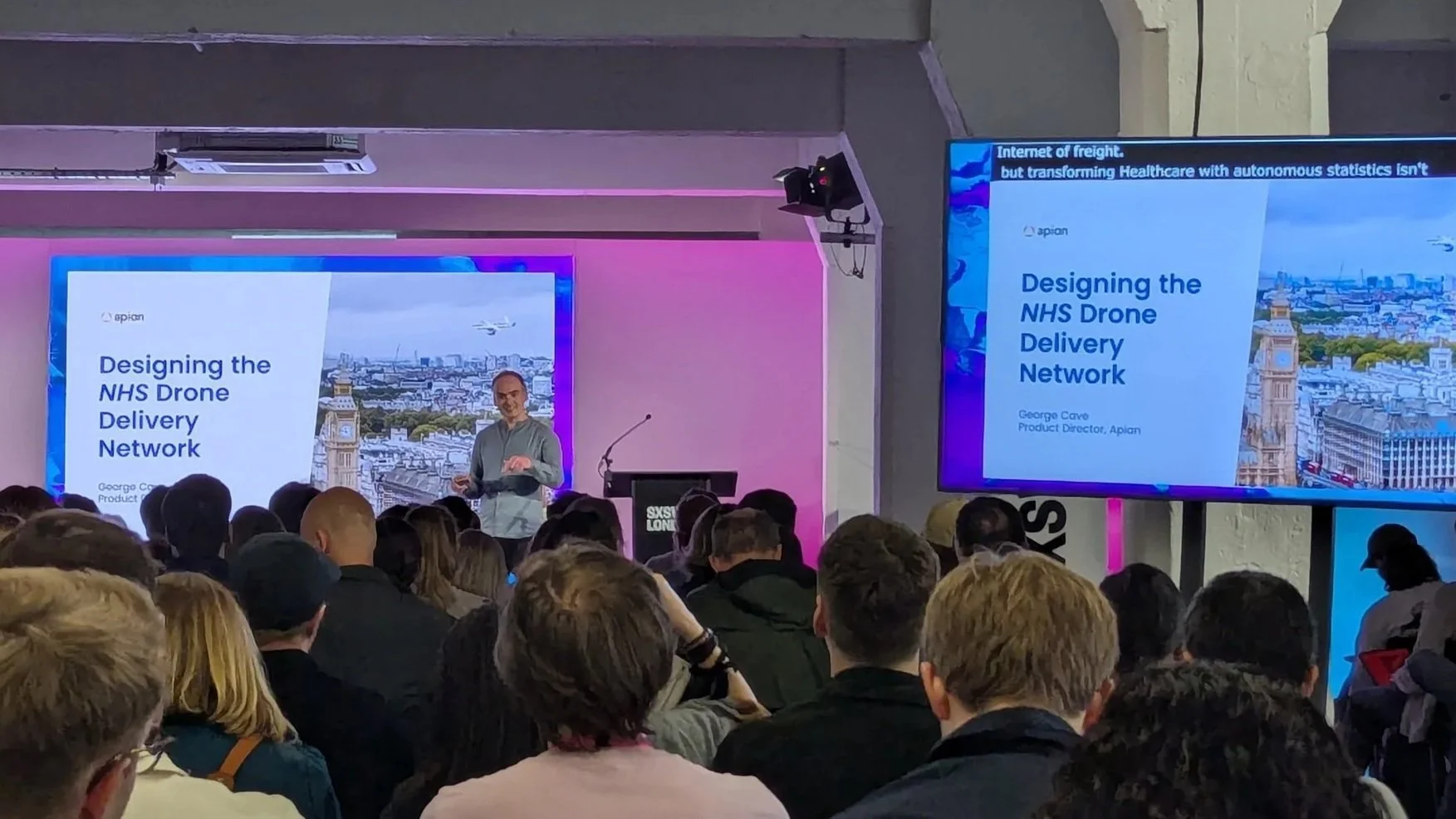
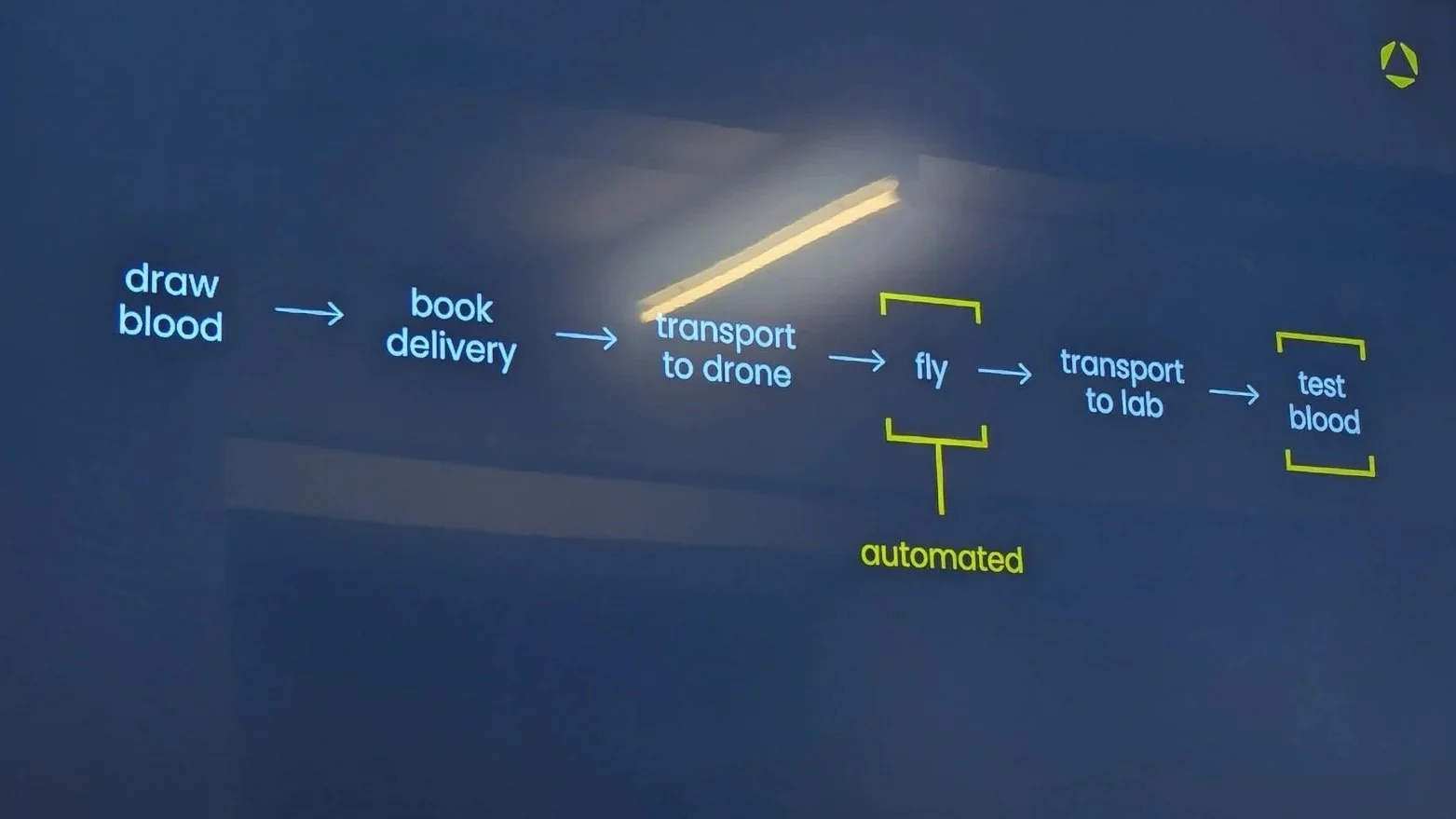
Designing the NHS Drone Delivery Network
George Cave
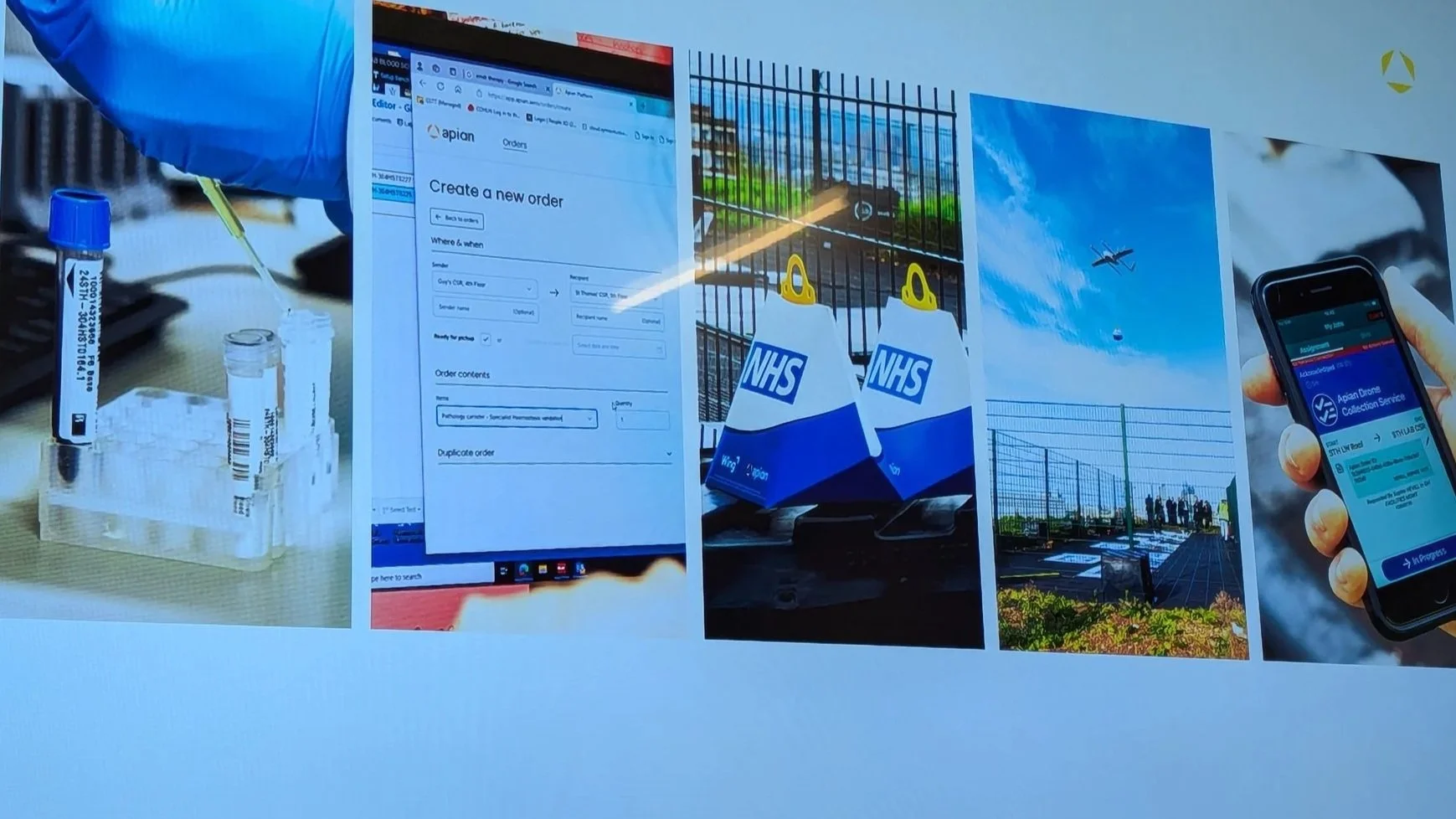
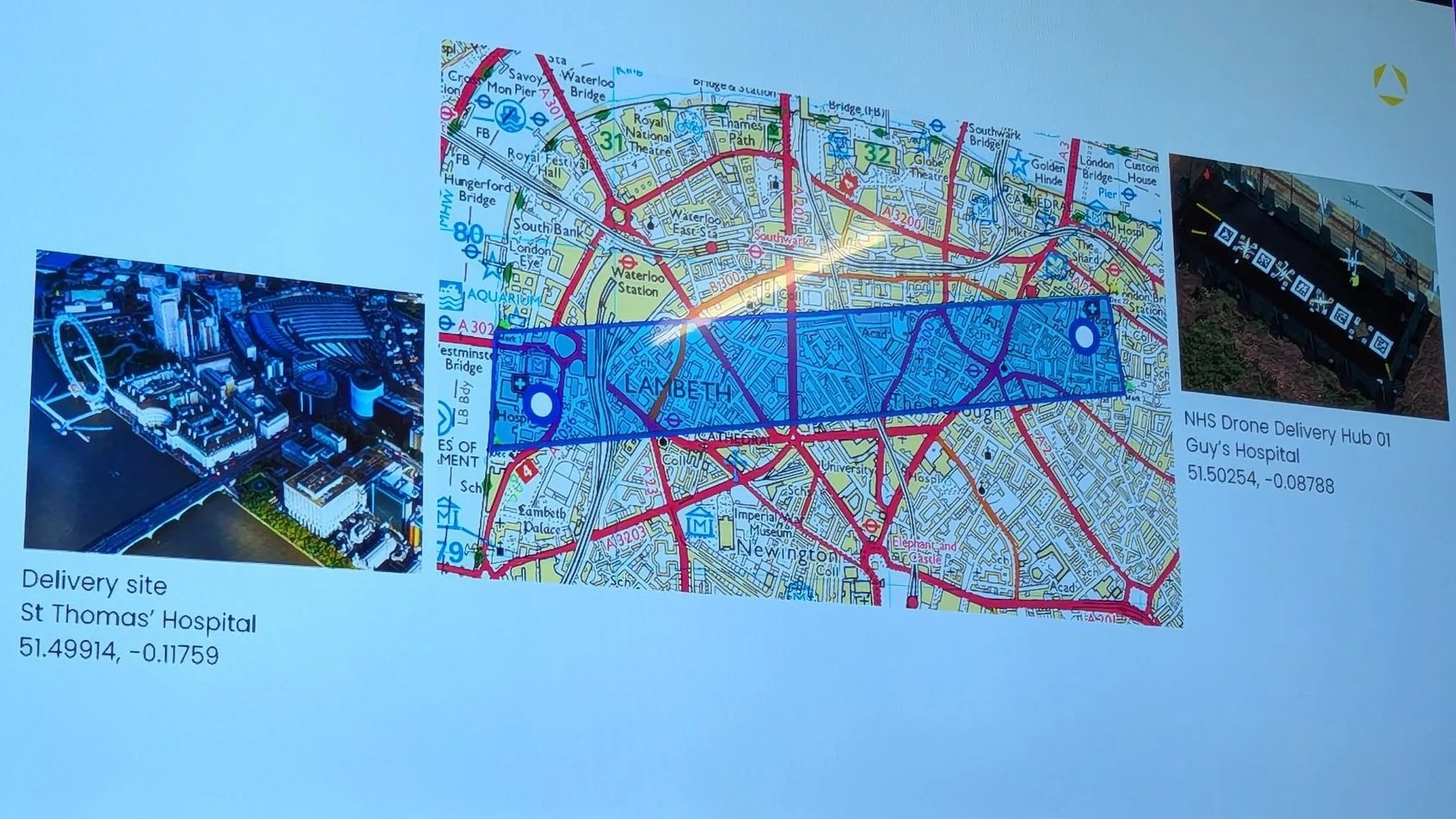
Imagine cutting a crucial 30-minute hospital delivery down to just two minutes. That’s exactly what the NHS is pulling off with their new drone network in London. Instead of risking gridlock on the ground, blood samples are now zipping between hospitals at 100km/h, launching from rooftop hubs. It wasn't an easy win—getting airspace approval over a busy city like London took two years—but the payoff is massive. While human porters are still handling the "last mile" inside the building for now, the ultimate dream is "lights out logistics": a fully automated future where robots and drones handle the entire journey without anyone lifting a finger.

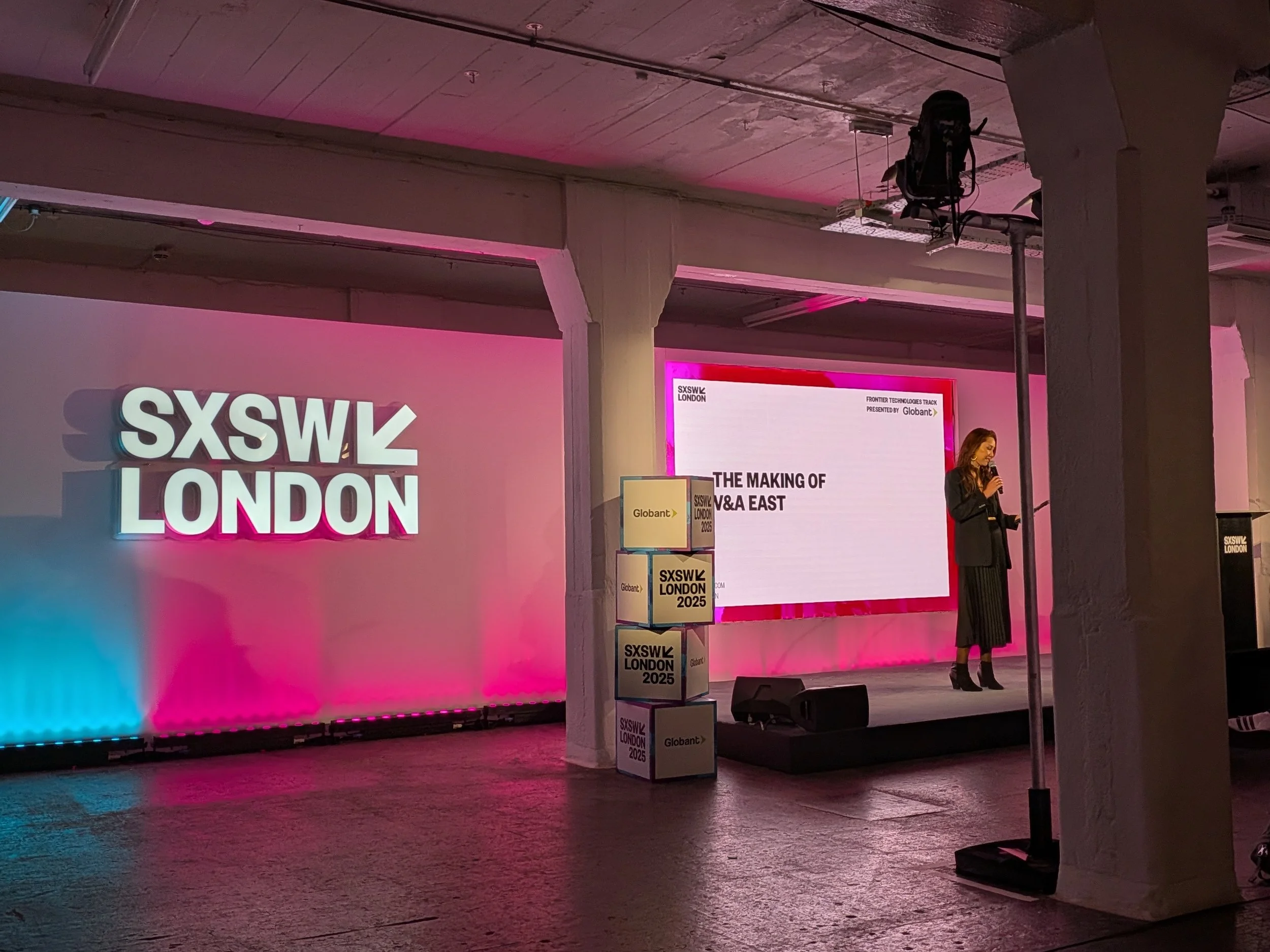
The Making of V&A East
Tim Reeve
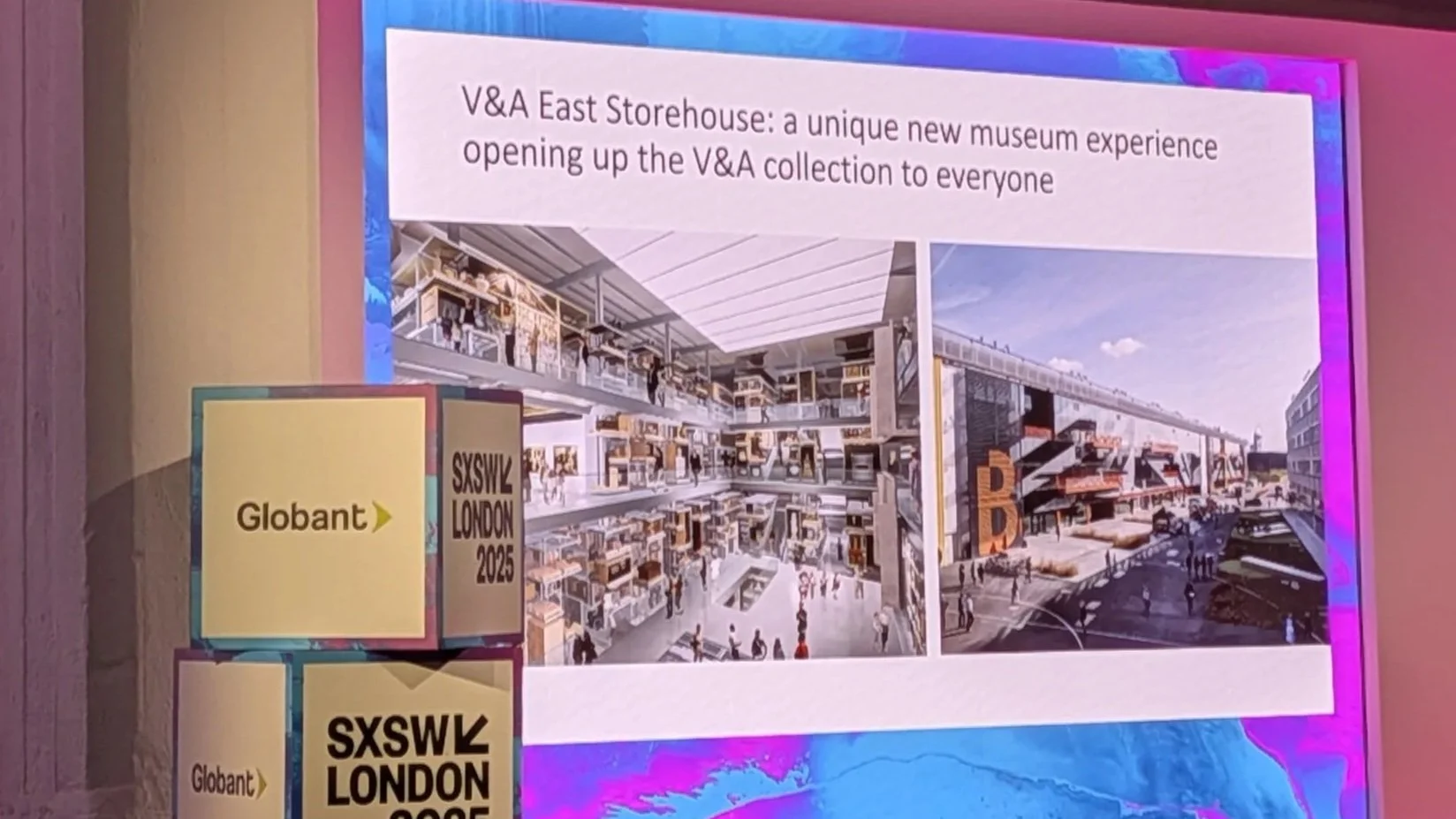
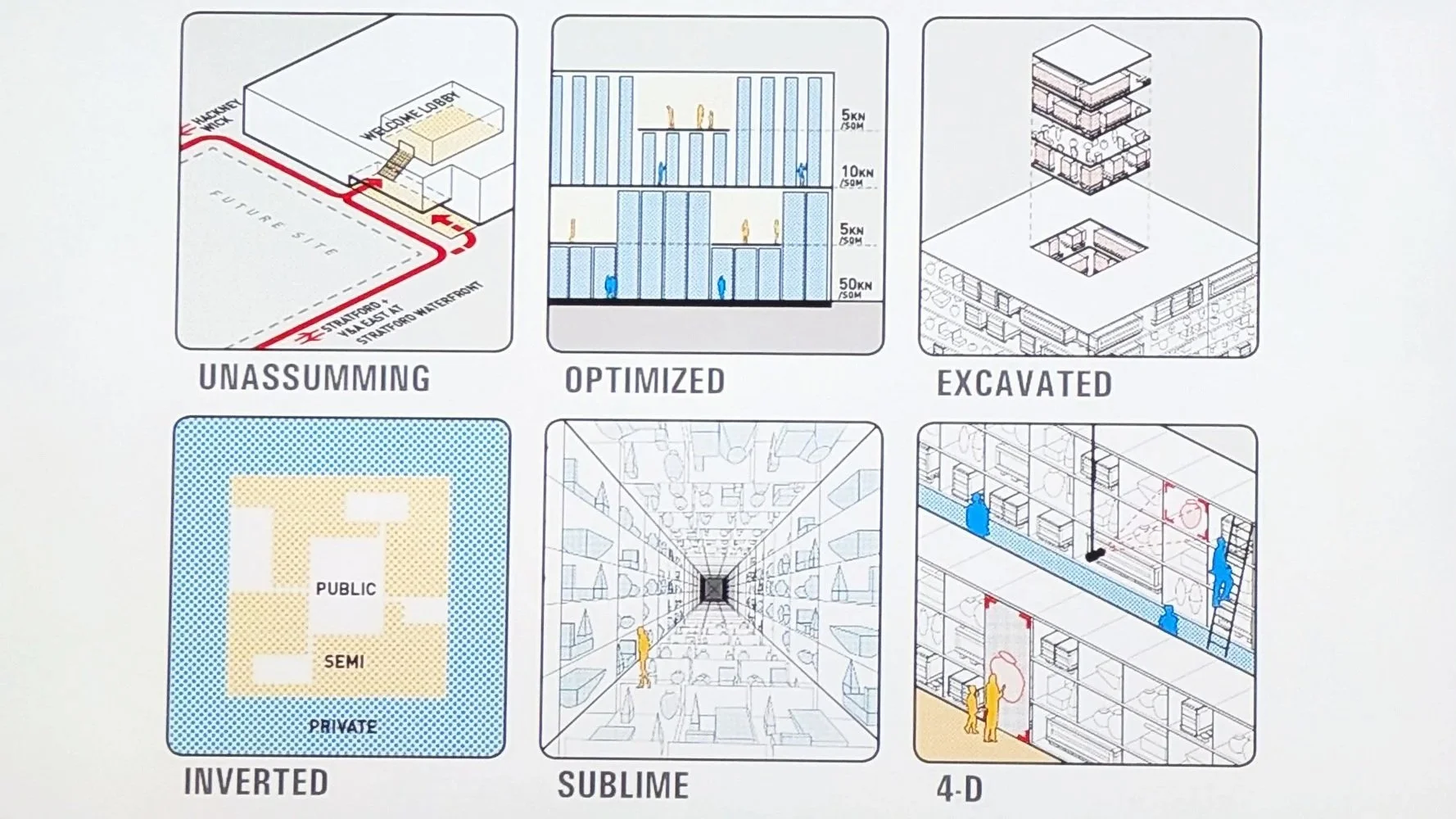
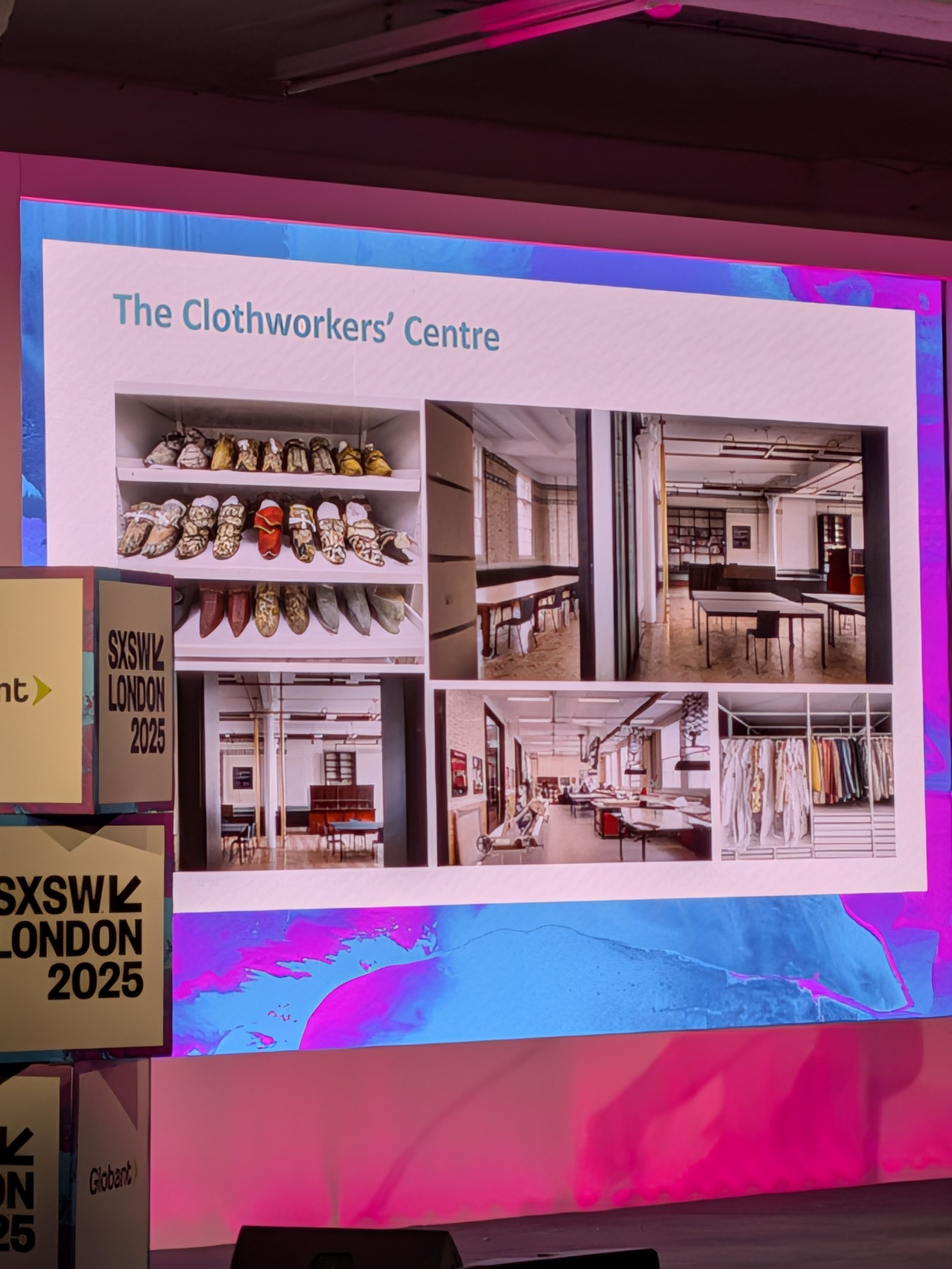
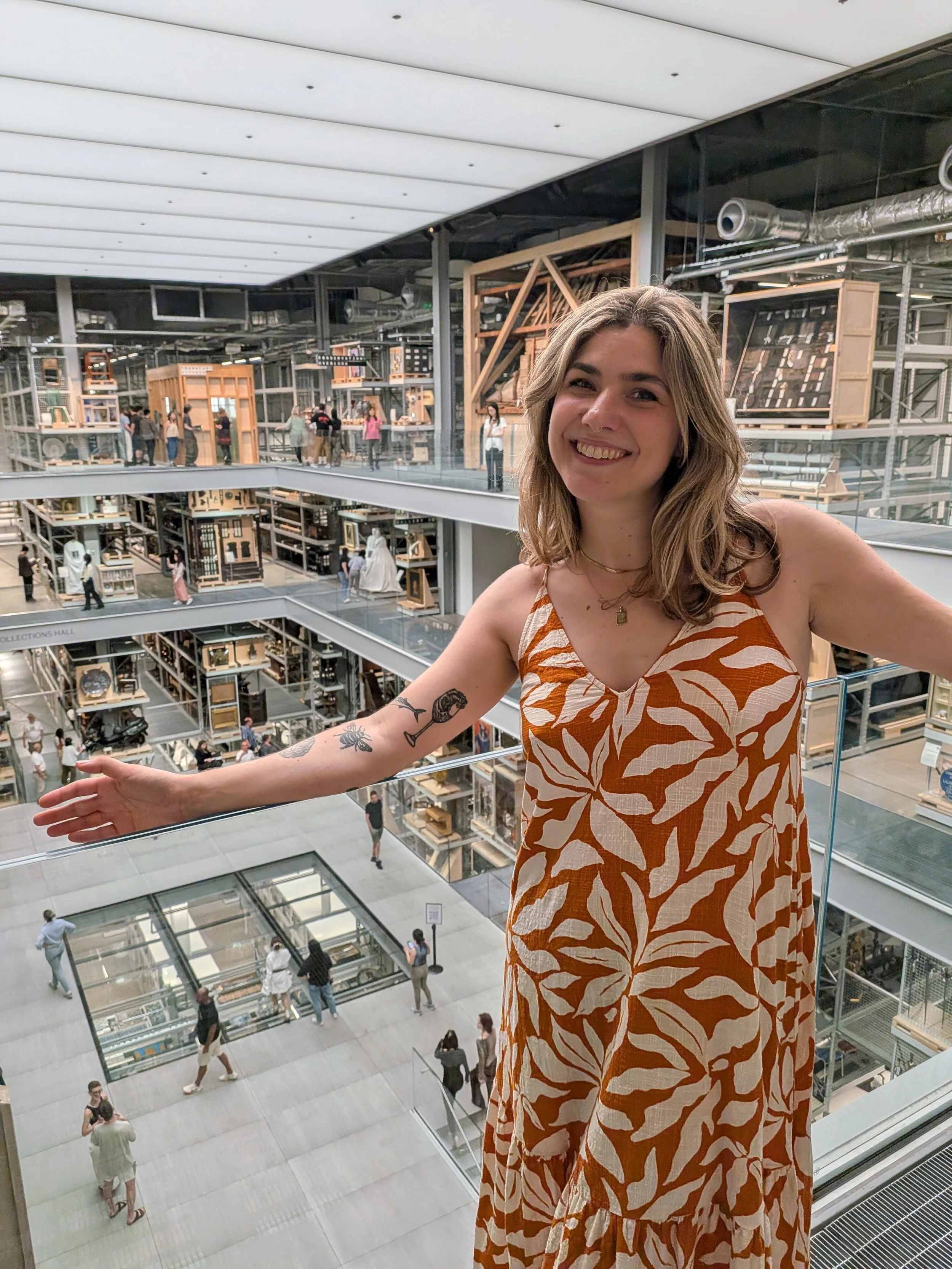
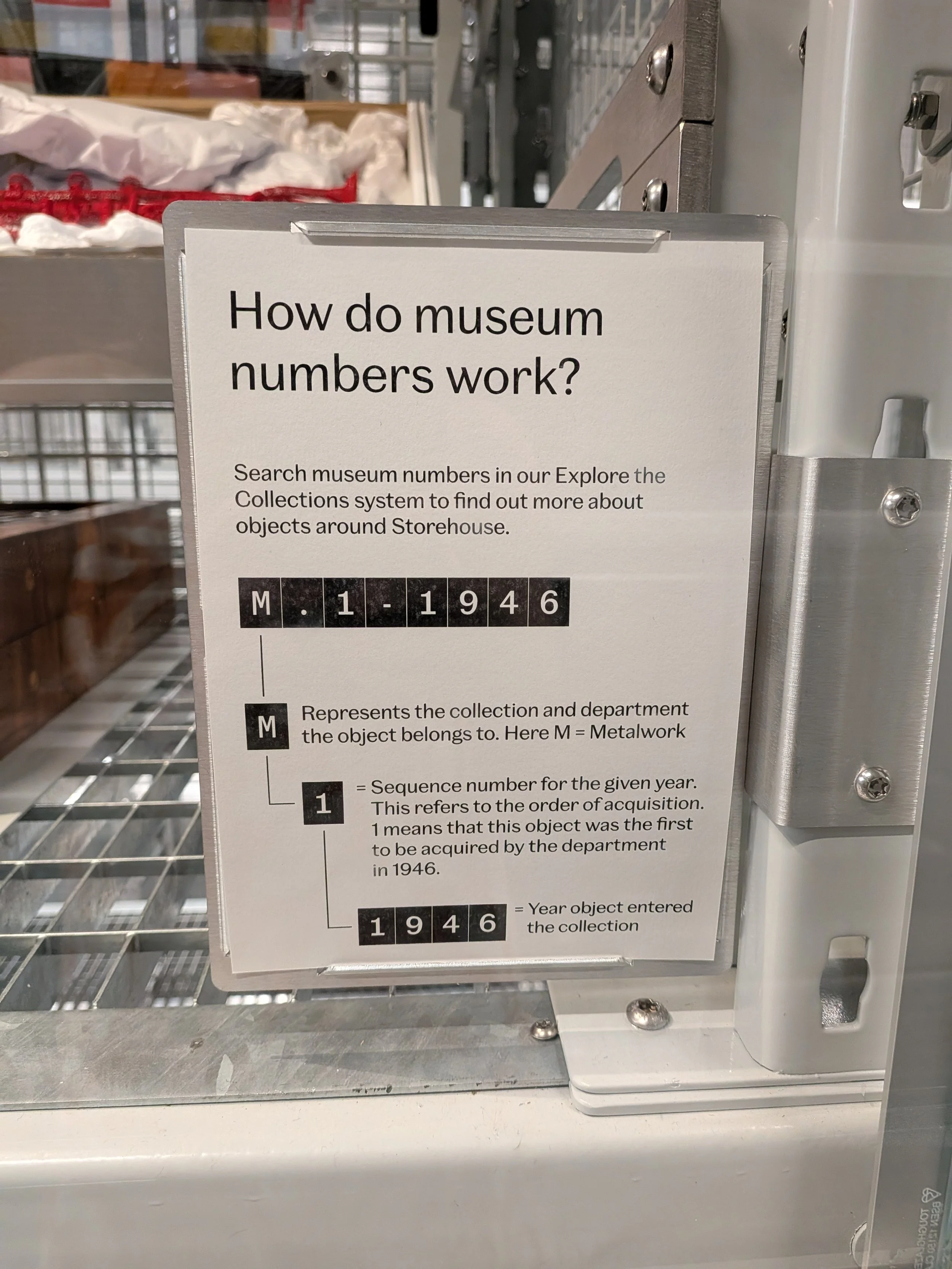
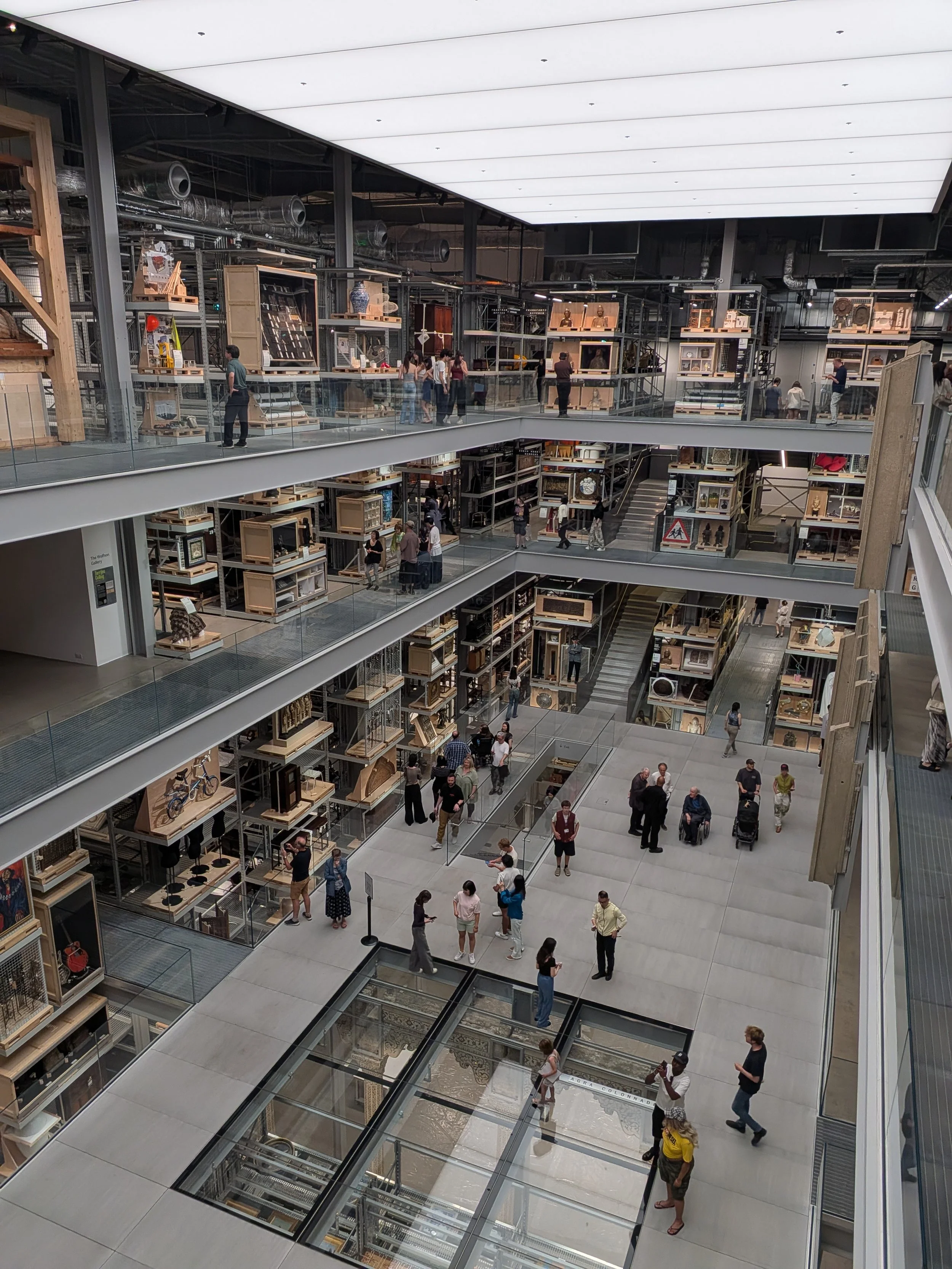
The V&A realized they had a massive problem: they own incredible treasures that nobody ever sees because they’re locked in dark storage rooms. With V&A East, they’re flipping the script. Taking over the old Olympic broadcast center, they are building something that feels less like a quiet gallery and more like the "IKEA of museums"—a giant, open-access storehouse . The idea is to democratize art by letting you wander through the archives or even "order" specific objects to inspect up close. It’s a raw, industrial approach designed to strip away the elitism and finally give East London’s creative community the access they deserve. I visited following the talk and was blown away by the experience.
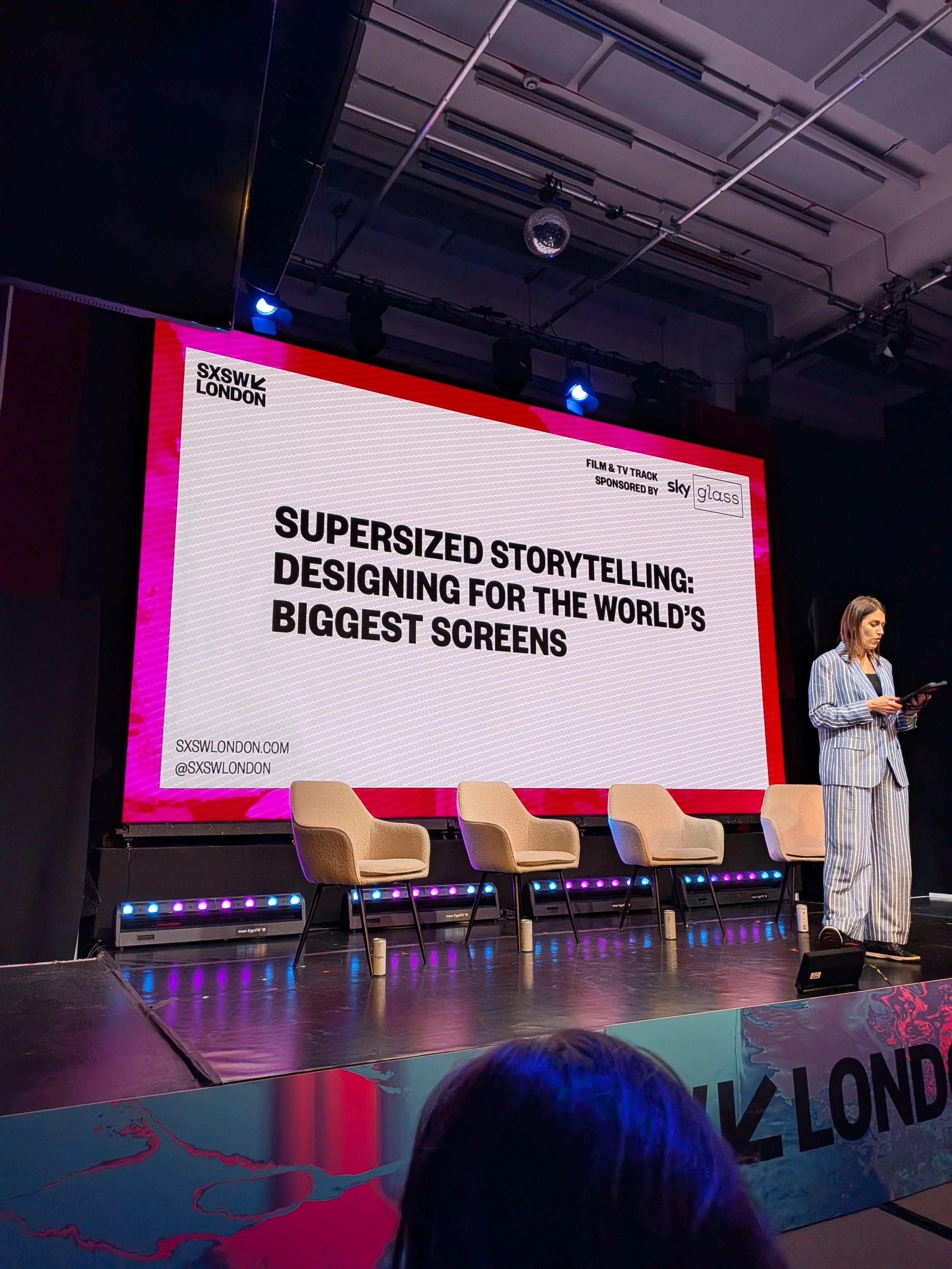
Supersized Storytelling: Designing for the World’s Biggest Screens
Chris O’Reilly, Fiona Pearce, Hannah Lau-Walker, Richard Kenworthy
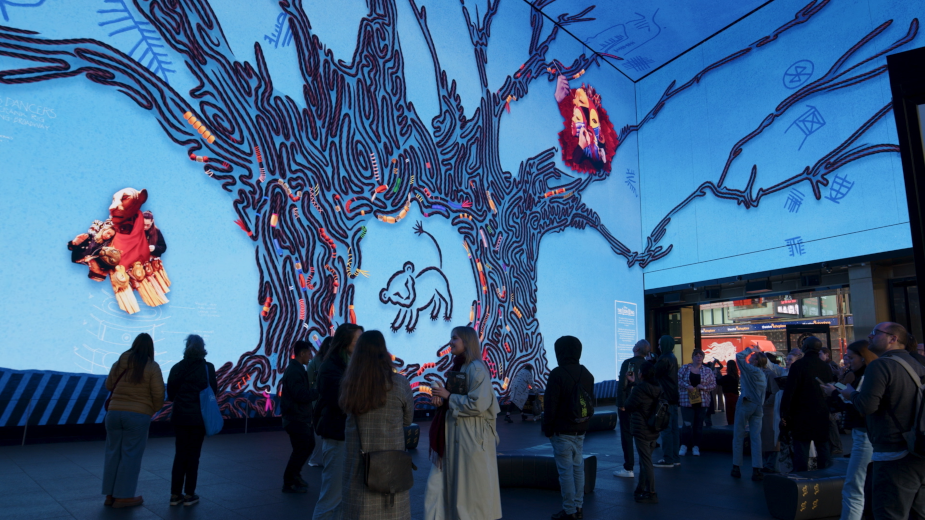
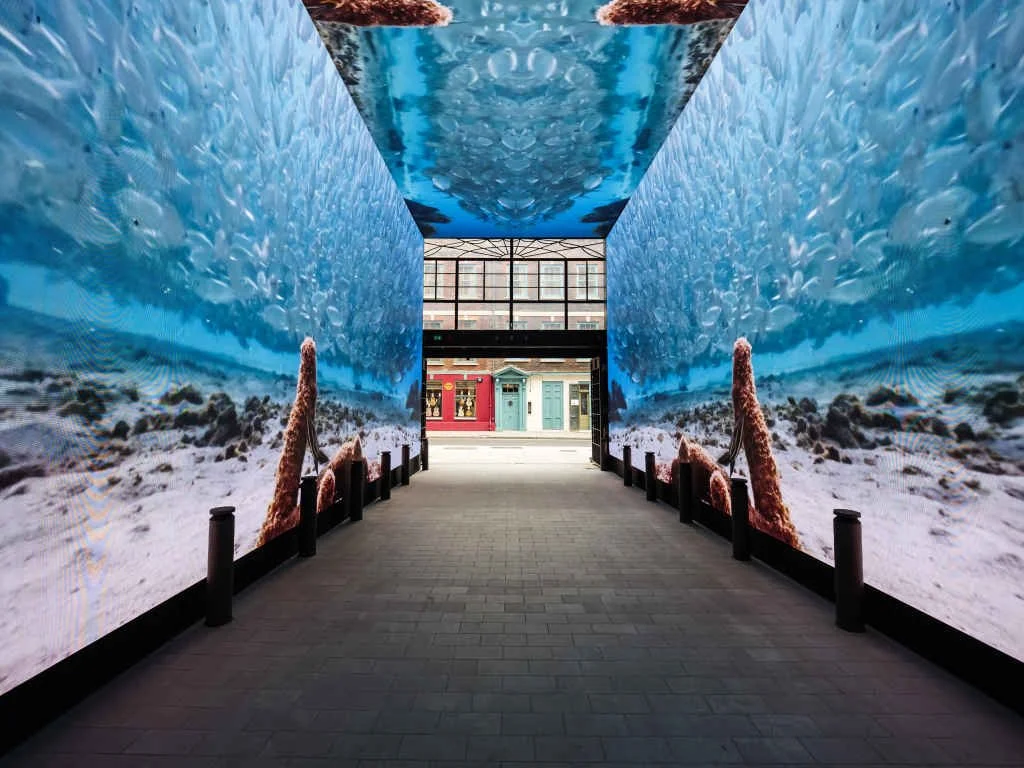
Designing for monster screens like the Las Vegas Sphere or London's Outernet isn't just about scaling up your video file, it's a totally different beast. The panel explained that when a screen is the size of a building, standard rules fly out the window; move the camera too fast, and your audience literally gets motion sickness. The team actually had to build custom VR tools just to preview their work because a standard monitor couldn't capture the sheer scale. But the payoff is undeniable: immersive shows like the Lion King anniversary are drawing millions more visitors than traditional galleries, proving that in a world of tiny phone screens, we are starving for shared, jaw-dropping spectacles that you have to be there to believe.
Reimagining Government in the Age of AI: How Technology Can Transform Public Services
Tony Blair, Peter Kyle, Melissa Heikkilä
Tony Blair didn't hold back: the government is "brilliantly resistant to change," but AI might be the only way to finally fix it. The panel argued that we need to stop treating the state like a slow-moving bureaucracy and start running it like a modern tech stack. We’re already seeing wins, like civil servants saving 30 minutes a day with CoPilot or a new GOV.UK chatbot that navigates thousands of documents for you. Blair’s advice was simple: leaders should be the ones holding their teams back from moving too fast, not the ones begging for innovation. The takeaway? The risk of doing nothing is now far scarier than the risk of trying something new and breaking a few things along the way.

Storytelling Outside of Action
Ryan Hays
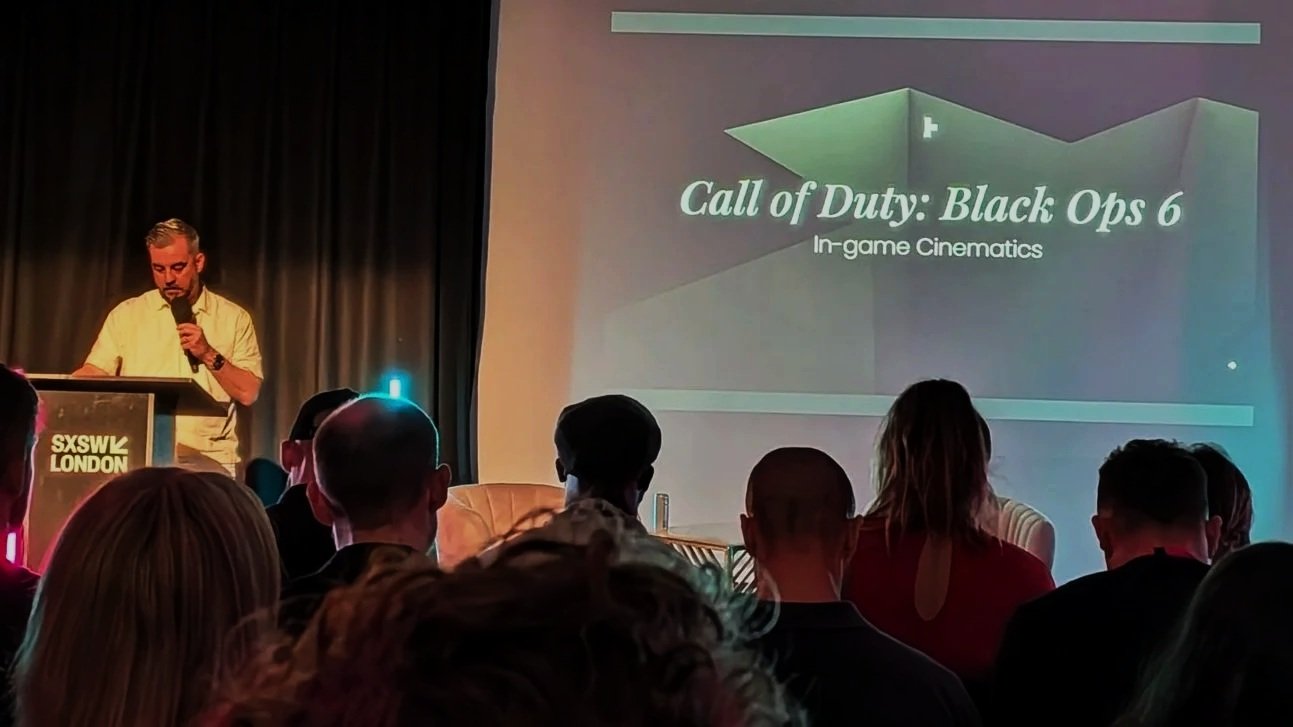
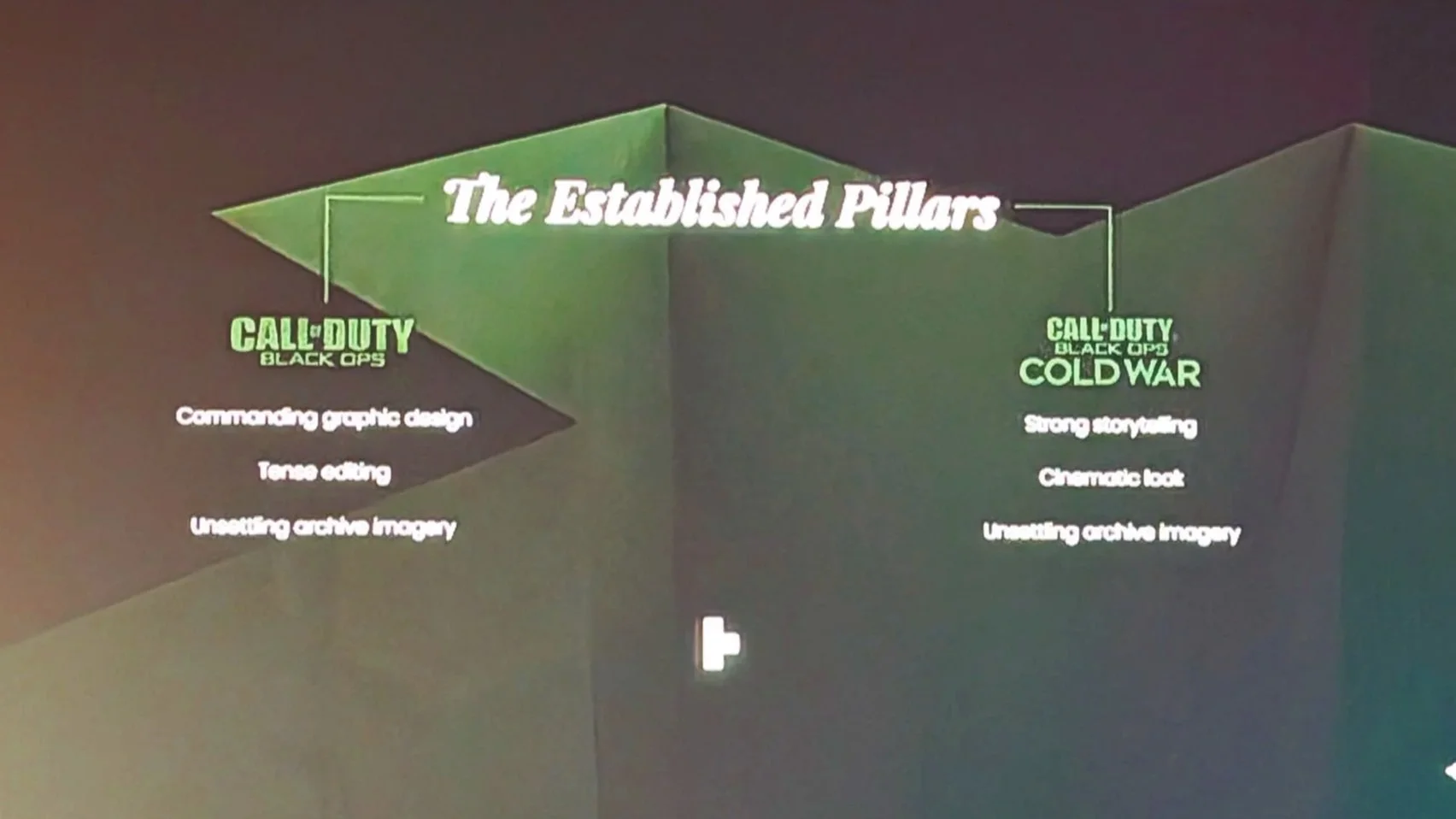
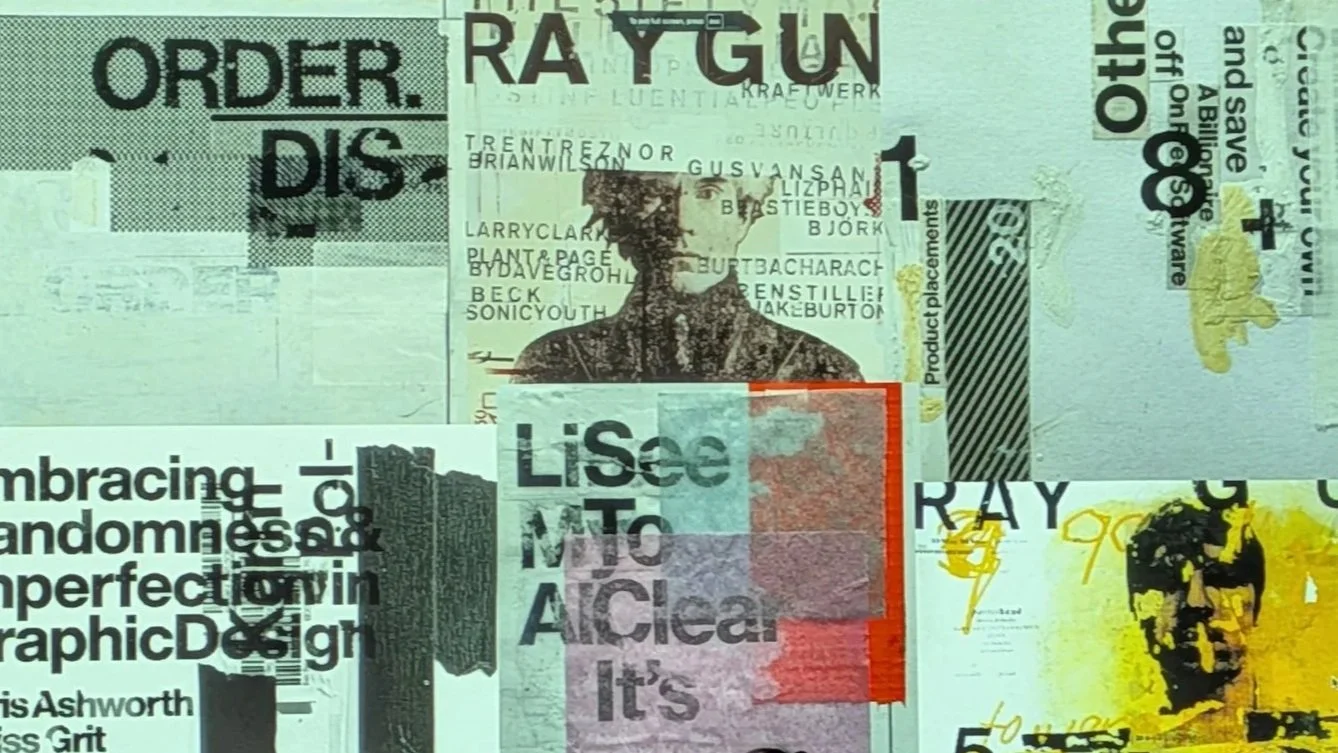
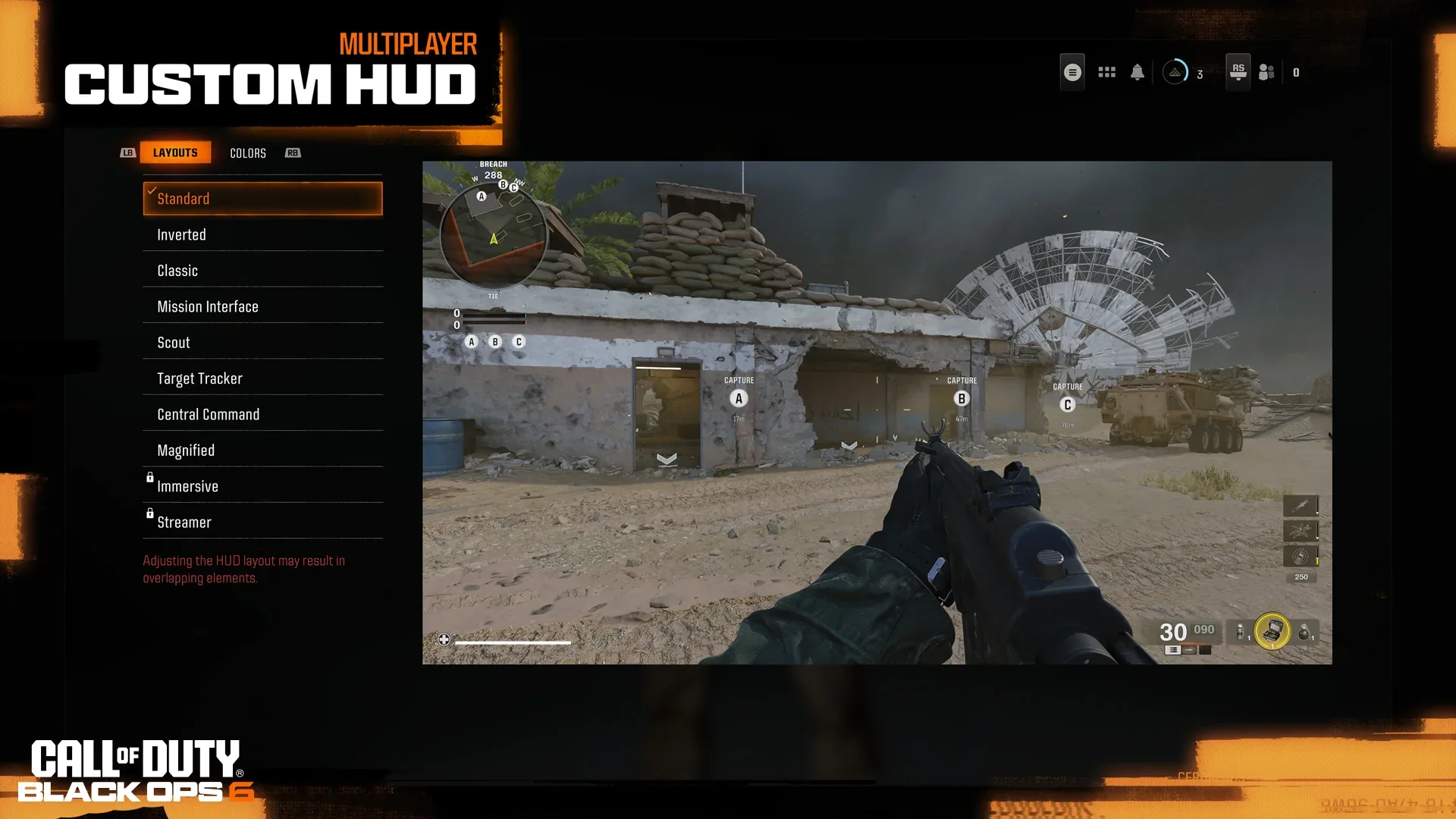
For Call of Duty: Black Ops 6, the team spent 18 months crafting just twelve short films to bridge the gap between gunfights. Instead of leaning on slick CGI, they went fully analog to nail that gritty, unsettling spy-thriller vibe. We’re talking physical Letrasets, printing on clear paper, and scrubbing textures with mineral spirits—literally retraining young designers how to make art with their hands instead of just a mouse. With strict rules against using stock footage, they had to build every asset from scratch. The result is "narrative in motion": a tense, handmade visual style that keeps the story gripping even when you put the controller down.



Other misc. talks
If you’re interested, you can read all SXSW notes.
Why Space Matters: Space is the new frontier for defense. With the UK currently unprepared for space-based threats, the focus must be on dual-use technology (commercial/military) to build resilience and redundancy.
Hidden Trends of the Future Normal: Futurists discussed "anticipatory anxiety" and the need to pivot from viewing AI as an efficiency tool to a creativity multiplier, harnessing the "AI-powered crowd."
Disinformation in War: A look at how encrypted apps (like WhatsApp) spread unverifiable rumors in conflict zones, and the urgent need for early detection services to flag violence-inciting messages.
The View of 2050: A broad panel predicting that by 2050, daily "toil" will be handled by embodied intelligence (robots). Notably, the West remains pessimistic about AI, while the East is largely optimistic.
Ageing and Biohacking: A deep dive into "biological vs. chronological age." The focus was on glycan age and lifestyle interventions (sleep, diet, cryotherapy) to extend healthspan, not just lifespan.
Power Shift (Female-Centric Cultures): Leaders from F1 and Sony Music argued that culture is defined by action—like aggressive childcare policies—not words. "If you can't see it, you can't be it."
Realising the Potential of Nature: Discussed how storytelling (like "Forged by Nature" in golf) and celebrity endorsements can reconnect the public with environmental agency.
City Sounds of 2050: Focused on "meanwhile spaces"—temporary cultural districts that revitalize areas. Highlights included the 24-hour lifecycle of buildings like the London Olympia.
The Future of Clothing: Vollebak founders detailed their experimental approach, using materials like copper, aerogel, and wood to create "smart" clothing that challenges the status quo.
Healing Arts: Art is a "second responder." Data shows arts participation can decrease anxiety by ~40%, suggesting a future where the NHS prescribes art for mental health.
Can Microbiomes Deliver? The microbiome is now seen as a signaling network affecting mood. Prediction: By 2030, checking microbiome data will be as common as checking the weather.
AI & Meaningful Experiences: Focused on the LA Clippers' new stadium. Philosophy: AI should be invisible, eliminating wait times and personalizing the fan journey. If it's visible, it's just "noise."
Quantum Era & Culture: Bettina Kames discussed how quantum mechanics (superposition, randomness) will influence art, changing the viewer from observer to participant.
Cinema Meets the Metaverse: The friction of screening films inside games like Minecraft. While full-length films struggle, immersive, community-driven short-form content thrives.
Horror by Design: Explored the "paradox of horror"—why humans seek safety in simulated fear. Designers must balance tension with silence to avoid player frustration.
Futurescape 2050: Predicted a shift in global power to the South and a rise in "designer genetics," raising ethical questions about inequality in biological advancement.
Love the Earth: A session on using animation to build empathy for climate action, supported by the UN Human Rights commission to bridge indigenous wisdom with modern storytelling.
Rapha (Cycling Club): How a brand scaled a "religion-like" community by moving from exclusion to inclusion, using the physical club as a "third space" to counter digital isolation.
SaaS AI Moment: The defining shift: AI is no longer just for chat; it is for action (agents). Trust is built when users can see why an AI made a decision.
Building New Worlds: Sir Ian Livingstone (Games Workshop) argued for "creative computing" in education—teaching kids to build games, not just consume them.
Building for Care: Architects discussed "socially useful architecture," citing Maggie Centers as the gold standard: non-clinical, home-like environments that improve patient outcomes.
Behind the Backlot: Virtual production allows directors to "walk" through a set in VR before it is built, saving money and improving spatial planning.
Sex Education (Cindy Gallop): Gallop presented her venture as the "Khan Academy of sex," aiming to normalize real-world, consensual sex education to counter distorted porn narratives.
Reverse Mentoring: Bridging the generational divide by having junior employees mentor senior leaders, helping leadership understand the realities of the modern workforce.
